

Listen to the full podcast episode on YouTube, Spotify, and Apple Podcasts.
An Industry Built on Disposal
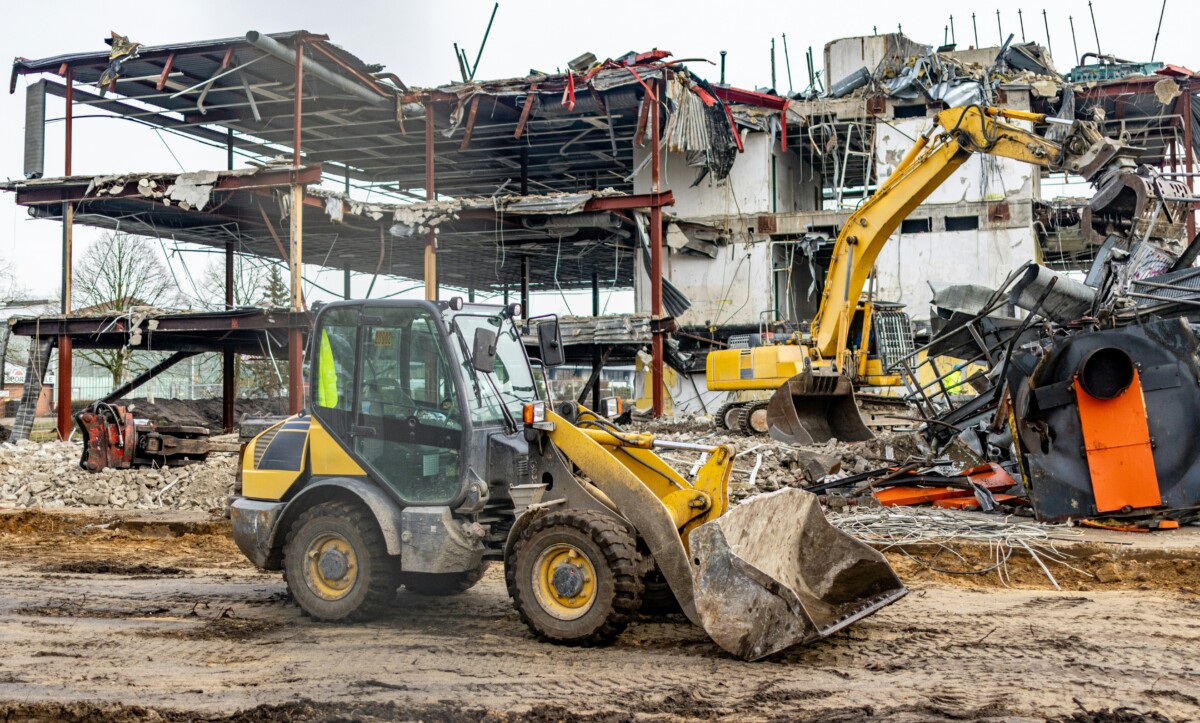
The built environment accounts for more than 40 percent of global energy-related CO₂ emissions and over one third of global waste. Yet only around one percent of materials are reused.
The figures expose a structural contradiction. Construction depends on extraction, manufacture and demolition.
Value is embedded in materials, then written off at end of life.
A recent McKinsey analysis argues that circular construction could unlock up to $360 billion in economic value by 2050 and generate 45 million jobs. The opportunity appears material. Adoption remains marginal.
The constraint is not intent. It is system design.
From Reduction to Regeneration
Fifteen years ago, Tina Snedker Kristensen encountered the Cradle to Cradle framework. At the time, sustainability discourse centred on minimisation.
“It was all about reducing, reducing consumption, reducing emission,” she says. “Living in a capitalistic world, you just think that’s just not going to happen.”
Cradle to Cradle proposed a different logic. Products should be designed either for biological return or technical reuse. Waste is a design error, not an inevitability.
Tina was then part of the leadership team at Troldtekt A/S, a Danish manufacturer of acoustic panels. Over 27 years, she helped reposition the company from domestic supplier to international brand, embedding certification into corporate strategy.
“It’s not just a stamp that you get,” she says. “You have to work continuously and improve on all five criteria.”
Third-party certification altered internal priorities. Sustainability shifted from communication to operational discipline. Awards followed. Market positioning strengthened. Documentation became a strategic asset.
What Circularity Looks Like in Practice
Today, Tina leads BuildDirection, advising companies across Denmark, Germany and Northern Europe on ESG strategy, documentation, branding and international positioning .
Her assessment of circularity in construction is direct. Reuse is technically possible. It is economically and operationally difficult.
She describes inspecting thousands of square metres of acoustic panels installed decades ago. They had been fixed with nails rather than screws. Disassembly damaged the product. Recovery required time and manual handling.
“It would be a bad day at work to dismantle those panels.”
Demolition companies operate under tight timelines. Manual sorting increases cost. Technical performance must be reverified. Ownership of materials can be unclear. Manufacturers may need to buy back used products to guarantee quality.
Each intervention adds friction.
Virgin materials, by contrast, benefit from industrial scale and automation. Reuse rarely does. The price differential reflects labour, not intent.
When Demand Outpaces Infrastructure
In Denmark, building regulation now allows reused materials to count as zero CO₂ in life-cycle assessments. Carbon thresholds for new buildings are tightening. Demand for certified reused materials is rising.
The regulatory signal is clear. Supply chains are less prepared.
Buyers often expect reused materials to be cheaper, reflecting second-hand consumer markets. In construction, that assumption collides with cost reality. Labour, certification and recertification increase expense.
Some niche examples demonstrate demand elasticity. Reclaimed bricks, valued for aesthetics, can command premium prices. Most materials do not benefit from architectural scarcity.
Circularity competes against optimised global production systems designed for linear throughput.
The Documentation Gap
The most persistent barrier lies in existing building stock.
Most companies retain documentation for limited periods. Beyond that, material composition becomes uncertain. Toxicity, durability and technical performance are often unknown.
“If I had a magic wand,” Tina says, “I would hope that it could sort of scan a building and define which kind of materials are there, what kind of quality do they have.”
Without documentation, reuse carries liability. Risk pricing suppresses uptake.
New buildings can embed digital material passports and design for disassembly. Legacy buildings cannot retroactively provide transparency. Circularity depends on visibility into assets already constructed.
Industrialising Reuse
The economic case for circular construction is plausible. The operational model remains immature.
Automation, digitalisation and artificial intelligence may reduce manual inspection and sorting. But industrialising reuse requires capital investment, new logistics models and clearer ownership frameworks.
Circularity does not sit outside capitalism. It must function within it.
Until documentation improves, labour intensity declines and regulation consistently rewards reuse, the system will default to what it understands: extract, build, demolish.
One percent reflects alignment between economics and infrastructure.
The remaining ninety-nine percent reflects what has yet to change.
Sponsored by...
truMRK: Marketing and Communications You Can Trust
👉 Learn how truMRK helps organisations strengthen the credibility of their marketing and communications.
Want to be a guest on our show?
Contact Us.
The Responsible Edge Podcast
Queensgate House
48 Queen Street
Exeter
Devon
EX4 3SR
Join 2,500+ Subscribers.
New episodes exploring responsible marketing, reporting and communications, straight to your inbox.
© 2026. The Responsible Edge Podcast. All rights reserved. The Responsible Edge Podcast® is a registered trademark.
Sponsored by truMRK
© 2026. The Responsible Edge Podcast