

Listen to the full podcast episode on YouTube, Spotify, and Apple Podcasts.
A system under pressure
Food systems face growing scrutiny. Health concerns are rising. Environmental costs are becoming clearer. Waste remains persistent.
The tension sits inside daily operations. Food must be affordable. Retailers require scale. Consumers expect convenience.
At the same time, public awareness has shifted. Ultra-processed food has entered public debate. Food waste has become a policy priority.
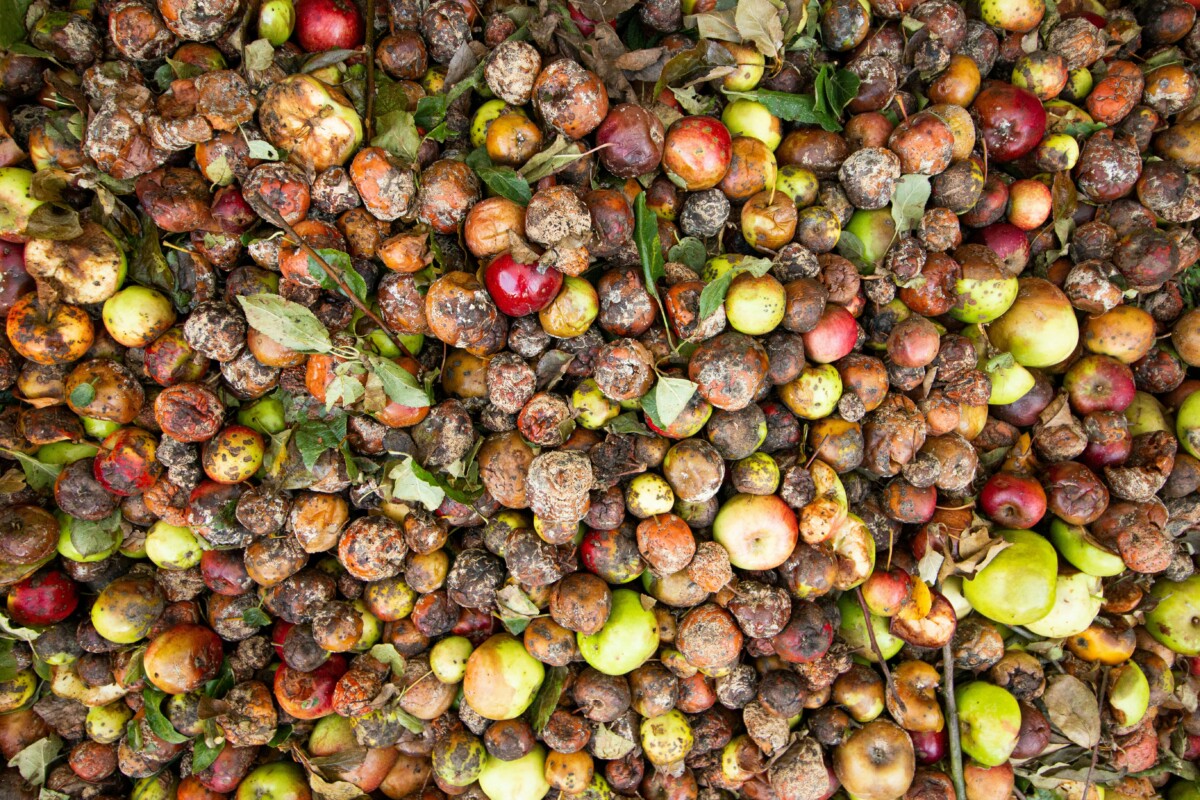
Globally, roughly one billion tonnes of food are wasted each year. The value is estimated at around one trillion dollars. Food waste contributes around ten percent of global emissions.
For businesses inside the system, the choices are practical. Ingredients can be cheaper. Packaging can be cheaper. Waste can be ignored.
Those decisions accumulate over time.
Charlie Bigham runs a business that has had to make those decisions repeatedly.
A kitchen table start
Charlie Bigham began his career as a consultant at Andersen Consulting.
He left after several years.
“I quite quickly worked out I wasn’t very good at working for other people.”
In 1996 he started a food business from his kitchen table.
The ambition was not modest.
Today the company employs about 750 people and produces prepared meals sold across UK supermarkets. Revenue is around £150 million.
Production takes place in two kitchens, one in London and one in Somerset.
Charlie attributes part of the early timing to circumstance.
“Every business needs to be lucky.”
In the mid-1990s British food culture was shifting. Newspapers introduced food sections. Television chefs became widely visible. Supermarkets began stocking more international ingredients.
Consumer curiosity around food was increasing.
The company grew steadily.
Charlie still describes the journey cautiously.
“We’re still in the foothills even after thirty years.”
Rejecting the purpose-first model
Many modern companies start with an explicit social purpose.
Charlie does not.
“I think you’re much better off saying, let’s focus on your product or your service and make that extraordinary.”
Responsibility follows competence. It cannot replace it.
The company’s first obligation remains the product.
“We are here first and foremost to make delicious food.”
Broader responsibilities appear alongside that work.
Some issues were not widely discussed when the company started. Climate change gained prominence years later. Regenerative agriculture has appeared more recently.
Ultra-processed food is another example.
The company’s ingredient discipline predates the debate.
“We will only ever put ingredients into our food that I have in my kitchen cupboard or my fridge at home.”
The rule originally supported taste and quality. It later aligned with emerging health concerns.
Inside the kitchens
Operational detail defines the company’s approach.
Meals are assembled from separate components. A dish such as chicken tikka masala includes cooked chicken, sauce and rice prepared independently.
Perfect alignment between components is difficult.
If one element runs out before the others, the remaining ingredients become surplus.
The company began measuring this problem carefully.
Food waste was first divided into two categories: edible and non-edible. Ingredients were then tracked by type and stage of production.
Measurement changed behaviour.
Over three years the company worked to eliminate edible food waste. Surplus food is now redistributed through charity partners including City Harvest and FareShare.
More than half a million meals have been redistributed.
Measurement also revealed smaller inefficiencies.
At one point the company discovered roughly 800 kilograms of food were being dropped on the floor each week.
Relative to total production it was small. In absolute terms it represented thousands of meals.
The next operational challenge became preventing that loss.
The commercial tension
Responsible decisions often cost more.
Packaging illustrates the trade-off.
The company packages its meals in wooden trays made from poplar grown in southwest France. The trays are produced by a family business that also manufactures traditional cheese boxes.
Plastic would be cheaper.
It would also work more easily with automated packing systems.
Natural materials vary slightly in size. Machines prefer precision.
Yet the company chose wood largely to avoid single-use plastic.
Similar decisions appear across procurement. The company purchases around a thousand ingredients and packaging components.
Cheaper options usually exist.
Short-term margins improve when they are chosen.
Resisting them requires discipline.
Responsibility without resolution
Charlie rejects the idea that business exists purely for extraction.
He also rejects the idea that purpose can replace commercial competence.
Responsibility appears through operational decisions rather than slogans.
Structural tensions remain. Incentives across supply chains often prioritise cost and speed. Regulation can sometimes move in contradictory directions.
Charlie believes the long-term answer must eventually involve governance.
“Business cannot exist purely for profit. It has to do more than that.”
For now, responsibility continues to emerge through the daily decisions made inside operating businesses.
Sponsored by...
truMRK: Marketing and Communications You Can Trust
👉 Learn how truMRK helps organisations strengthen the credibility of their marketing and communications.
Want to be a guest on our show?
Contact Us.
The Responsible Edge Podcast
Queensgate House
48 Queen Street
Exeter
Devon
EX4 3SR
Join 2,500+ Subscribers.
New episodes exploring responsible marketing, reporting and communications, straight to your inbox.
© 2026. The Responsible Edge Podcast. All rights reserved. The Responsible Edge Podcast® is a registered trademark.
Sponsored by truMRK
© 2026. The Responsible Edge Podcast