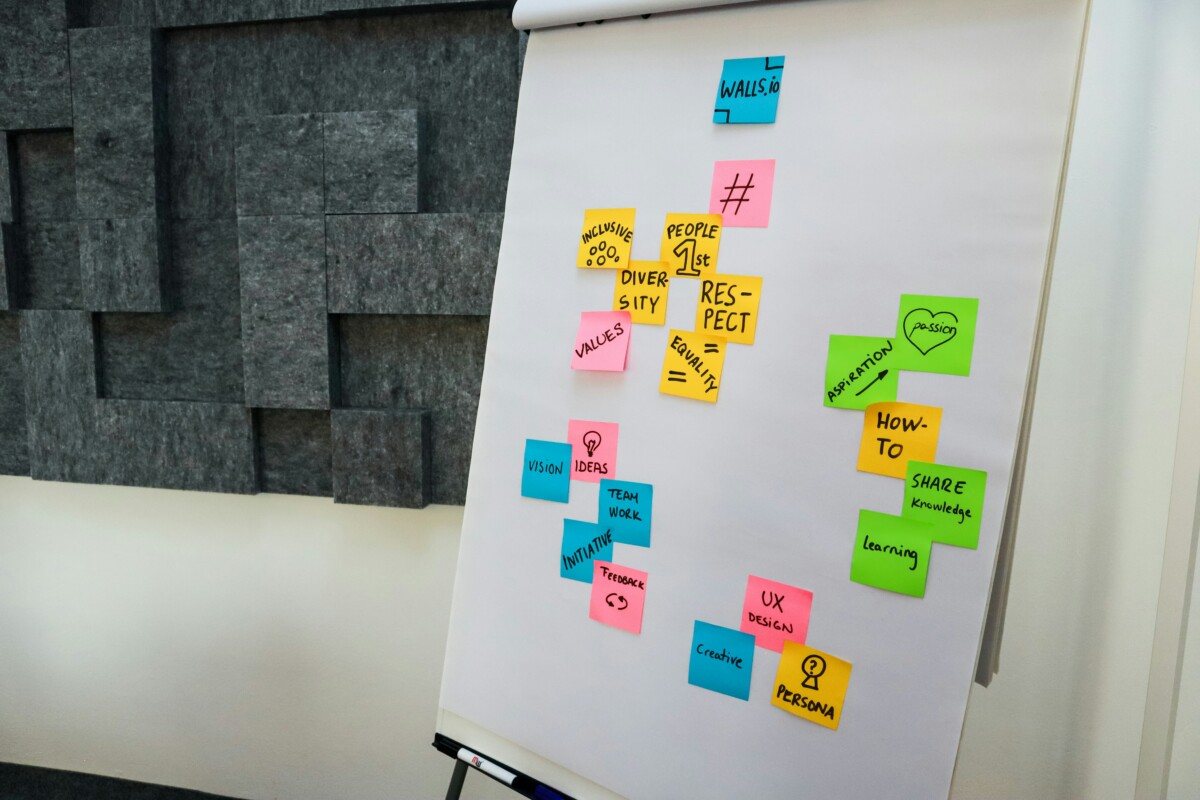
Why Business Needs to Reimagine Organisational Structures to Solve Sustainability Challenges

Episode 90 | 24.4.2025

Why Business Needs to Reimagine Organisational Structures to Solve Sustainability Challenges

In the latest episode of The Responsible Edge, Laura Hunter joined us to explore how the structures underpinning business are holding back progress on sustainability—and why redesigning them is now urgent.

Listen to the full podcast episode on YouTube, Spotify, and Apple Podcasts.

Laura grew up in the shadow of deindustrialisation. Raised in a coal mining village in South Yorkshire, she witnessed first-hand how progress for some meant devastation for many. That early understanding of inequality and its deep social consequences shaped the trajectory of her career—and the powerful insights she shares today.


The Legacy We Haven’t Escaped: Outdated Organisational Thinking

From the late 19th century onwards, thinkers like Frederick Taylor and Max Weber helped craft the management models still dominating companies today:

  • 📚 Scientific Management: Maximise efficiency by turning organisations into tightly-controlled machines.

  • 🏢 Bureaucratic Structures: Standardise processes, create rigid hierarchies, and define success through productivity and control.

At the time, these ideas revolutionised business. But in today’s world, trying to solve systemic sustainability challenges with “scientific management” principles is like trying to fix a spaceship with Victorian plumbing.

“We’re using outdated ways of working to try and solve challenges that have never been solved before.”

The sustainability issues we face require creativity, imagination, and dynamic thinking—not rigid hierarchy and departmental silos.


Why Compliance Alone Won’t Save Us

Laura is clear: compliance is essential—but it’s not the end goal.

“We can’t compliance our way out of this.”

Organisations have rightly focused on building robust sustainability reporting, frameworks, and compliance mechanisms. But in doing so, many have squeezed out the very things that drive genuine change: innovation, experimentation, and human creativity.

Without making space for new thinking, compliance risks becoming a comfort blanket that lulls organisations into a false sense of progress.


Introducing the ‘Now Work’ Philosophy

Frustrated by outdated structures, Laura founded The Now Work, a new kind of business designed around modern sustainability needs.

Here’s what makes it different:

  • 🌍 2,000-strong global network of sustainability experts across strategy, carbon accounting, creative storytelling, science, and systems thinking.

  • 🚀 Flexible talent models: helping businesses “rent, borrow, or share” sustainability expertise.

  • 🛠️ Built for agility, creativity, and real transformation—not just reporting and box-ticking.

It’s a glimpse into the future of organisational design: porous, flexible, human-centred, and impact-driven.


Rethinking Power: Why Shared Value Networks Matter

Laura also discussed the concept of Shared Value Networks (SVNs)—a radical rethink of how organisations could be structured.

Instead of all decision-making power sitting at the centre, SVNs operate at the edges, connecting companies with external stakeholders: NGOs, educators, citizens, and others. This creates a decentralised web of knowledge, co-creation, and collective intelligence.

Key ideas:

  • Impact Coordinators: New leadership roles managing the interconnected networks.

  • 🌱 Organic structures, intentionally designed for creativity and adaptability.

  • 🤝 Genuine collaboration with external voices, not just tokenistic advisory boards.

Laura believes models like SVNs can unlock the creativity and stakeholder engagement needed for real systemic change.

“We need space for creativity. We’re not going to solve these challenges by staying rigidly inside traditional structures.”


The Real Risk: Losing the Next Generation

One of Laura’s most powerful warnings? That by focusing too much on compliance, companies risk discouraging the next wave of sustainability talent.

If the sustainability profession becomes seen as purely technical and compliance-led, we will miss out on the creative, passionate innovators needed to lead true transformation.


Laura’s Magic Wand: Tackling Wealth Inequality

If given a magic wand to change one thing in business, Laura’s choice was clear:

“I want businesses to take rising wealth inequality seriously. Without tackling inequality, we won’t build a society capable of creating a better future.”

Business can’t exist in a vacuum. A sustainable economy is impossible without social justice.


Final Thoughts: Building the Businesses We Need

Laura’s message is both a challenge and an opportunity:

  • 🌟 Redesign your structures.

  • 🌟 Build spaces for creativity.

  • 🌟 Connect beyond your walls.

  • 🌟 Tackle social issues, not just environmental ones.

In short: Stop trying to save the world with broken models.

Sponsored by...


truMRK: Communications You Can Trust


👉 Learn how truMRK helps organisations strengthen the credibility of their communications.

Want to be a guest on our show?

Contact Us.

The Responsible Edge Podcast
Queensgate House
48 Queen Street
Exeter
Devon
EX4 3SR

Recognition.
Join 2,500+ professionals.

Exploring how to build trust, lead responsibly, and grow with integrity. Get the latest episodes and exclusive insights direct to your inbox.

  • This field is for validation purposes and should be left unchanged.

© 2026. The Responsible Edge Podcast. All rights reserved.
The Responsible Edge Podcast® is a registered trademark.

Sponsored by truMRK

© 2026. The Responsible Edge Podcast
Reinventing Women’s Health: How 28X is Building a New Model for Ethical Tech

Episode 89 | 21.4.2025

Reinventing Women’s Health: How 28X is Building a New Model for Ethical Tech

In an era where digital health solutions are booming, Amber Vodegel is proving that innovation doesn’t have to come at the cost of ethics. Speaking to The Responsible Edge podcast, Amber shared the remarkable story behind her new venture, 28X—a revolutionary period tracking app aiming to transform women’s health by putting data ownership, accessibility, and integrity at its core.

Listen to the full podcast episode on YouTube, Spotify, and Apple Podcasts.

🎙️ “We need to give women the power back over their own data,” Amber explained, detailing a blueprint for business that challenges the profit-first model dominating today’s tech landscape.


The Problem with Current Women’s Health Apps

While millions of women globally rely on period tracking apps, Amber highlighted a worrying reality:

  • Most are VC-backed and male-owned, with data practices that often prioritise profit over privacy.

  • Some leading apps have faced lawsuits for mishandling sensitive user information, eroding trust.

  • Subscription models and employer-based access schemes often exclude the 80% of women who cannot afford expensive plans.

“These models are outdated,” Amber said. “They’re designed for the privileged few, not the many.”


28X: A Radically Different Approach 🚀

Rather than replicating the flawed systems already in place, Amber is building 28X around three radical principles:

  • No data collection by default: Users’ information stays on their device unless they choose otherwise.

  • Completely free access: No paywalls, no barriers.

  • Ethical funding model: Self-funded with selective, mission-aligned investors, avoiding the pressures that can lead to unethical compromises.

🦋 The name 28X reflects the 28-day cycle and the X chromosome, with a butterfly symbol representing transformation—a fitting metaphor for Amber’s ambitions.


A New Blueprint for Business 📈

Amber’s vision for 28X isn’t just about creating a better health app. It’s about showing the world that responsible, ethical businesses can still scale, still succeed—and still make a real difference.

Key features of her approach:

  • Circular impact: Future profits will be partially reinvested in supporting female founders and climate-focused businesses.

  • Longevity over exit: Rather than building for a quick sale, 28X is designed for long-term ownership, offering dividends rather than structuring for acquisition.

  • Open invitation for collaboration: Amber is actively calling for support from professionals who want to help build an ethical giant in women’s health tech.

“We have enough companies focused purely on extraction. Let’s build something different—something that gives back.”


Lessons from an Entrepreneurial Journey

Amber’s own story—rooted in resilience, creativity, and hard-earned lessons—shapes everything she is building today.

Key takeaways she shared:

  • Build around paradox: Entrepreneurship is the constant balancing of highs and lows.

  • Own your resilience: Setbacks are inevitable; persistence is essential.

  • Work when others watch TV: Amber attributes much of her early success to sacrificing downtime to build her ventures in the evenings.

  • Ethics must be baked in early: Retrofitting ethics doesn’t work; they must be foundational.


A Call to Action 📣

Amber’s goal is bold: reach 100 million women a month within five years, making 28X the world’s largest, most trusted period tracking platform.

“If we want to change the status quo, we need to think big—and do it ethically,” she said.

💬 Interested in helping? Amber is inviting skilled volunteers, collaborators, and mission-driven supporters to join the movement. “We can build this together,” she urged.

Sponsored by...


truMRK: Communications You Can Trust


👉 Learn how truMRK helps organisations strengthen the credibility of their communications.

Want to be a guest on our show?

Contact Us.

The Responsible Edge Podcast
Queensgate House
48 Queen Street
Exeter
Devon
EX4 3SR

Recognition.

Join 2,500+ professionals.

Exploring how to build trust, lead responsibly, and grow with integrity. Get the latest episodes and exclusive insights direct to your inbox.

  • This field is for validation purposes and should be left unchanged.

© 2026. The Responsible Edge Podcast. All rights reserved.
The Responsible Edge Podcast® is a registered trademark.

Sponsored by truMRK

© 2026. The Responsible Edge Podcast

How Smarter Storage Can Unlock the UK’s Clean Energy Future

Episode 88 | 17.4.2025

How Smarter Storage Can Unlock the UK’s Clean Energy Future

In this episode of The Responsible Edge, we welcomed Robin Stopford, CEO of British clean tech innovator PowerVault. With a career that began at Rolls-Royce developing large-scale coal power stations, Robin’s journey has taken a decisive and deliberate turn—from heavy industry to household-level sustainability. His story isn’t just a reflection of professional evolution, but a window into how decentralised energy, behavioural nudges, and pragmatic system thinking can drive systemic change.

Listen to the full podcast episode on YouTube, Spotify, and Apple Podcasts.

PowerVault is pioneering affordable residential battery storage, helping consumers harness solar energy and store it for use when the grid is under pressure. But behind that simple idea lies something much bigger: a model for reducing grid strain, supporting renewable adoption, and giving consumers more agency without demanding lifestyle sacrifice.


🛠️ The Case for a Smarter Grid Starts at Home

“You can start with a simple algorithm. Then, once people are in, you can gamify the system and drive behavioural change.”

PowerVault’s batteries aren’t just about shaving a few quid off your electricity bill. They’re part of a broader ecosystem designed to balance national demand, support heat pump adoption, and help reduce the staggering infrastructure investment needed to hit net zero.

Some key stats Robin referenced:

  • The UK may need to invest £540 billion in grid infrastructure over the next 25 years to meet peak winter demand.

  • Yet every £1 spent on solar and batteries can potentially save £4 in future infrastructure costs.

  • A typical PowerVault user could halve their electricity costs, particularly when paired with solar and a time-of-use tariff.

But it’s not just about the money. This is about redesigning energy systems to fit how people actually live. It’s about nudging, not nagging.


💡 Behavioural Economics Meets Renewable Tech

In discussing recent government efforts to promote air source heat pump adoption through “nudge theory,” Robin reflects on the challenges of changing public perception—and why a more interconnected approach might be necessary.

“Telling people to change doesn’t work. If we want better outcomes, the sustainable choice has to become the easier one.”

He explains that while heat pumps represent a key part of the decarbonisation puzzle, they are often misunderstood. Many households still see them as expensive, noisy, or unfamiliar. Meanwhile, installers—long accustomed to gas boilers—can be reluctant to change their ways. The answer? Broader systems thinking and easier decision-making pathways for consumers.

By integrating solar, batteries, insulation, and smarter tariffs, Robin argues we can:

  • Reduce upfront financial risk for households

  • Create better comfort without complexity

  • Drive adoption without reliance on ideology or sacrifice


🧠 Engineering a Culture of Curiosity

Despite being a startup, PowerVault actively encourages experimentation across the business. Whether it’s product development, messaging, or user interface design, Robin stresses the importance of learning loops.

“Companies need to experiment to learn. And being small, we get immediate feedback.”

This includes listening to highly engaged customers—often engineers and technologists—who are testing boundaries and pushing the tech to new use cases. PowerVault has begun integrating insights from these ‘power users’ into product evolution, and even exploring ways to create “made-in-Britain” bundles in collaboration with other clean tech innovators.


🔍 Fighting Misinformation in the Home Energy Market

One of the subtler but recurring themes in Robin’s conversation was how misinformation—or lack of clear, accessible education—can stifle adoption.

“People read about lithium scooters catching fire and assume it’s the same risk in our managed battery systems. It’s not.”

PowerVault is working hard to simplify its messaging and make the technology feel approachable, safe, and beneficial. The long-term goal? A user experience that feels as natural and invisible as a boiler—except cleaner, cheaper, and smarter.


🪄 Magic Wand: Longer-Term Thinking, Please

If Robin could change one thing about the commercial world?

“I’d imbue investors with a 10- or 20-year horizon. Right now, shareholder short-termism is stalling the energy transition.”

He points out that while major oil companies pull back from renewables, some of the world’s largest petrostates are doubling down on clean energy. India’s Adani Group, for instance, is building some of the world’s largest solar farms—despite being one of the biggest coal producers.

The contradiction is clear. The question now is: which model will dominate?


🧭 Final Thought

Robin’s story isn’t just about PowerVault. It’s about redesigning systems—financial, technical, behavioural—so that doing the right thing becomes the logical thing. It’s a blend of old-school engineering discipline and 21st-century agility, applied to the challenge of making sustainable living simple.

This episode offers real insight into the granular side of the energy transition. Not the macro targets or the hype—but the reality of what’s happening on British rooftops, behind the meter, and inside the minds of households choosing to step into a smarter energy future.

Sponsored by...


truMRK: Communications You Can Trust


👉 Learn how truMRK helps organisations strengthen the credibility of their communications.

Want to be a guest on our show?

Contact Us.

The Responsible Edge Podcast
Queensgate House
48 Queen Street
Exeter
Devon
EX4 3SR

Recognition.

Join 2,500+ professionals.

Exploring how to build trust, lead responsibly, and grow with integrity. Get the latest episodes and exclusive insights direct to your inbox.

  • This field is for validation purposes and should be left unchanged.

© 2026. The Responsible Edge Podcast. All rights reserved.
The Responsible Edge Podcast® is a registered trademark.

Sponsored by truMRK

© 2026. The Responsible Edge Podcast
From Plot to Plate: How Personal Sustainability Can Empower Entire Communities

Episode 87 | 14.4.2025

From Plot to Plate: How Personal Sustainability Can Empower Entire Communities

“Waste is money.” It’s a simple phrase—but in the hands of South African sustainability leader Tozama Kulati Siwisa, it becomes a blueprint for transforming lives, rethinking business, and tackling climate change from the ground up.

Listen to the full podcast episode on YouTube, Spotify, and Apple Podcasts.

In this episode of The Responsible Edge, Tozama joins host Charlie Martin to share her deeply personal and professional journey—from becoming a mother at 15 and putting herself through university, to leading sustainability for some of South Africa’s biggest companies. But this isn’t just a story of corporate ESG frameworks—it’s about how self-sufficiency and environmental stewardship can be taught, lived, and scaled to create true change.


🌍 Sustainability as Survival: Lessons from the Eastern Cape

Raised in the rural Eastern Cape, Tozama grew up in a household where sustainability wasn’t a lifestyle trend—it was survival.

“My mum would insist on a vegetable garden, on collecting rainwater, and on sorting waste… She didn’t know she was teaching ESG. It was just how we got by.”

After becoming a mother at 15, Tozama defied societal expectations by putting herself through university, working two jobs, and later funding her siblings’ education. This drive—to move beyond poverty—ultimately led her into corporate sustainability roles at organisations like Eskom and Lonmin, where she connected her upbringing with the professional world of ESG.


💡 Turning ESG from Buzzword to Behaviour

Tozama’s lightbulb moment came when she realised that the same sustainability habits she’d learned at home could be applied in boardrooms, communities, and entire industries.

“At first, ESG was just a buzzword. But when I looked closely, I realised—this is what we’ve been doing all along.”

In roles that spanned community development, local economic empowerment, and corporate sustainability compliance, she witnessed the direct link between environmental awareness and social mobility—particularly in mining communities where pollution, poverty, and unemployment intersect.


🧑‍🌾 Community Power: Farming, Waste & the Value of Self-Sufficiency

Tozama’s ethos is clear: when individuals take control of their resources, they unlock resilience—not just for themselves, but for entire communities.

“If you recycle your water, grow your own vegetables, and collect your own eggs, you don’t just reduce waste—you build dignity and independence.”

Through initiatives that encouraged schools to grow their own food and reuse recycled water, she saw how sustainability could alleviate poverty and empower marginalised groups.


🌱 The Kids Are the Key: Building a Climate-Conscious Generation

A key theme from the show—and the accompanying Vox article discussed—was the power of early intervention.

In South Africa’s Western Cape, the Climate Change Champs programme is teaching children to see environmental responsibility not just as a duty, but as an opportunity. From medicinal plants to waste recycling, these young minds are already identifying as future climate scientists and entrepreneurs.

“We need to start them young. Because when a child knows their waste has value, they’ll change their household, their school, their entire community.”

Tozama envisions a future where sustainability is taught alongside literacy and numeracy—and where children from rural communities can become green economy leaders.


🚨 Class & Climate: The Realities of Environmentalism in South Africa

One of the most powerful takeaways from the episode is Tozama’s breakdown of how environmentalism is perceived across different socio-economic groups in South Africa:

  • For those in survival mode, sustainability feels like a luxury.

  • For those in stable jobs, it’s about resource efficiency—saving water and lowering bills.

  • For the wealthy, it’s something they often outsource.

This class-based perspective is critical in designing policies and funding strategies that are truly inclusive.


🤝 What Role Should the Global North Play?

The episode also tackled the often-uncomfortable question of how European or Global North institutions support sustainability efforts in the Global South.

Tozama’s view?

“If there’s someone willing to fund people becoming self-sustaining—who’s not trying to give handouts but to enable long-term change—that’s incredibly valuable. Especially in our villages, where poverty is visible in the air.”

But she’s also clear: support must be led by local insight, not imposed from afar.


✨ Magic Wand Moment: Make Ethics a Contractual Obligation

If handed a magic wand, Tozama would instil one change in the commercial world:

“Less greed, more compliance. If companies simply did what they committed to do—built the schools, delivered the jobs, protected the water—they would change lives.”

Her call is a potent reminder: ESG must be more than promises on paper. It must be monitored, enforced, and lived—especially in communities where corporate behaviour can make or break futures.


Final Thoughts

Tozama’s story is not just inspiring—it’s instructional.

It shows that real sustainability isn’t imposed from boardrooms or think tanks. It’s grown in vegetable gardens. It’s felt in the weight of a water bucket. It’s taught to children who turn recycling into purpose.

When ESG is grounded in personal experience and community wisdom, it becomes more than policy. It becomes a movement.

Sponsored by...


truMRK: Communications You Can Trust


👉 Learn how truMRK helps organisations strengthen the credibility of their communications.

Want to be a guest on our show?

Contact Us.

The Responsible Edge Podcast
Queensgate House
48 Queen Street
Exeter
Devon
EX4 3SR

Recognition.

Join 2,500+ professionals.

Exploring how to build trust, lead responsibly, and grow with integrity. Get the latest episodes and exclusive insights direct to your inbox.

  • This field is for validation purposes and should be left unchanged.

© 2026. The Responsible Edge Podcast. All rights reserved.
The Responsible Edge Podcast® is a registered trademark.

Sponsored by truMRK

© 2026. The Responsible Edge Podcast
Marketing with Meaning: The Rise of Cultural Intelligence in Brand Strategy

Episode 86 | 10.4.2025

Marketing with Meaning: The Rise of Cultural Intelligence in Brand Strategy

On this episode of The Responsible Edge, host Charlie is joined by Kian Bakhtiari—founder of The People, a purpose-driven creative consultancy working with some of the world’s most recognisable brands. Kian is also a Trustee for Earthwatch Europe, One Young World Ambassador and Advisor to UN Climate Change.

Listen to the full podcast episode on YouTube, Spotify, and Apple Podcasts.

This conversation explores the uncomfortable space between progressive messaging and commercial interest—shedding light on why well-meaning marketing campaigns often backfire, and how a deeper understanding of cultural intelligence might be the missing link between purpose and authenticity.


🧭 From Insight to Impact

Kian’s background in both philosophy and marketing gives him a unique lens through which to interrogate the role of business in society. For him, the key shift is moving from insight to impact—and recognising that brand storytelling isn’t neutral.

“Marketing shapes culture and society. The stories brands tell influence behaviour, values, and even identity.”

Many brands claim to be purpose-led, but the gap between intent and execution often leads to reputational risk—or worse, social harm. “We’re seeing more brands get called out for performative campaigns. They say the right things, but their internal practices don’t match,” Kian notes.

That mismatch, he argues, stems from a failure to truly understand the cultures they seek to represent or support.


🌍 Cultural Intelligence: More Than Market Research

Kian believes that the future of ethical marketing lies in cultural intelligence—a practice that combines anthropology, philosophy, behavioural psychology and systems thinking.

“You can’t simply take a cultural insight, twist it into a campaign, and expect it to resonate. Culture isn’t a toolkit. It’s a relationship.”

His work with The People focuses on bridging the gap between brands and communities through long-term engagement—not just trend reports. That means working with cultural researchers, grassroots voices, and youth councils to co-create campaigns that reflect lived experience—not just aspirational messaging.

Some of the common mistakes brands make when attempting this include:

  • ❌ Relying on tokenistic representation

  • ❌ Using data to justify what they’ve already decided

  • ❌ Prioritising short-term virality over long-term impact

“Just because something gets a lot of likes doesn’t mean it’s right,” Kian points out. “Metrics can often distract from meaning.”


💬 The Power of Listening (Not Just Talking)

One of the more surprising takeaways from Kian’s work is that the most powerful form of communication is listening.

“Brands think of storytelling as broadcasting. But real connection comes when you create space for dialogue. That means being willing to be wrong, to change course, and to elevate voices other than your own.”

This, he argues, is where many ESG or sustainability communications fall short. Organisations are quick to share their commitments, but slow to address critique. “There’s a fear of being exposed, so they stick to safe language. But safety often equals blandness. And that’s what people see through.”


🔮 What’s Next for Ethical Storytelling?

As younger generations demand more transparency and accountability from brands, the stakes for getting this right are only increasing.

Kian believes the next frontier lies in co-creation—not just hiring creatives to interpret purpose, but involving communities in shaping what that purpose looks like in practice.

He’s also interested in intergenerational leadership within the creative industries, helping younger thinkers drive change from within, rather than being relegated to advisory roles.

“True innovation often comes from the edge. From people who aren’t yet indoctrinated into how things ‘should’ be done.”


Final Takeaway 💡

Kian’s call to action is simple, yet radical:
Slow down. Listen deeply. Build with—not for—communities.
Because in the end, ethical marketing isn’t about having the loudest voice. It’s about having the most honest one.

Sponsored by...


truMRK: Communications You Can Trust


👉 Learn how truMRK helps organisations strengthen the credibility of their communications.

Want to be a guest on our show?

Contact Us.

The Responsible Edge Podcast
Queensgate House
48 Queen Street
Exeter
Devon
EX4 3SR

Recognition.

Join 2,500+ professionals.

Exploring how to build trust, lead responsibly, and grow with integrity. Get the latest episodes and exclusive insights direct to your inbox.

  • This field is for validation purposes and should be left unchanged.

© 2026. The Responsible Edge Podcast. All rights reserved.
The Responsible Edge Podcast® is a registered trademark.

Sponsored by truMRK

© 2026. The Responsible Edge Podcast