Why SMEs Can’t Ignore Sustainability Any Longer

Episode 135 | 24.11.2025

Why SMEs Can’t Ignore Sustainability Any Longer

A clear look at why supply-chain pressure is reshaping the future for small businesses.

Listen to the full podcast episode on YouTube, Spotify, and Apple Podcasts.

A Shift That Is Quiet but Serious

The conversation with sustainability strategist Jonathan Wragg takes place inside Bramall Lane in Sheffield. It is a calm setting for a discussion that affects thousands of small businesses. Jonathan has worked in sustainability roles across multiple industries for almost two decades, and he sees a pattern forming. Large organisations are asking harder questions about the suppliers they rely on, and they expect real answers.

He puts it plainly.

“By your business not being more sustainable, you are seen as a high risk supplier.”

For SMEs, this change arrives quickly. Many work with short planning cycles and tight margins. They see sustainability as something to improve when time allows. Their biggest customers see it as a decision point today.


A Career Built on Work, Chance and Values

Jonathan describes his route into sustainability as accidental. He joined the Royal Navy at sixteen and learned discipline, teamwork and a sense of duty.
“They give you a sense of doing the right thing when nobody is looking,” he says.

After leaving the Navy, he moved through plastics, packaging, manufacturing and global supply chains. His LinkedIn record shows senior roles in governance, supply-chain oversight and ESG development across more than forty countries.

Throughout this journey, he developed a skill that shapes his work today. He learned how to translate complex sustainability language into something people can understand.

“One of the things that I do best is the translation of sustainability,” he says.

This is the basis of his work with Ltt Group, the consultancy he co-founded to support SMEs.


The Turning Point That Changes Everything

Jonathan believes the era of vague sustainability claims is over. Small businesses once relied on broad statements in tenders and sales meetings. They are now challenged directly.

“If somebody tells me something, my response is prove it,” he says. “If you cannot, I am not going to buy off you.”

Corporate sustainability teams are now involved in procurement. They review carbon data. They check policies. They assess risk. They can see when language is used as decoration rather than substance.

Jonathan also points to the influence of investors. “Investment in ESG has gone up to around 19 trillion dollars globally,” he says.

“Politics works in three year cycles. Finance works in longer cycles.”

In other words, the pressure is structural. It will not disappear.


Helping SMEs Take Action Without Guesswork

Ltt Group works with SMEs by starting where the risk is most visible. “The first thing we do is work with the sales team,” Jonathan explains. “We identify the clients you have right now and what risk you have.”

If a single corporate buyer represents sixty percent of revenue, that is a direct vulnerability.

“If they stop using you, they will switch off the tap,” he says.

The support that follows is practical.

  • A clear emissions baseline
  • Honest policies and data
  • Basic governance
  • Social value reporting
  • Straightforward language
  • A timeline that can be tracked

Jonathan encourages SMEs to focus on accuracy rather than perfection. “It is about the journey you are on,” he says. “Be honest about where you are.”

 

The Moral and Commercial Tension

Jonathan speaks openly about a larger tension that sits behind this shift. Many SMEs feel overwhelmed. They face rising costs, labour shortages and daily operational challenges. Yet their customers are moving ahead with stronger sustainability expectations.

“Everybody just wants to grow,” he says. “The only way business can grow now is by being more sustainable.”

He also worries about the impact on communities if local suppliers fail to keep up.

“If businesses in Sheffield lose their big contracts, the unemployment impact is huge,” he says. “That terrifies me.”

This is the heart of his work. Sustainability is not only about targets. It is about livelihoods.


Why Procurement Will Shape the Future

Jonathan believes the next decade will be shaped more by procurement than by politics. He gives an example of a company that weighted a major tender ninety percent on CSR. Prices fell because suppliers understood the scoring and aligned to it. “It improved everything,” he says.

His own idea for faster progress is simple.

“Minimum sixty percent scoring on CSR with named accreditations,” he says. “Hold people to account.”

Clear expectations allow suppliers to plan, grow and compete on a level field.


The Takeaway

Jonathan’s message to SMEs is practical and direct. Waiting will not protect you. The market has moved, and it rewards those who can show what they are doing.

“By being more sustainable, you lower your risk. You protect your future,” he says.


Closing Reflection

The setting at Bramall Lane makes the conversation feel grounded in a real place and a real community. It is a reminder that responsible business is not a slogan. It shapes jobs, supply chains and the confidence of local regions.

For SMEs, sustainability is becoming a basic part of running a secure and resilient business. Proof has become a form of trust. And trust is now a condition for growth.

Sponsored by...


truMRK: Communications You Can Trust


👉 Learn how truMRK helps organisations strengthen the credibility of their communications.

Want to be a guest on our show?

Contact Us.

The Responsible Edge Podcast
Queensgate House
48 Queen Street
Exeter
Devon
EX4 3SR

Recognition.
Join 2,500+ professionals.

Exploring how to build trust, lead responsibly, and grow with integrity. Get the latest episodes and exclusive insights direct to your inbox.

  • This field is for validation purposes and should be left unchanged.

© 2025. The Responsible Edge Podcast. All rights reserved.
The Responsible Edge Podcast® is a registered trademark.

Sponsored by truMRK

© 2025. The Responsible Edge Podcast

China’s Energy Pivot: Gib Hedstrom on What the West Missed

Episode 129 | 12.10.2025

China’s Energy Pivot: Gib Hedstrom on What the West Missed

Sustainability leader Gib Hedstrom explains how China’s clean energy surge is changing the rules of global leadership and what Western boards can learn.

Listen to the full podcast episode on YouTube, Spotify, and Apple Podcasts.

Scene-Setter: The World’s Energy Shock

When author and board advisor Gib Hedstrom read the China Energy Transition Review 2025, he was stunned. “I was surprised by the pace and scale of what’s happening,” he said. “China’s clean energy portfolio is right at the steep part of the S-curve. It’s taking off.”

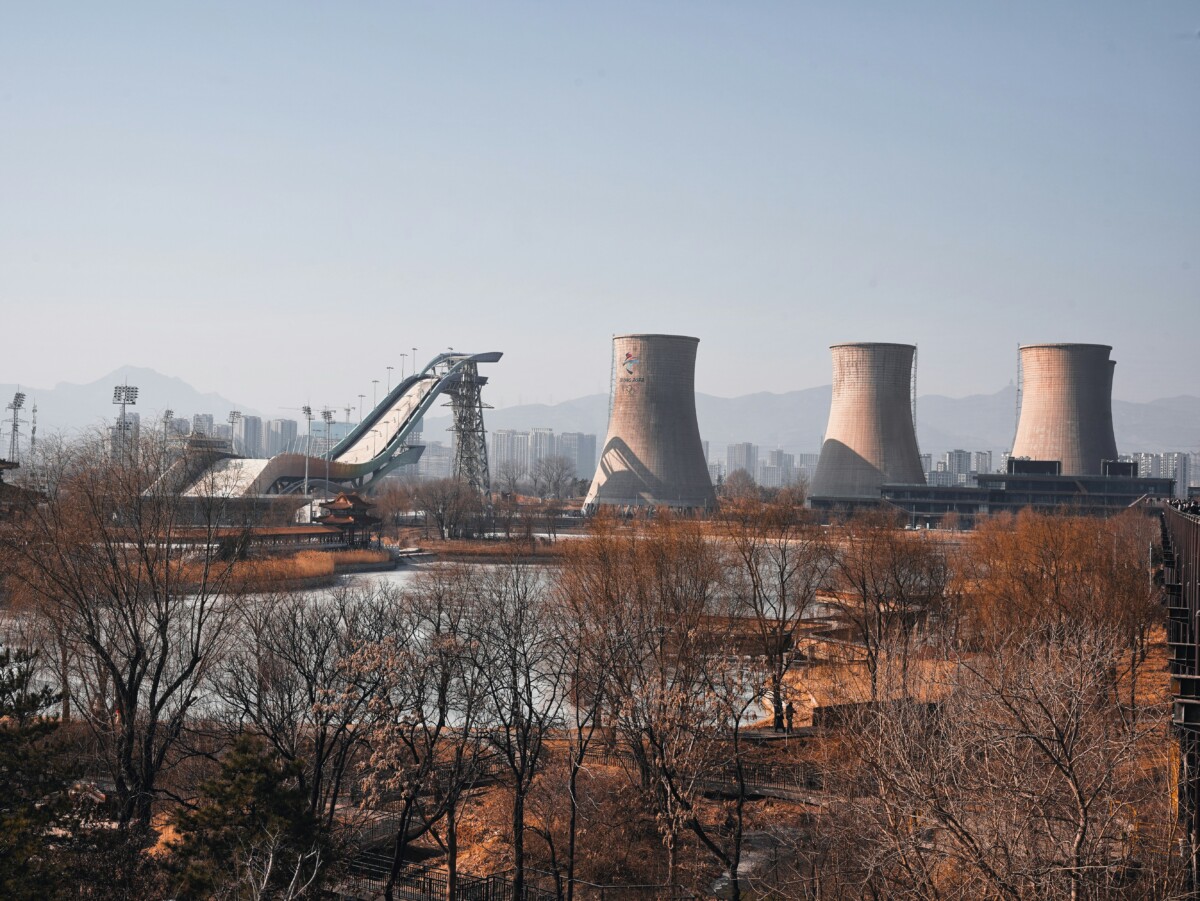
For years, the world saw China as the land of smog and coal. But while Western countries argued over targets, China built the world’s largest renewable infrastructure. It now leads in solar, wind, and electric vehicles. That shift is changing the global energy map.

“China’s clean energy rise isn’t gradual. It’s explosive.”


Origin Story: From Dirty Coal to Clean Ambition

A decade ago, China’s air was choking with pollution. President Xi called it a “war on air pollution,” cutting particulate levels almost in half. The following year, he launched a plan to win what he called the technologies of the future.

“Back in 2015, China set out to win clean energy,” Gib said.

“Most of us in the West didn’t see it. We still thought of them as the dirty coal guys. But they were already working their plan.”

That long view sits at the heart of Gib’s message. While China planned decades ahead, Western companies stuck to short-term cycles. “In the U.S., the median CEO tenure is under five years,” he said. “Boards think in one-to-three-year windows. That’s the dilemma.”


Turning Point: The Power of Planning

After decades of advising Fortune 500 boards, Gib has seen how short-term thinking limits progress. His research found that companies that plan and execute over five to seven years outperform their peers by almost 50 percent.

“China proves the same logic,” he said. “They plan in decades, not in quarters. That’s what leadership looks like.”

“We’re at a fork in the road. For business, for the planet, and for our kids.”


Real-World Action: The Numbers Behind the Shift

The scale of China’s transformation is hard to grasp. It makes 80 percent of the world’s solar panels, 60 percent of wind turbines, and half of all electric vehicles. EV sales jumped from six percent to fifty percent in just four years.

“They’re racing up the S-curve while the rest of us are still building PowerPoints,” Gib said with a smile.

“It’s humbling, and it should be.”

For developing countries, this boom has a ripple effect. China’s mass production has driven prices down, making clean tech the affordable choice. “They’ve built more capacity than needed to meet the Paris targets,” Gib said. “That means others can leapfrog. They can skip the fossil era entirely.”


Conflict: The Clean Energy Paradox

Even with all this progress, China’s story has a shadow side. The country is still building new coal plants, more than six times as many as any other nation.

“It’s the missing half of the story,” Gib said.

“Air quality is better, but coal isn’t gone. They’re closing older plants, but the tension remains.”

This balance between progress and contradiction mirrors the wider sustainability struggle. Every gain carries a cost. Every victory needs more work.


Future Outlook: Lessons for the West

For Gib, the takeaway is simple. Responsibility starts with realism. The West cannot lead without thinking long-term. “Boards don’t usually tell CEOs what to do,” he said. “They lead by asking better questions.”

He hopes China’s progress will wake up Western leaders. “If we don’t change our stripes, we’ll be left in the dust,” he warned.

“Long-term thinking isn’t a luxury. It’s survival.”


Takeaway: Responsibility Through Realism

Gib stays hopeful. He believes change can come from three groups at once: leaders, families, and Gen Z. Each has power to shift how we buy, build, and behave.

“The next five years will define the future,” he said.

“Not just for business, but for our planet. It’s time to plan like we mean it.”


Closing Reflection

Gib’s message is quiet but firm. Responsibility begins with facing facts and having the courage to look beyond the next quarter. China’s clean energy story isn’t only about economics. It’s a test of how seriously we take the future.

Sponsored by...


truMRK: Communications You Can Trust


👉 Learn how truMRK helps organisations strengthen the credibility of their communications.

Want to be a guest on our show?

Contact Us.

The Responsible Edge Podcast
Queensgate House
48 Queen Street
Exeter
Devon
EX4 3SR

Recognition.

Join 2,500+ professionals.

Exploring how to build trust, lead responsibly, and grow with integrity. Get the latest episodes and exclusive insights direct to your inbox.

  • This field is for validation purposes and should be left unchanged.

© 2025. The Responsible Edge Podcast. All rights reserved.
The Responsible Edge Podcast® is a registered trademark.

Sponsored by truMRK

© 2025. The Responsible Edge Podcast
Building Bridges or Holding the Line? Assheton Carter on the Realities of Leading Responsibly

Episode 120 | 12.8.2025

Building Bridges or Holding the Line? Assheton Carter on the Realities of Leading Responsibly

When Assheton Carter left London’s high-octane financial world in his late twenties to pursue a PhD in responsible mining, he wasn’t chasing an idealistic dream. He was looking for the hardest problem he could find — the sector most maligned, least trusted, and most entangled in global politics and environmental harm. His logic was simple: solve mining, and everything else would be easier.

Listen to the full podcast episode on YouTube, Spotify, and Apple Podcasts.

Decades later, as founder of TDI Sustainability and The Impact Facility, Assheton still sees leadership through a pragmatic lens.

“You can’t save the angels,” he says.

Real change comes not from working only with ethical darlings like Patagonia, but from engaging with the difficult, the controversial, and the imperfect — coal miners, commodity traders, multinationals operating in fragile states.


Why dialogue isn’t always the answer

The corporate sustainability playbook often extols “engaging with critics” as the gold standard. But Assheton cautions against seeing it as a universal law. In some crises, silence can be the most strategic move. He cites cases where companies facing serious allegations saw the scandal evaporate without public engagement — while others, who entered prolonged dialogue, simply kept the controversy alive.

Instead, his approach is forensic:

  • Assess the power of the claimant (Who’s making the accusation?)

  • Evaluate legitimacy (Is it true?)

  • Gauge urgency (Is the problem imminent or distant?)

Only when the stakes are clear should companies decide whether to engage, go silent, or radically change course.


Alignment, not altruism

At the heart of Assheton’s philosophy is a blunt truth: businesses are designed to make profit, not to act as “development agencies.” Expecting them to operate against their core interest is naïve — the task is to align corporate survival with societal needs.

That alignment, he argues, is achieved through regulation, access to capital, and market signals. Without clear governance, even the most willing companies will struggle to act.

“We need leaders bold enough to set the rules — and companies will respond,” he insists.


Why governance is the real battleground

Asked for his magic-wand wish for the business world, Assheton’s answer is swift: stronger governance. In an era where AI, climate change, and resource scarcity pose existential threats, leaving action to corporate goodwill is a risk too great.

His second wish? Greater employee ownership and participation. Companies that are closer to their communities, he believes, will naturally be more attuned to what society needs.

It’s a worldview rooted in systems thinking: change the underlying governance and participation structures, and the rest will follow. Standards and metrics — the default tools of corporate responsibility — are, in his words, “the weakest levers” for change.


Leading responsibly in an imperfect world

The Responsible Edge asks: Is it really possible to lead responsibly?

Assheton’s answer is cautious but hopeful. Yes — but only if we accept the world as it is, not as we wish it to be. That means working with the imperfect, recognising limits, and relentlessly seeking alignment between profit and progress.

Because in his experience, lasting change comes not from purity, but from the hard, often messy work of building bridges — and knowing exactly when to hold the line.

Sponsored by...


truMRK: Communications You Can Trust


👉 Learn how truMRK helps organisations strengthen the credibility of their communications.

Want to be a guest on our show?

Contact Us.

The Responsible Edge Podcast
Queensgate House
48 Queen Street
Exeter
Devon
EX4 3SR

Recognition.

Join 2,500+ professionals.

Exploring how to build trust, lead responsibly, and grow with integrity. Get the latest episodes and exclusive insights direct to your inbox.

  • This field is for validation purposes and should be left unchanged.

© 2025. The Responsible Edge Podcast. All rights reserved.
The Responsible Edge Podcast® is a registered trademark.

Sponsored by truMRK

© 2025. The Responsible Edge Podcast
Power, Property and Possibility: Anna Clare Harper on Capital, Confidence and Change

Episode 116 | 24.7.2025

Power, Property and Possibility: Anna Clare Harper on Capital, Confidence and Change

When it comes to responsible leadership, Anna Clare Harper isn’t interested in vague promises or poster slogans. She’s building structures—financial, technological and human—that hold.

Listen to the full podcast episode on YouTube, Spotify, and Apple Podcasts.

As co-founder of Green Resi, a platform unlocking institutional capital to retrofit underperforming homes, Anna’s mission is startlingly precise: “To bring ten thousand vacant and underperforming homes back into use by 2030.”

But scratch the surface, and the deeper aim becomes clear.

“Inequality of opportunity is the thing I care most about,” she says.

“For me, that’s about homes—and who gets to lead in delivering them.”


Why Inclusion Doesn’t Start with Capability

The prevailing narrative in tech and construction is that AI can “level the playing field” for women. But Anna’s take is refreshingly sceptical: “The real barriers aren’t capability,” she explains. “They’re structural.”

In her view, three deficits hold women back: access to influential sponsors, control over capital, and traditional markers of confidence.

“We reward a very narrow idea of leadership—typically alpha, typically male. And then wonder why women drop out of the pipeline.”

This isn’t a diversity plea. It’s a business critique. “Only 2% of real estate funds are managed by women,” she says. “That’s not just unfair—it’s inefficient. There’s clear data showing that diverse teams make better, more risk-aware decisions.”


The Power of Sponsorship (and the Pain of Its Absence)

Anna draws a crucial distinction between mentorship and sponsorship. Mentorship offers advice. Sponsorship opens doors. And the latter, she argues, is still vanishingly rare for women in property and finance.

“The most important predictor of career success isn’t performance. It’s having someone who advocates for you when you’re not in the room,” she says.

“And that’s often where women are missing out.”

Embedding sponsorship as a core responsibility of leadership, she argues, would shift not just who leads, but how.

“We need to reward people not just for individual performance, but for cultivating the next generation.”


AI Isn’t a Silver Bullet—But It Might Be a Lever

Despite her caution around tech hype, Anna sees real potential for AI to reshape housing investment. Green Resi uses software to rapidly assess upgrade costs and filter investment opportunities—tasks that would overwhelm human analysts.

“It’s about reliability,” she says.

“Institutional investors won’t back a £300,000 retrofit unless they trust the process that got them there. But aggregate that to £50 million or more, and now they’re interested.”

Still, she warns against overestimating tech’s role in inclusion. “AI won’t fix capital gaps or culture. But it can remove excuses.”


What It Really Takes to Lead Responsibly

Anna’s leadership isn’t loud or linear. It’s iterative, reflective—and deeply commercial. “People change when there’s pain,” she says bluntly.

“When they see competitors outperforming them, they start to care about inclusion.”

She’s clear that responsible leadership must be commercially savvy. “You need the moral case. But you really need the business case,” she insists. “That’s when things start to move.”

In a sector fixated on the new, Anna is betting on the overlooked: vacant homes, underrepresented talent, underestimated leaders. And she’s building the systems to bring them all into the fold.

Sponsored by...


truMRK: Communications You Can Trust


👉 Learn how truMRK helps organisations strengthen the credibility of their communications.

Want to be a guest on our show?

Contact Us.

The Responsible Edge Podcast
Queensgate House
48 Queen Street
Exeter
Devon
EX4 3SR

Recognition.

Join 2,500+ professionals.

Exploring how to build trust, lead responsibly, and grow with integrity. Get the latest episodes and exclusive insights direct to your inbox.

  • This field is for validation purposes and should be left unchanged.

© 2025. The Responsible Edge Podcast. All rights reserved.
The Responsible Edge Podcast® is a registered trademark.

Sponsored by truMRK

© 2025. The Responsible Edge Podcast

The Air We Breathe: Business’s Most Overlooked Health Crisis

Episode 111 | 7.7.2025

The Air We Breathe: Business’s Most Overlooked Health Crisis

Most of us don’t give much thought to the air around us — at least not until we’re stuck behind a bus, coughing our way down a polluted street, or reading yet another headline about smog-filled cities. But for Louise Thomas, the air we breathe has become a very personal — and professional — mission.

Listen to the full podcast episode on YouTube, Spotify, and Apple Podcasts.

After more than two decades working in government, from the halls of Whitehall to the frontlines of international development, Louise made what some might call an unexpected leap. She co-founded Air Aware Labs, a start-up that’s making air pollution personal — literally.

“We’re trying to reduce the huge health burden of air pollution,” explains Louise.

“The World Health Organization estimates around eight million deaths every year are linked to it. Yet there’s so little out there that helps people actually do something to protect themselves.”

It’s not just about knowing there’s pollution — it’s about giving people the tools to avoid it. Air Aware’s technology offers real-time, hyperlocal insights into air quality, so you can change your running route, adjust your commute, or just understand what you’re being exposed to each day.

But Louise’s message isn’t only for individuals. It’s for businesses too — and she’s not afraid to say that many are missing a trick.


Why This Matters for Business

Air pollution isn’t just an environmental issue. It’s a people issue. And for businesses, that means it’s also a productivity, wellbeing, and reputation issue.

“Think about your employees,” says Louise.

“If they’re commuting through polluted areas, working in spaces with poor air quality — it affects their health, their performance, even their decision to stay with your company.”

Recent research backs her up. A striking 92% of professionals at a recent mobility conference said they don’t believe employers are doing enough on air pollution. That’s not just a criticism — it’s a huge opportunity for forward-thinking organisations to step up.

“Companies already talk a lot about carbon footprints,” Louise points out.

“But how many are looking at their own nitrogen dioxide emissions, or at the health impacts of where their offices and sites are located?”


A Personal Story Behind the Tech

Louise’s path to air quality innovation wasn’t a straight line. It started with a maths degree, a passion for social justice, and a curiosity that led her from Colombia’s grassroots women’s groups to senior government roles shaping international policy.

For years, she admits, she parked her love of data — it didn’t seem there was an obvious way to connect it to the causes she cared about. But with Air Aware Labs, that’s come full circle.

“It feels like it’s all finally come together,” she reflects.

“We’re using data and tech, but for something so fundamentally human — our health, our families, the cities we live in.”


Making the Invisible Visible

One of the biggest challenges with air pollution, Louise says, is that you often can’t see it. Unlike floods or heatwaves, its impact is quiet — but deadly.

Yet the statistics are hard to ignore. Air pollution is now considered the second biggest threat to health, just behind high blood pressure. And it’s not just outdoor air — indoor spaces can be just as problematic.

The good news? Tackling it often goes hand in hand with climate action and building more liveable, green urban spaces.

“I live in the city, I love it,” says Louise.

“But I want to be confident that my choice to live here isn’t compromising my health — or my kids’ health.”


A Wake-Up Call for Employers

For businesses, Louise believes this is about more than compliance. It’s a chance to show leadership — to genuinely improve employee wellbeing and to turn an overlooked health crisis into a catalyst for positive change.

“This is where sustainability meets human impact,” she says.

“It’s not just about emissions targets. It’s about asthma, heart health, quality of life.”

Her advice? Start small. Measure the problem. Look at commuting patterns. Explore how tools like Air Aware’s app can support staff. And most importantly, talk about it — make air quality part of the wellbeing conversation, not just a side note.

Because whether we notice it or not, the air we breathe is shaping our health, our cities, and our futures. It’s time more of us — especially in business — started paying attention.

Sponsored by...


truMRK: Communications You Can Trust


👉 Learn how truMRK helps organisations strengthen the credibility of their communications.

Want to be a guest on our show?

Contact Us.

The Responsible Edge Podcast
Queensgate House
48 Queen Street
Exeter
Devon
EX4 3SR

Recognition.

Join 2,500+ professionals.

Exploring how to build trust, lead responsibly, and grow with integrity. Get the latest episodes and exclusive insights direct to your inbox.

  • This field is for validation purposes and should be left unchanged.

© 2025. The Responsible Edge Podcast. All rights reserved.
The Responsible Edge Podcast® is a registered trademark.

Sponsored by truMRK

© 2025. The Responsible Edge Podcast

The Gender Investment Gap Is Costing Us Climate Solutions

Episode 100 | 29.5.2025

The Gender Investment Gap Is Costing Us Climate Solutions

Despite the rhetoric around data-driven investing, there’s one figure the venture capital world keeps conveniently ignoring: female founders consistently outperform their male counterparts—and yet receive just 2% of available funding. For Carmel Rafaeli, investor and serial entrepreneur, this isn’t just a moral failure. It’s an economic one.

Listen to the full podcast episode on YouTube, Spotify, and Apple Podcasts.

“I invest in women building in climate,” Carmel told us on The Responsible Edge. “Not because it’s charity, but because it’s good business.”

Carmel’s journey is anything but linear. From journalist to fashion executive to founder of a hospitality tech platform, her entrepreneurial drive took many forms—until COVID forced a hard reset. Sitting at her kitchen table during lockdown, she had a moment of realisation: “Whatever I do now, it cannot be about making something for someone just to buy. It has to be about impact.”

That pivot led her to climate tech, angel investing, and ultimately, founding The Table—a non-commercial community of over 225 investors with more than £10 billion AUM, all focused on backing women-led climate ventures. Since launch, 32 deals have been shared, 10 closed, and new models of capital allocation are taking shape.


🛑 The Myth of the Pipeline Problem

Investors often claim there just aren’t enough women building VC-backable climate solutions. Carmel disagrees.

“That’s not true,” she says plainly. “Women are building incredible businesses. They just don’t have the resources—and they’re building differently because of it.”

Women are present in the early stages. Cohorts at venture builders like Zinc or Carbon Thirteen are often 40–60% female. But when it comes to pre-seed or seed funding, the numbers plummet. The result? A false feedback loop that implies lack of ambition rather than lack of access.


🔁 Same Bias, New Money

A recent Trellis article suggested that more corporate capital in climate tech might change the gender equation. But Carmel isn’t convinced.

“Corporates don’t treat women differently. The same biases are embedded—just with a new logo.”

Her frustration is rooted in data. Women-led startups deliver higher ROI, reach unicorn status faster, and maintain stronger fundamentals. Yet when pitching, men are asked about their vision. Women are asked about their risks.


🔧 Fixing the System, Not the Women

So what needs to change? For Carmel, it’s not about training women to pitch better. It’s about rebuilding the structures they’re pitching into.

Here’s what she recommends:

  • More catalytic capital: Funds like The Table Foundation (launching soon) offer recoverable grants to match investments, reducing the perceived risk.

  • Visible, shared deal flow: The Table invites all investors—angels, syndicates, funds—to co-invest and share live rounds.

  • Data transparency: Asking every member to report the gender and diversity make-up of their portfolio and team is one small but powerful act of accountability.

“We’re not subsidising climate tech. We’re subsidising men. It’s time to change the ROI conversation.”


🎯 Why This Matters for Climate Tech

Carmel’s call-to-arms isn’t just about equity—it’s about effectiveness. Climate tech doesn’t have the luxury of letting good ideas die on the sidelines because of bias.

“We need all the innovation we can get,” she says. “We can’t afford to run the same VC playbook and just hope for the best.”

When you fund a narrow slice of society, you get narrow solutions. Mixed teams, diverse founders, and new ideas aren’t just morally right—they’re our best chance at solving the climate crisis.


✊ Final Word

When asked what one thing she’d change about the commercial world with a magic wand, Carmel didn’t hesitate:

“The bias against women.”

She’s not waiting for a wand, though. She’s building new structures. Sharing better data. Opening locked doors. And with every climate-positive, woman-led company that gets funded, she’s proving that impact and returns aren’t trade-offs—they’re allies.

Sponsored by...


truMRK: Communications You Can Trust


👉 Learn how truMRK helps organisations strengthen the credibility of their communications.

Want to be a guest on our show?

Contact Us.

The Responsible Edge Podcast

Queensgate House
48 Queen Street
Exeter
Devon
EX4 3SR

Recognition.

Join 2,500+ professionals.

Exploring how to build trust, lead responsibly, and grow with integrity. Get the latest episodes and exclusive insights direct to your inbox.

  • This field is for validation purposes and should be left unchanged.

© 2025. The Responsible Edge Podcast. All rights reserved.
The Responsible Edge Podcast® is a registered trademark.

Sponsored by truMRK

© 2025. The Responsible Edge Podcast