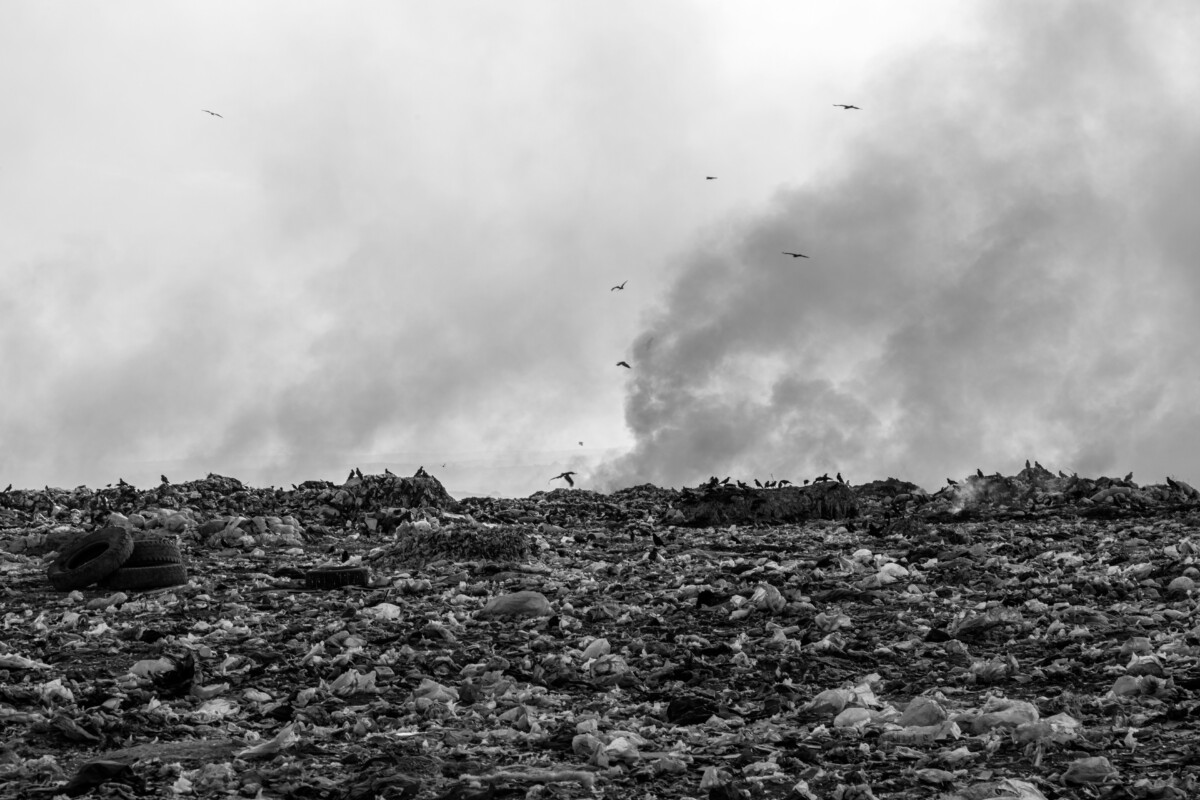
Why Only 1% of Building Materials Are Reused

Episode 148 | 23.2.2026

Why Only 1% of Building Materials Are Reused

Tina Snedker Kristensen on the labour, documentation and market failures slowing circular construction.

Listen to the full podcast episode on YouTube, Spotify, and Apple Podcasts.

An Industry Built on Disposal

The built environment accounts for more than 40 percent of global energy-related COโ‚‚ emissions and over one third of global waste. Yet only around one percent of materials are reused.

The figures expose a structural contradiction. Construction depends on extraction, manufacture and demolition.

Value is embedded in materials, then written off at end of life.

A recent McKinsey analysis argues that circular construction could unlock up to $360 billion in economic value by 2050 and generate 45 million jobs. The opportunity appears material. Adoption remains marginal.

The constraint is not intent. It is system design.

ย 

From Reduction to Regeneration

Fifteen years ago, Tina Snedker Kristensen encountered the Cradle to Cradle framework. At the time, sustainability discourse centred on minimisation.

โ€œIt was all about reducing, reducing consumption, reducing emission,โ€ she says. โ€œLiving in a capitalistic world, you just think that’s just not going to happen.โ€

Cradle to Cradle proposed a different logic. Products should be designed either for biological return or technical reuse. Waste is a design error, not an inevitability.

Tina was then part of the leadership team at Troldtekt A/S, a Danish manufacturer of acoustic panels. Over 27 years, she helped reposition the company from domestic supplier to international brand, embedding certification into corporate strategy.

โ€œItโ€™s not just a stamp that you get,โ€ she says. โ€œYou have to work continuously and improve on all five criteria.โ€

Third-party certification altered internal priorities. Sustainability shifted from communication to operational discipline. Awards followed. Market positioning strengthened. Documentation became a strategic asset.

ย 

What Circularity Looks Like in Practice

Today, Tina leads BuildDirection, advising companies across Denmark, Germany and Northern Europe on ESG strategy, documentation, branding and international positioning .

Her assessment of circularity in construction is direct. Reuse is technically possible. It is economically and operationally difficult.

She describes inspecting thousands of square metres of acoustic panels installed decades ago. They had been fixed with nails rather than screws. Disassembly damaged the product. Recovery required time and manual handling.

โ€œIt would be a bad day at work to dismantle those panels.โ€

Demolition companies operate under tight timelines. Manual sorting increases cost. Technical performance must be reverified. Ownership of materials can be unclear. Manufacturers may need to buy back used products to guarantee quality.

Each intervention adds friction.

Virgin materials, by contrast, benefit from industrial scale and automation. Reuse rarely does. The price differential reflects labour, not intent.

ย 

When Demand Outpaces Infrastructure

In Denmark, building regulation now allows reused materials to count as zero COโ‚‚ in life-cycle assessments. Carbon thresholds for new buildings are tightening. Demand for certified reused materials is rising.

The regulatory signal is clear. Supply chains are less prepared.

Buyers often expect reused materials to be cheaper, reflecting second-hand consumer markets. In construction, that assumption collides with cost reality. Labour, certification and recertification increase expense.

Some niche examples demonstrate demand elasticity. Reclaimed bricks, valued for aesthetics, can command premium prices. Most materials do not benefit from architectural scarcity.

Circularity competes against optimised global production systems designed for linear throughput.

ย 

The Documentation Gap

The most persistent barrier lies in existing building stock.

Most companies retain documentation for limited periods. Beyond that, material composition becomes uncertain. Toxicity, durability and technical performance are often unknown.

โ€œIf I had a magic wand,โ€ Tina says, โ€œI would hope that it could sort of scan a building and define which kind of materials are there, what kind of quality do they have.โ€

Without documentation, reuse carries liability. Risk pricing suppresses uptake.

New buildings can embed digital material passports and design for disassembly. Legacy buildings cannot retroactively provide transparency. Circularity depends on visibility into assets already constructed.

ย 

Industrialising Reuse

The economic case for circular construction is plausible. The operational model remains immature.

Automation, digitalisation and artificial intelligence may reduce manual inspection and sorting. But industrialising reuse requires capital investment, new logistics models and clearer ownership frameworks.

Circularity does not sit outside capitalism. It must function within it.

Until documentation improves, labour intensity declines and regulation consistently rewards reuse, the system will default to what it understands: extract, build, demolish.

One percent reflects alignment between economics and infrastructure.

The remaining ninety-nine percent reflects what has yet to change.

Sponsored by...

ย 

truMRK: Sustainability Communications You Can Trust


๐Ÿ‘‰ Learn how truMRK helps organisations strengthen the credibility of their communications.

Want to be a guest on our show?

Contact Us.

The Responsible Edge Podcast
Queensgate House
48 Queen Street
Exeter
Devon
EX4 3SR

Join 2,500+ professionals.

Exploring how to build trust, lead responsibly, and grow with integrity. Get the latest episodes and exclusive insights direct to your inbox.

  • This field is for validation purposes and should be left unchanged.

ยฉ 2026. The Responsible Edge Podcast. All rights reserved. The Responsible Edge Podcastยฎ is a registered trademark.

Sponsored by truMRK

ยฉ 2026. The Responsible Edge Podcast

Why Compostable Packaging Isnโ€™t the Answer

Episode 147 | 16.2.2026

Why Compostable Packaging Isnโ€™t the Answer

Clare Brass of Moree argues that single-use alternatives preserve the system they claim to reform.

Listen to the full podcast episode on YouTube, Spotify, and Apple Podcasts.

The Reassurance Economy

Packaging has become a proxy for responsibility. Plastic is replaced with compostable film. Labels promise biodegradability. Procurement teams log progress.

Yet the underlying system remains intact. Single-use packaging continues to move in one direction: from production to disposal.

In conversation on The Responsible Edge, Clare Brass challenged the premise beneath much of this transition. The issue is not simply the material. It is the model.

โ€œVery often if you switch one material for another material, youโ€™re just putting the problem somewhere else.โ€

Compostables offer reassurance. They allow businesses to signal change while preserving throughput. The transaction remains single use. The waste stream remains active.

ย 

Formation in Landfill

Clare is Co-founder and Chief Product Officer at Moree, a London-based reusable packaging start-up focused on the coffee sector . She describes herself as a โ€œproduct design engineer and waste haterโ€ .

Her early career followed a conventional path. She ran a thriving product design studio in Milan for fourteen years . Growth meant more products in the market.

โ€œThe more I grew as a designer, the more landfill I generated.โ€

That realisation altered her direction. In 2002 she began asking whether she could โ€œbe a designer without designing stuffโ€ . A Masters in Creative Entrepreneurship at Politecnico di Milano reset her professional trajectory .

She went on to lead sustainability at the Design Council and later founded SustainRCA at the Royal College of Art . The focus shifted from objects to systems.

ย 

Recycling as False Resolution

The compostable debate, for Claire, is inseparable from recycling. Both sit downstream of the core issue: volume.

โ€œBiodegradableโ€ฆ it sounds all kind of nature friendly and cuddly.โ€

In practice, compostables require specific infrastructure. Most households do not have it. Consumers cannot easily distinguish between compostable and recyclable plastics. When compostables enter recycling streams, contamination follows. Entire batches can be diverted to landfill.

Claire went further.

โ€œRecycling is probably the worst thing you can do in a circular economy.โ€

The argument is structural. Mixed plastics degrade in quality. Recycled material rarely returns to its original use. Value diminishes. Meanwhile, production continues to rise.

โ€œThere is no way that recycling is ever going to keep pace with the rate at which we are increasingly using single-use packaging.โ€

Disposal systems are asked to absorb growth. They were never designed for it.

ย 

Designing Reuse for One Sector

Rather than argue abstractly, Claire has narrowed the problem. Moree focuses on B2B coffee distribution .

Roasteries typically ship coffee in one-kilogram single-use bags. A cafรฉ ordering fifty kilograms per week receives fifty units. Most are discarded within days.

Moree replaces those with reusable five-kilogram vessels. The packaging is engineered specifically for coffee. It is food safe. It is designed so grounds cannot become trapped. It is flexible rather than rigid, reducing the cost of return logistics.

The system includes tracking software.

โ€œYou can see how many bags you own altogether, how many youโ€™ve got currently in stock, and which clients have got all the rest and how long theyโ€™ve had them.โ€

Visibility reduces risk. Clients know where their packaging sits. They can manage returns before shortages occur.

The commercial case is explicit. Over five years, most clients save around fifty percent of packaging costs . Break-even typically occurs within the first year.

The friction lies at the beginning. Upfront capital. Operational change. Customer participation.

ย 

The Incumbent Constraint

Large packaging companies optimise material efficiency annually. They reduce thickness. They increase recycled content. They improve performance margins.

Their revenue, however, depends on selling units.

โ€œIf you ask them to say, okay, weโ€™re not going to do that anymoreโ€ฆ I think they would put themselves out of business.โ€

Transformation at scale threatens existing employment structures, infrastructure, and revenue models. The incentives are misaligned.

Claire suggests experimentation at the margins. Established firms can test alternative models without dismantling their core operations. Start-ups operate outside legacy constraints.

โ€œTheyโ€™re like little cogs and theyโ€™re working together.โ€

Most will fail. Some will scale. Structural change accumulates gradually.

ย 

Turning Off the Tap

Claire returns repeatedly to throughput.

โ€œWe have to turn off the tap.โ€

Recycling is the teaspoon in an overflowing bath. Compostables adjust the material of the bathwater. Neither addresses flow.

Reuse is operationally harder. It requires coordination between supplier and customer. It requires tracking. It requires agreement. It introduces friction into what was previously seamless disposal.

Compostables allow continuity. Reuse demands redesign.

For now, Claireโ€™s focus is contained. Demonstrate that reuse works in one sector. Make it commercially viable. Reduce cost and waste simultaneously.

If proof accumulates, replication becomes easier.

The reassurance economy can persist only while the tap remains open.

Sponsored by...

ย 

truMRK: Sustainability Communications You Can Trust


๐Ÿ‘‰ Learn how truMRK helps organisations strengthen the credibility of their communications.

Want to be a guest on our show?

Contact Us.

The Responsible Edge Podcast
Queensgate House
48 Queen Street
Exeter
Devon
EX4 3SR

Join 2,500+ professionals.

Exploring how to build trust, lead responsibly, and grow with integrity. Get the latest episodes and exclusive insights direct to your inbox.

  • This field is for validation purposes and should be left unchanged.

ยฉ 2026. The Responsible Edge Podcast. All rights reserved. The Responsible Edge Podcastยฎ is a registered trademark.

Sponsored by truMRK

ยฉ 2026. The Responsible Edge Podcast
Boards Say Theyโ€™re Prepared for a Cyber Attack. The Evidence Suggests Otherwise

Episode 146 | 11.2.2026

Boards Say Theyโ€™re Prepared for a Cyber Attack. The Evidence Suggests Otherwise

Joseph Hubback on executive complacency, asset-based protection, and why resilience must be agreed before crisis strikes.

Listen to the full podcast episode on YouTube, Spotify, and Apple Podcasts.

Confidence in the Face of Weekly Attacks

Cyber attacks are no longer exceptional events. They are operational realities. Ransomware halts systems. Data breaches expose customers. Supply chains stall.

Yet most boards remain confident.

Joseph Hubback, Advisory Partner and CISO at Elixirr, reviewed research across roughly 1,000 companies. Ninety-four percent of boards said they felt comfortable with their security posture.

The statistic sits uneasily alongside the frequency of disruption.

โ€œWhen the attack happens, the CISO will do all they can,โ€ Joseph says, โ€œbut itโ€™s the CEO and the executives that will be in the limelight.โ€

Cyber security, in that moment, becomes executive.

The issue is not whether frameworks exist. It is whether leadership understands what is truly at risk.

ย 

From Industrial Engineering to Cyber Governance

Joseph did not begin in cyber.

He started as an engineer, building chemical factories at ICI Plc. He later moved into commercial and strategic roles before becoming a partner at McKinsey & Company.

Security entered his career through client work in the late 2000s. It remained.

Today, at Elixirr, he advises clients globally while also serving internally as CISO. The combination keeps him close to both governance questions and operational exposure.

ย 

The Conversation Has Not Moved On

Executives often repeat that cyber security is no longer just a technical issue. It is a people issue. A leadership issue.

Joseph questions the novelty of that claim.

โ€œFifteen years ago we were talking about it as a people issue as much as anything else.โ€

In his view, the language has evolved without changing behaviour. Compliance frameworks have expanded. Certifications are widely pursued. Audit outcomes provide reassurance.

But attackers do not target frameworks. They target value.

The repetition of the insight has not produced structural change.

ย 

From Compliance to Asset Protection

Joseph believes education efforts are often misdirected.

Organisations train employees to recognise phishing emails and suspicious links. Attack techniques evolve constantly. The training ages quickly.

He proposes a simpler foundation: define the assets.

In the physical world, people instinctively protect wallets and keys. In the digital world, identity, data, intellectual property and operational systems carry equivalent weight. Yet many leadership teams have not clearly defined what must be protected first.

โ€œIf you explain to people what it is that is now important for them to protect,โ€ Joseph says, behaviour changes.

At board level, this means identifying the value streams that generate revenue. Which digital systems enable trading. Which processes, if interrupted, would damage trust or liquidity.

In one client example, business leaders and security teams mapped these value streams together. The dynamic shifted. Security ceased to be viewed as โ€œthe department that says noโ€ and became aligned with protecting continuity.

The conversation moved from standards to survival.

ย 

Comfort and Exposure

The 94 percent confidence figure remains central.

Boards often equate completed controls with resilience. Certifications and dashboards provide comfort.

Yet when an attack occurs, decisions escalate immediately.

Do we shut systems down.
Who do we inform first.
How do we communicate with customers.
How do we coordinate employees across regions.

โ€œIt becomes a collective exercise,โ€ Joseph says. โ€œWhen an attack happens, youโ€™ll all be involved.โ€

The exposure is visible. Accountability shifts to the executive team.

Confidence, in that moment, is tested.

ย 

From Collaboration to Commitment

Collaboration is frequently cited as the solution.

Industry forums convene. Information is shared. Best practice circulates.

Joseph supports information exchange. He questions whether it goes far enough.

He points to the response following the NotPetya attack on DLA Piper. Clients and competitors provided practical support. Capacity was shared. Documentation was restored. Recovery depended on those relationships.

That cooperation was operational.

Joseph argues that organisations should define such arrangements in advance. Who provides temporary infrastructure. Who safeguards data copies. How supply chains will respond if one party is incapacitated.

Without defined commitments, resilience relies on goodwill.

The distinction is subtle but material. Discussion is not the same as agreement.

ย 

Urgency After the Breach

Joseph has observed a pattern.

Following a significant attack, executive attention intensifies. Investment rises. Governance improves. The urgency lasts three to four years.

Then it fades.

Digital transformation, however, continues to expand exposure. Cloud infrastructure grows. Systems integrate further. Ecosystems interconnect.

Risk compounds faster than memory.

Cyber security, Joseph argues, is not primarily a technology problem. It is a governance question.

โ€œWhen the attack happens,โ€ he says, โ€œitโ€™s the CEO and the executives that will be in the limelight.โ€

Preparation is quiet. The breach is public.

The distance between those two moments is leadership.

Sponsored by...

ย 

truMRK: Sustainability Communications You Can Trust


๐Ÿ‘‰ Learn how truMRK helps organisations strengthen the credibility of their communications.

Want to be a guest on our show?

Contact Us.

The Responsible Edge Podcast
Queensgate House
48 Queen Street
Exeter
Devon
EX4 3SR

Join 2,500+ professionals.

Exploring how to build trust, lead responsibly, and grow with integrity. Get the latest episodes and exclusive insights direct to your inbox.

  • This field is for validation purposes and should be left unchanged.

ยฉ 2026. The Responsible Edge Podcast. All rights reserved. The Responsible Edge Podcastยฎ is a registered trademark.

Sponsored by truMRK

ยฉ 2026. The Responsible Edge Podcast

When Behaviour Change Meets the Limits of Ethical Consultancy

Episode 145 | 2.2.2026

When Behaviour Change Meets the Limits of Ethical Consultancy

BH&P founder Becky Holland on working inside flawed systems, and why walking away is not always the responsible choice.

Listen to the full podcast episode on YouTube, Spotify, and Apple Podcasts.

โ€‹Scene and Context

In recent years, agencies have found themselves under scrutiny not just for what they make, but for who they make it for. Campaigns are dissected for greenwashing. Consultancies are questioned for their role in enabling harm. Neutrality has become a fragile defence.

At the heart of this scrutiny sits a difficult question. Should agencies be held accountable for the actions of their clients, even when they do not control the final decisions? Or does refusing to engage simply leave flawed systems untouched?

That question framed a recent episode of The Responsible Edge, where Becky Holland, founder and CEO of BH&P, spoke candidly about the ethical tension baked into values-led consultancy work.

โ€œThereโ€™s a lot of damage that can be done by good people working inside bad systems,โ€ she said.

ย 

Formation Inside the System

Becky has spent her entire career in marketing and advertising. She began in large agencies in the 1990s, working on major brands during a period when long hours and shareholder pressure were the norm. Purpose-led work existed, but usually at the margins.

โ€œThe myth was you had to have a retail client, a car client, a finance client, something sexy, and a charity client,โ€ she recalled.

โ€œThe charity client didnโ€™t make any money, but everyone wanted to work on it because it made them feel good.โ€

The imbalance was hard to ignore. Most of the work, she said, existed to keep shareholders happy, whether client-side or agency-side. โ€œYouโ€™re working ten, twelve hour days. You spend a lot of time at work. Do you really want it to be that?โ€

That question stayed with her as she moved between agency, consultancy, and client-side roles, eventually leaving large agencies altogether.

ย 

A Shift in Purpose

The turning point was not a single moment, but an accumulation of unease. Becky described looking back on campaigns where creative brilliance was used to sell things that โ€œdonโ€™t really do any good in the worldโ€.

At the same time, she saw organisations tackling complex social and environmental problems struggling to change behaviour or communicate effectively.

โ€œWe can use that creativity. We can use that strategic rigour,โ€ she said. โ€œAnd we can use it differently.โ€

BH&P was founded in 2016 around that idea. The agency positioned itself as a behaviour change consultancy working upstream, focused on insight and strategy as much as creative output. The aim was not awareness for its own sake, but measurable change in what people think, feel, and do.

ย 

The Work and the Grey Areas

Today, BH&P works primarily in sectors where impact is complicated rather than cosmetic. Energy, finance, and technology dominate the client list. Becky described these as industries where โ€œchoosing positive impact is exactly that. It is a choice.โ€

One example discussed was work tackling energy meter tampering and energy crime. Funded by the energy sector and delivered through the Retail Energy Code, the programme enables anonymous reporting, makes dangerous properties safe, and directs vulnerable households to support.

On the surface, such work could be dismissed as reputation management. Becky was direct about that criticism.

โ€œYou could argue itโ€™s greenwashing,โ€ she said. โ€œIt isnโ€™t. It is a very specific initiative that is done to keep people safe. And it works.โ€

For her, the ethical test is not the sector alone, but the consequence of the work itself.

ย 

Interrogating the Brief

Becky was clear that most ethical failures begin long before delivery. They start with accepting a brief at face value.

โ€œThe brief will be written to look good,โ€ she said. โ€œWhat you have to do is put your critical lens on it and go, โ€˜Which means what?โ€™โ€

At BH&P, behavioural frameworks normally used with clients are applied internally. Capability, opportunity, and motivation are assessed not just for audiences, but for the organisation commissioning the work.

Is the client capable of change? Do they have the opportunity to act? Are they genuinely motivated, or simply managing reputation?

Sometimes, the answer is instinctive. โ€œYou probably know the first time you read the brief,โ€ Becky said. โ€œWe donโ€™t give gut feel enough credit in business.โ€

ย 

The Pressure to Compromise

Becky acknowledged how difficult refusal can be, particularly for smaller agencies. Ethical clarity becomes harder when livelihoods are involved.

โ€œIf youโ€™re a ten-person company and youโ€™ve got a million-pound contract on the table, and halfway through you realise this isnโ€™t good, thatโ€™s a moral dilemma,โ€ she said. โ€œYouโ€™ve got people paying their mortgages.โ€

That reality, she argued, is why rigorous upfront interrogation matters. It is also why blanket judgments about โ€œbad actorsโ€ are unhelpful.

โ€œThereโ€™s very rarely black and white,โ€ she said. โ€œSometimes there is. But not very often.โ€

ย 

Standards, Absolutes, and Unintended Consequences

The conversation turned to professional standards, particularly B Corp certification. Recent rule changes now limit how much revenue agencies can earn from fossil fuel companies.

Becky understands the intent, but worries about the effect.

โ€œIt potentially goes against the opportunity to get inside those organisations and cause good,โ€ she said.

Her concern is not about defending harmful practices, but about losing access to the places where the biggest change is needed. Ethical work, she argued, often happens inside uncomfortable systems.

ย 

Closing Reflection

Becky ended with a call for accountability that goes beyond outputs. Not just what agencies deliver, but what their work actually does.

โ€œIf every agency had to demonstrate not just what theyโ€™ve delivered, but what impact itโ€™s had on society, the environment, governance,โ€ she said, โ€œit would change the incentives.โ€

It is not a comforting vision. It offers no moral purity and no easy refusals. But it reflects the reality Becky has spent her career navigating.

Change, she believes, rarely comes from standing outside and pointing. It comes from staying inside long enough to make responsibility unavoidable.

Sponsored by...

ย 

truMRK: Sustainability Communications You Can Trust


๐Ÿ‘‰ Learn how truMRK helps organisations strengthen the credibility of their communications.

Want to be a guest on our show?

Contact Us.

The Responsible Edge Podcast
Queensgate House
48 Queen Street
Exeter
Devon
EX4 3SR

Join 2,500+ professionals.

Exploring how to build trust, lead responsibly, and grow with integrity. Get the latest episodes and exclusive insights direct to your inbox.

  • This field is for validation purposes and should be left unchanged.

ยฉ 2026. The Responsible Edge Podcast. All rights reserved. The Responsible Edge Podcastยฎ is a registered trademark.

Sponsored by truMRK

ยฉ 2026. The Responsible Edge Podcast

When Leadership Mistakes Motion for Progress

Episode 144 | 26.1.2026

When Leadership Mistakes Motion for Progress

John Oโ€™Brien MBE reflects on why modern organisations struggle to stop projects, and what responsible leadership requires instead.

Listen to the full podcast episode on YouTube, Spotify, and Apple Podcasts.

โ€‹Scene and Context

Many organisations are busy without being effective. Projects multiply, initiatives overlap, and leaders spend increasing time maintaining activity rather than assessing whether it still serves a clear aim. The result is rarely failure. More often, it is a slow dilution of attention.

John describes this as a leadership problem rather than a structural one. In his view, organisations now operate in conditions that reward visibility and speed over judgment.

Quarterly cycles, constant commentary, and social media noise all push leaders toward doing more, not deciding better.

What suffers is focus. Projects continue not because they work, but because stopping them feels harder than starting something new.

ย 

Early discipline and formation

Johnโ€™s understanding of leadership did not come from business school. He grew up in rural Shropshire, entered work through retail banking, and then chose to become an infantry officer. For ten years, he served in the army, operating in situations where decisions had immediate consequences for others.

That experience shaped his view of responsibility.

Leadership, he learned, was not about visibility or personal advancement, but about making clear decisions under pressure and being accountable for their outcomes.

Those lessons stayed with him as he moved into work at the intersection of business, government, and civil society, including a decade working with the then Prince of Wales, now King Charles III, on programmes linking business leadership to social and environmental concerns.

ย 

Accumulating experience across systems

Over the next three decades, John moved between roles that rarely sit together on a conventional career path. He led non-profit initiatives, built his own advisory business, and later became EMEA managing partner at Omnicom.

Rather than specialising in one sector, he accumulated exposure to how decisions are made across different systems. He worked with large corporations, charities, public bodies, and founders.

Over time, a pattern became clear to him. Activity was often mistaken for progress.

Organisations launched initiatives that looked responsible or innovative but sat alongside incentives that rewarded entirely different behaviour. In those moments, John became increasingly sceptical of programmes that existed at the margins rather than shaping core decisions.

ย 

Founding Anthropy

The pandemic sharpened that scepticism. Watching the strain placed on Britainโ€™s social and economic fabric, John became concerned about how leaders were thinking about recovery and long-term direction.

In response, he founded Anthropy. Anthropy was conceived not as a conference business, but as a national leadership gathering focused on Britainโ€™s long-term future. It brings together leaders from business, government, civil society, and younger generations.

The gathering takes place at the Eden Project, with sessions held inside the biomes rather than traditional conference spaces.

The environment is deliberate. It slows the pace and changes how conversations unfold.

Anthropy now involves thousands of participants, hundreds of speakers, and a significant emerging leaders programme for those aged eighteen to thirty. John describes this group as one of the most serious and hopeful aspects of the gathering.

ย 

The difficulty of stopping

John is clear that leadership failure rarely comes from backing the wrong idea. It more often comes from not knowing when to stop.

He distinguishes between three types of projects. Some succeed clearly. Some fail visibly.

The hardest are those that sit in the middle, producing just enough activity to justify their continuation without delivering meaningful results.

In his own career, John describes initiatives he allowed to fade once it became clear they would not deliver the collective impact he had hoped for. Ending them was not dramatic. It required detachment rather than urgency.

He notes that organisations routinely apply sell-by dates to products but almost never to internal initiatives. Without agreed endpoints, projects persist through habit and emotional attachment rather than relevance.

ย 

Purpose as a practical filter

For John, purpose is not a slogan or a communications device. It is a tool for decision-making.

When an organisation is clear about why it exists, decisions become simpler. Opportunities that sit outside that purpose can be declined without debate. Authority can be delegated because people understand the criteria behind decisions.

He contrasts this with organisations where purpose is displayed everywhere but shapes nothing.

In those cases, slogans coexist with incentives that reward contradictory behaviour. The result is not cynicism, but underperformance.

Employees can work without clarity. They work better with it. Purpose, when taken seriously, reduces distraction and narrows focus.

ย 

The unresolved tension

Despite progress in how organisations talk about responsibility, John remains concerned about short-termism. Quarterly reporting, constant media cycles, and performative leadership push decision-making toward immediacy rather than durability.

He believes this is as much a cultural issue as an economic one. Leaders are rewarded for speed, reaction, and visibility.

Maturity and restraint receive less attention.

Yet he remains optimistic. Through Anthropyโ€™s emerging leaders programme, John sees younger leaders already practising a slower, more deliberate form of leadership. They are less interested in performance and more concerned with consequence.

ย 

Closing reflection

Modern organisations are not short of ideas. They are short of judgment.

Responsible leadership, in Johnโ€™s view, requires fewer initiatives, clearer decisions, and the discipline to stop.

In an environment that rewards noise, responsibility may begin with restraint.

Sponsored by...

ย 

truMRK: Sustainability Communications You Can Trust


๐Ÿ‘‰ Learn how truMRK helps organisations strengthen the credibility of their communications.

Want to be a guest on our show?

Contact Us.

The Responsible Edge Podcast
Queensgate House
48 Queen Street
Exeter
Devon
EX4 3SR

Join 2,500+ professionals.

Exploring how to build trust, lead responsibly, and grow with integrity. Get the latest episodes and exclusive insights direct to your inbox.

  • This field is for validation purposes and should be left unchanged.

ยฉ 2026. The Responsible Edge Podcast. All rights reserved. The Responsible Edge Podcastยฎ is a registered trademark.

Sponsored by truMRK

ยฉ 2026. The Responsible Edge Podcast

Why AI Can Speed Up Hiring but Still Miss the Right Leader

Episode 143 | 19.1.2026

Why AI Can Speed Up Hiring but Still Miss the Right Leader

An executive search founder reflects on AI, food systems, and why human judgment still matters when leadership decisions shape the future of food.

Listen to the full podcast episode on YouTube, Spotify, and Apple Podcasts.

โ€‹Scene and Context

Executive search is under pressure.

Clients want speed, certainty, and scale. Artificial intelligence promises all three.

In leadership hiring, the stakes are higher than efficiency. Decisions shape culture, strategy, and long-term outcomes. In sectors like food and agriculture, they also shape health and environmental impact.

As AI tools move quickly into recruitment, the question is no longer whether they will be used. The question is where judgment should still sit with people.

ย 

Formation and Origins

Simon Heal did not begin his career in sustainability or food systems. He trained as a computer scientist and spent more than two decades in mainstream executive search, building leadership teams for IT, e-commerce, and fintech businesses. He describes himself as a technologist who moved into people work because he was drawn to detail, pattern, and character rather than sales.

The shift came later. About six years ago, his young son came home from school after watching a documentary on climate change. Simon recalls being asked directly what he was doing to help. The question stayed with him. He began to examine where his skills could have real effect.

โ€œWhat am I really good at?โ€ he remembers asking himself.

The answer was clear. Building teams. Finding leaders. Understanding potential.

ย 

A Turning Point Toward Food Systems

Food and agriculture stood out. Simon grew up in Cheshire, surrounded by farming. His grandfather was a farmer. The industry felt familiar and increasingly urgent. He saw a sector under strain, doing significant harm, but also entering a period of rapid innovation.

Rather than work broadly across the industry, he narrowed his focus. Simon chose to work only with companies aiming to shift outcomes, not simply improve optics. That decision led to the founding of Myco Search, a specialist executive search firm serving food tech, agri-food tech, and food health innovators.

The positioning is deliberate. Candidates know the companies are serious. Founders know the candidates are motivated by impact as well as role.

ย 

The Work He Is Doing Now

Myco Search focuses on leadership and specialist hires in emerging food technologies. Many clients are early-stage or scaling businesses. The work involves risk. Technologies are new. Track records are limited. Commercialisation is uncertain.

Heal is explicit about those realities. His approach is open book. Candidates are told early where the risks sit and what could go wrong.

Founders are asked directly about weaknesses, gaps, and pressure points.

The goal is not to remove uncertainty, but to avoid surprises.

ย 

AI, Recruitment, and the Risk of Repeating the Past

Simon is a long-time user of technology and an advocate for AI used carefully. He sees clear value in using tools to expand research capacity, reduce administrative load, and surface wider pools of candidates.

Where he draws a firm line is judgment.

AI systems learn from historical data. In leadership hiring, that means past profiles, past success, and past patterns. Simon warns that this can quietly reinforce narrow definitions of leadership and filter out potential that does not yet have a record.

โ€œAI is very good at spotting patterns,โ€ he says. โ€œIt cannot spot potential.โ€

In emerging sectors like food tech, that limitation matters. Innovation often comes from people who do not fit existing templates. Over-reliance on automated screening risks narrowing thinking at the moment it needs to widen.

Simon deliberately includes what he calls a wildcard candidate in many shortlists. Someone who does not look right on paper, but shows conviction, learning capacity, and alignment with the mission. Sometimes they are hired. Sometimes they are not. They almost always sharpen decision-making.

ย 

The Tension That Remains

Food businesses remain driven primarily by profit. Simon sees this as the central structural tension. Cheap, damaging food is rewarded. Healthier, lower-impact models struggle for scale.

If he could change one thing, he would reverse the order. Human and planetary health first. Profit second.

He is realistic about constraints. Companies must survive. Investors expect returns. But he believes leadership choices can move systems, especially when capital and talent begin to align with long-term outcomes.

ย 

Closing Reflection

AI will continue to reshape executive search. Simon does not resist that shift.

He argues instead for clarity about where tools end and responsibility begins.

In leadership hiring, judgment remains the work. The cost of getting it wrong is not just commercial. In food systems, it reaches into health, land, and trust.

Speed matters. Empathy matters more.

Sponsored by...

ย 

truMRK: Sustainability Communications You Can Trust


๐Ÿ‘‰ Learn how truMRK helps organisations strengthen the credibility of their communications.

Want to be a guest on our show?

Contact Us.

The Responsible Edge Podcast

Queensgate House
48 Queen Street
Exeter
Devon
EX4 3SR

Join 2,500+ professionals.

Exploring how to build trust, lead responsibly, and grow with integrity. Get the latest episodes and exclusive insights direct to your inbox.

  • This field is for validation purposes and should be left unchanged.

ยฉ 2026. The Responsible Edge Podcast. All rights reserved. The Responsible Edge Podcastยฎ is a registered trademark.

Sponsored by truMRK

ยฉ 2026. The Responsible Edge Podcast