Construction’s Circular Gap

Episode 157 | 27.4.2026

Construction’s Circular Gap

Amira Damji, a structural engineer, argues that Britain’s built environment cannot be circular while its contracts keep ending.

Listen to the full podcast episode on YouTube, Spotify, and Apple Podcasts.

Talk and practice

Britain’s construction sector talks confidently about the circular economy. It is less confident about who is accountable once a project changes hands.

Most contracts are designed to end. Responsibility ends with them.

A widely cited industry piece puts the prize for a circular built environment at around ยฃ1.5 trillion. The figure assumes materials reused, buildings maintained for longer, waste redirected. It is a systems claim. It requires systems cooperation.

Britain’s contracts do not deliver that. Designers pass the asset to contractors. Contractors pass it to facilities managers. Maintenance lands wherever an asset is owned at the time. At each boundary, a legal duty expires.

This is the gap the conversation returns to.
Engineer by training

Amira read Civil Engineering at Cambridge, graduating with an MEng in 2018. She is chartered with both the Institution of Civil Engineers and the Institution of Structural Engineers.

Before her own practice, she moved through several firms, including AECOM, Walsh Structural and Civil Engineers, Morph Structures, Fairhurst and AMP Structures. Her work has spanned new build and retrofit, from early design through construction.

In May 2025 she founded Additive Sustainability. Its premise is straightforward.

Push materials, embodied carbon and maintenance thinking into the earliest design decisions, rather than leaving them to procurement.

ย 

A pair of shoes

Amira tells a story about shoes. As a teenager she wore through a pair and left them downstairs to throw away, having already ordered replacements. Her mother intervened and took them to a cobbler.

“It changed the way I thought about everything.”

She had not considered where the shoes were made, nor where they would have gone. A small local skill had extended their life. Construction, she argues, has the same blind spot writ large. Every project is treated as a blank canvas. Existing stock is framed as constraint.

“What do we perceive as valuable?”

Heritage or worn. Vintage or old. The commercial case for reuse rests on which word applies.

ย 

Thinking moved upstream

Additive Sustainability works to move structural and material decisions to the front of projects. By the time most designs are fixed, the embodied carbon is already committed.

The practice assesses existing buildings for continued use. It advises on extending the life of assets rather than replacing them. It specifies reclaimed or low carbon materials. It sets carbon budgets within which contractors must procure.

It also redirects physical stock, including timber, steel and concrete, from sites being stripped out to sites that can use them.

Amira prefers the phrase asset maintenance to circular economy.

An asset, in her framing, is something that yields future value, requires upkeep, and has stakeholders who use it.

The language matters. It turns a building from a finished deliverable into a continuing obligation.

Where contracts end

The obligation has no contractual home.

“I’ve not really worked on a project where we are looking at maintenance and repair.”

Construction contracts terminate at defined handover points. The designer’s duty ends. The contractor’s duty ends. A facilities manager’s duty begins. None of these parties carries a financial stake in what happens across a building’s full life.

Circularity requires that stake.

“Someone’s contract ends and someone’s contract begins.”

The larger contractors do this better, she says. They are resourced for it. They staff sustainability teams. They win regulated work that mandates it.

“The bigger players are doing it better.” They are, she adds, because they have to.

Smaller firms face different economics. Their clients do not demand circular methods. Their contracts do not price them. Voluntary adoption is limited.

“If it’s an option, people aren’t going to do it.”

There is also the cost asymmetry. Reclaimed and recycled materials tend to cost more than virgin supply. Procurement logic weighted to the short term will keep choosing virgin material until that calculation changes. Incentives, she suggests, work better than penalties within existing contract cultures. A VAT cut on reclaimed material would help. It would not suffice.

Then there is the short termism of the wider framework. Circularity is a long horizon bet. Listed developers are not. When put to her that shareholder pressure actively rewards building for short lifespans, she does not disagree.

“Unfortunately, I have to largely agree with what you said.”

ย 

A question of responsibility

Given one intervention, Amira returned to accountability. Designers, she said, should remain responsible for the buildings they designed long after handover. Producers should be responsible for what happens to materials at end of life.

“We have responsibility of the end of life.”

The current system is organised to do the opposite. It releases every party from the asset as their contract closes. This is not an oversight. It is a feature of how the sector is priced, contracted and financed.

Whether it changes depends on contract design, tax treatment, client demand and the allocation of capital. None of those levers sits with a structural engineer. They sit with regulators, investors and the C suites that, in her reading, understand the problem best where they are compelled to.

The gap between rhetorical ambition and structural accountability remains open.

Sponsored by...

ย 

truMRK: Sustainability Reports and Communications You Can Trust


๐Ÿ‘‰ Learn how truMRK helps organisations strengthen the credibility of their reporting and communications.

Want to be a guest on our show?

Contact Us.

The Responsible Edge Podcast
Queensgate House
48 Queen Street
Exeter
Devon
EX4 3SR

Join 2,500+ professionals.

Exploring how to build trust, lead responsibly, and grow with integrity. Get the latest episodes and exclusive insights direct to your inbox.

  • This field is for validation purposes and should be left unchanged.

ยฉ 2026. The Responsible Edge Podcast. All rights reserved. The Responsible Edge Podcastยฎ is a registered trademark.

Sponsored by truMRK

ยฉ 2026. The Responsible Edge Podcast
When โ€œGreen Paintโ€ Masks a Petrochemical Industry

Episode 150 | 9.3.2026

When โ€œGreen Paintโ€ Masks a Petrochemical Industry

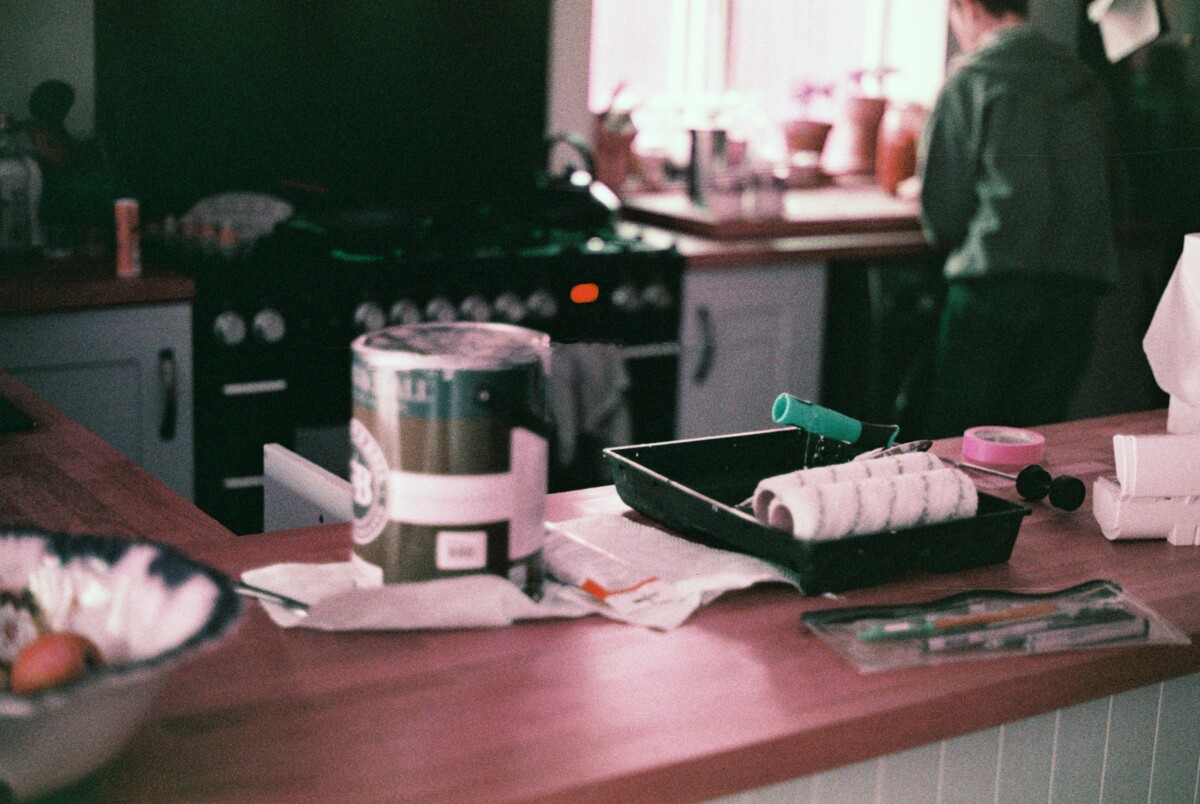
Historic building consultant Michiel Brouns argues the sustainability language around decorative coatings obscures a simpler question of materials.

Listen to the full podcast episode on YouTube, Spotify, and Apple Podcasts.

A sustainability claim under pressure

The paint aisle now looks virtuous. Labels promise low emissions, water-based formulas and environmental responsibility. Green palettes and reassuring language suggest a sector aligned with sustainability.

The chemistry behind many products tells a different story.

Historic building consultant and paint manufacturer Michiel Brouns believes the industry has become skilled at describing progress without changing its fundamentals.

Discussing a recent industry guide on environmental claims in paint, Michiel calls the strategy โ€œa perfect example of flooding the zone.โ€

The document contains many terms. It contains far fewer explanations of what actually sits inside a tin of paint.

The central distinction, Michiel argues, is rarely discussed. Most modern decorative paints remain dependent on petrochemical polymers.

ย 

A career shaped by buildings

Michielโ€™s route into the argument began long before he started making paint.

He grew up in Maastricht in the south of the Netherlands, a city layered with Roman, Spanish, French and German influences. Historic architecture was not an abstraction. It was the physical environment.

Early work took him into the commercial world of architectural ceramics. Michiel worked for a Dutch tile manufacturer supplying designers and architects.

The decisive shift came through chance.

Waiting for a connecting bus in the town of Gulpen, Michiel repeatedly passed a small shop selling traditional building materials. Curiosity eventually took him inside.

The shop specialised in historic finishes: lime washes, traditional paints, wrought iron and restoration materials. Michiel describes the reaction as instinctive.

The materials were natural. The finishes tactile. The environment felt recognisably human.

Michiel left his corporate job soon afterwards and joined the shopโ€™s owner, Dutch restoration expert Haske van Zadelhoff. There he learned the practical logic behind traditional materials.

Once understood, Michiel says, the reasoning becomes difficult to ignore.

ย 

An unexpected market gap

Michiel moved to the United Kingdom in 2006. The initial focus was glazing.

He founded Histoglass to supply thin double-glazing units designed for historic windows. The technology allowed period properties to improve thermal performance without replacing original frames. Over time the business became a recognised supplier for heritage buildings.

During presentations to architects and conservation professionals, one question surfaced repeatedly.

Which paint should be used on historic timber?

The answer, for Michiel, was straightforward. Linseed oil paint had been used across Europe for centuries.

The surprise was the response.

Architects often had never encountered it. High-quality versions were difficult to obtain.

โ€œSomebody has to manufacture it,โ€ Michiel concluded.

The decision led to the creation of Brouns & Co, producing linseed oil paints based on traditional formulations.

ย 

The work today

Today Michiel divides his time between manufacturing, consulting and education.

Brouns & Co produces linseed oil paint made from flaxseed oil. The coating contains no plastics and allows timber to release moisture rather than trapping it.

Alongside the product business, Michiel advises architects and preservation specialists on historic building envelopes.

The work involves a steady programme of lectures and professional education. Michiel has delivered hundreds of continuing professional development courses through the Royal Institute of British Architects.

Projects connected to this work range widely. They include historic estates and heritage landmarks such as the Tower of London and the Chatsworth Estate.

More recently Michiel expanded advisory work in the United States through Brouns & Galloway, focusing on historically accurate building envelope solutions.

The objective behind these activities remains uncomplicated.

Michiel says the aim is simply to replace petrochemical paints with natural alternatives wherever possible.

ย 

The communication problem

The difficulty lies in how the industry describes itself.

Paint manufacturers frequently emphasise water-based formulas and low emissions. Such claims create the impression that the environmental question has largely been addressed.

Michiel disputes that conclusion.

Many products described as water-based still rely on plastic polymers. The water allows thinning and cleaning, but it does not alter the underlying material.

The result, Michiel argues, is a discussion dominated by labels rather than ingredients.

This matters because the paint sector sits within the wider petrochemical supply chain. Large chemical manufacturers underpin many of the brands found in retail stores.

Against that backdrop, sustainability claims become part of marketing.

The debate shifts towards terminology rather than materials.

ย 

An unresolved shift

The structural imbalance between natural paint producers and the petrochemical coatings industry is substantial. Large manufacturers command budgets and distribution networks that smaller producers cannot match.

Yet Michiel sees signs of movement.

Homeowners increasingly ask about indoor air quality. Conservation professionals are revisiting traditional finishes. Environmental concerns about microplastics are also growing.

The change remains gradual.

Michiel describes it less as a breakthrough than a slow accumulation of attention. Conversations that once seemed niche are beginning to reappear in mainstream discussion.

For Michiel the argument ultimately returns to transparency.

If products carried clearer ingredient listings, he believes, consumers could decide for themselves.

The choice would remain theirs.

But the materials inside the tin would be harder to obscure.

Sponsored by...

ย 

truMRK: Sustainability Reports and Communications You Can Trust


๐Ÿ‘‰ Learn how truMRK helps organisations strengthen the credibility of their reporting and communications.

Want to be a guest on our show?

Contact Us.

The Responsible Edge Podcast
Queensgate House
48 Queen Street
Exeter
Devon
EX4 3SR

Join 2,500+ professionals.

Exploring how to build trust, lead responsibly, and grow with integrity. Get the latest episodes and exclusive insights direct to your inbox.

  • This field is for validation purposes and should be left unchanged.

ยฉ 2026. The Responsible Edge Podcast. All rights reserved. The Responsible Edge Podcastยฎ is a registered trademark.

Sponsored by truMRK

ยฉ 2026. The Responsible Edge Podcast

Why Only 1% of Building Materials Are Reused

Episode 148 | 23.2.2026

Why Only 1% of Building Materials Are Reused

Tina Snedker Kristensen on the labour, documentation and market failures slowing circular construction.

Listen to the full podcast episode on YouTube, Spotify, and Apple Podcasts.

An Industry Built on Disposal

The built environment accounts for more than 40 percent of global energy-related COโ‚‚ emissions and over one third of global waste. Yet only around one percent of materials are reused.

The figures expose a structural contradiction. Construction depends on extraction, manufacture and demolition.

Value is embedded in materials, then written off at end of life.

A recent McKinsey analysis argues that circular construction could unlock up to $360 billion in economic value by 2050 and generate 45 million jobs. The opportunity appears material. Adoption remains marginal.

The constraint is not intent. It is system design.

ย 

From Reduction to Regeneration

Fifteen years ago, Tina Snedker Kristensen encountered the Cradle to Cradle framework. At the time, sustainability discourse centred on minimisation.

โ€œIt was all about reducing, reducing consumption, reducing emission,โ€ she says. โ€œLiving in a capitalistic world, you just think that’s just not going to happen.โ€

Cradle to Cradle proposed a different logic. Products should be designed either for biological return or technical reuse. Waste is a design error, not an inevitability.

Tina was then part of the leadership team at Troldtekt A/S, a Danish manufacturer of acoustic panels. Over 27 years, she helped reposition the company from domestic supplier to international brand, embedding certification into corporate strategy.

โ€œItโ€™s not just a stamp that you get,โ€ she says. โ€œYou have to work continuously and improve on all five criteria.โ€

Third-party certification altered internal priorities. Sustainability shifted from communication to operational discipline. Awards followed. Market positioning strengthened. Documentation became a strategic asset.

ย 

What Circularity Looks Like in Practice

Today, Tina leads BuildDirection, advising companies across Denmark, Germany and Northern Europe on ESG strategy, documentation, branding and international positioning .

Her assessment of circularity in construction is direct. Reuse is technically possible. It is economically and operationally difficult.

She describes inspecting thousands of square metres of acoustic panels installed decades ago. They had been fixed with nails rather than screws. Disassembly damaged the product. Recovery required time and manual handling.

โ€œIt would be a bad day at work to dismantle those panels.โ€

Demolition companies operate under tight timelines. Manual sorting increases cost. Technical performance must be reverified. Ownership of materials can be unclear. Manufacturers may need to buy back used products to guarantee quality.

Each intervention adds friction.

Virgin materials, by contrast, benefit from industrial scale and automation. Reuse rarely does. The price differential reflects labour, not intent.

ย 

When Demand Outpaces Infrastructure

In Denmark, building regulation now allows reused materials to count as zero COโ‚‚ in life-cycle assessments. Carbon thresholds for new buildings are tightening. Demand for certified reused materials is rising.

The regulatory signal is clear. Supply chains are less prepared.

Buyers often expect reused materials to be cheaper, reflecting second-hand consumer markets. In construction, that assumption collides with cost reality. Labour, certification and recertification increase expense.

Some niche examples demonstrate demand elasticity. Reclaimed bricks, valued for aesthetics, can command premium prices. Most materials do not benefit from architectural scarcity.

Circularity competes against optimised global production systems designed for linear throughput.

ย 

The Documentation Gap

The most persistent barrier lies in existing building stock.

Most companies retain documentation for limited periods. Beyond that, material composition becomes uncertain. Toxicity, durability and technical performance are often unknown.

โ€œIf I had a magic wand,โ€ Tina says, โ€œI would hope that it could sort of scan a building and define which kind of materials are there, what kind of quality do they have.โ€

Without documentation, reuse carries liability. Risk pricing suppresses uptake.

New buildings can embed digital material passports and design for disassembly. Legacy buildings cannot retroactively provide transparency. Circularity depends on visibility into assets already constructed.

ย 

Industrialising Reuse

The economic case for circular construction is plausible. The operational model remains immature.

Automation, digitalisation and artificial intelligence may reduce manual inspection and sorting. But industrialising reuse requires capital investment, new logistics models and clearer ownership frameworks.

Circularity does not sit outside capitalism. It must function within it.

Until documentation improves, labour intensity declines and regulation consistently rewards reuse, the system will default to what it understands: extract, build, demolish.

One percent reflects alignment between economics and infrastructure.

The remaining ninety-nine percent reflects what has yet to change.

Sponsored by...

ย 

truMRK: Sustainability Reports and Communications You Can Trust


๐Ÿ‘‰ Learn how truMRK helps organisations strengthen the credibility of their reporting and communications.

Want to be a guest on our show?

Contact Us.

The Responsible Edge Podcast
Queensgate House
48 Queen Street
Exeter
Devon
EX4 3SR

Join 2,500+ professionals.

Exploring how to build trust, lead responsibly, and grow with integrity. Get the latest episodes and exclusive insights direct to your inbox.

  • This field is for validation purposes and should be left unchanged.

ยฉ 2026. The Responsible Edge Podcast. All rights reserved. The Responsible Edge Podcastยฎ is a registered trademark.

Sponsored by truMRK

ยฉ 2026. The Responsible Edge Podcast
From Footprints to Handprints: Measuring What Really Matters

Episode 130 | 18.10.2025

From Footprints to Handprints: Measuring What Really Matters

How a new way of thinking about impact is helping the built environment move from compliance to genuine change.

Listen to the full podcast episode on YouTube, Spotify, and Apple Podcasts.

Why this conversation matters

The built environment is responsible for around 40% of global carbon emissions. For years, sustainability in construction has meant counting emissions, writing reports, and checking boxes. But what if the real story isnโ€™t in the footprint we leave behind โ€” itโ€™s in the handprint we create?

This weekโ€™s conversation explores that shift with The Responsible Edge host Charlie Martin and Useful Simple Trustโ€™s Head of Sustainability, Carrie Behar.

ย 

The origin of a responsible mindset

Carrieโ€™s turning point came early. As a young architecture graduate in 2009, she joined a masterโ€™s course in environmental design. The first assignment? Calculate her own carbon footprint.

โ€œIโ€™d just spent a year travelling the world,โ€ she laughed.

โ€œMy flight emissions wouldnโ€™t fit on the page.โ€

That moment turned embarrassment into action. She realised how every individual decision โ€” no matter how small โ€” plays a part in shaping our shared impact.

ย 

From student to systems thinker

Fifteen years later, Carrie leads sustainability across the Useful Simple Trust, a group of purpose-led design and engineering firms. Her role bridges two worlds: guiding the Trustโ€™s internal transition to net zero, and advising clients on how to design for regeneration.

That balance keeps her grounded. โ€œWe canโ€™t ask clients to do something weโ€™re not doing ourselves,โ€ she says.

โ€œImplementing change in-house makes me a more pragmatic consultant.โ€

ย 

Compliance or change?

The discussion centres on a Financial Times article about a surge in ESG regulation. Carrie recognises the tension between the growing focus on compliance and the slower work of transformation.

She admits that smaller teams like hers could spend all their time measuring emissions and writing policies. โ€œIt can feel bureaucratic,โ€ she says.

โ€œBut a clear strategy is the hook from which everything else can hang.โ€

By doing the heavy lifting on data and governance, her team frees others to innovate โ€” a reversal of the usual model.

ย 

The handprint idea

Carrieโ€™s proudest initiative reframes the entire question of impact. Rather than measuring only the carbon footprint of the organisation, Useful Simple Trust now measures its handprint โ€” the positive influence of its projects across society and the environment.

โ€œOur footprint is small,โ€ she explains, โ€œbut our handprint โ€” the ripple effect of our work โ€” is where our real impact lies.โ€

The tool maps each project along a regenerative design spectrum, forcing the team to be brutally honest about both benefits and harms. Itโ€™s data with a conscience.

ย 

Responsibility in practice

Carrie sees success not as one departmentโ€™s progress, but as collective engagement. Her favourite metric is the growing number of colleagues applying for the Trustโ€™s R&D and pro bono investment fund.

โ€œIโ€™d rather everyone does a little bit,โ€ she says, โ€œthan just a few people doing a lot.โ€

This bottom-up model turns sustainability from a policy into a practice โ€” one that belongs to everyone.

ย 

Hope for a regenerative future

Asked what sheโ€™d change about the business world, Carrie offers two wishes: to measure success beyond financial value, and to give nature a literal voice in decision-making.

At Useful Simple Trust, that might soon mean a board agenda item titled โ€œWhat would nature say?โ€

Itโ€™s a small but profound shift โ€” from counting emissions to considering ethics. From footprints to handprints.

Sponsored by...

ย 

truMRK: Sustainability Reports and Communications You Can Trust


๐Ÿ‘‰ Learn how truMRK helps organisations strengthen the credibility of their reporting and communications.

Want to be a guest on our show?

Contact Us.

The Responsible Edge Podcast
Queensgate House
48 Queen Street
Exeter
Devon
EX4 3SR

Join 2,500+ professionals.

Exploring how to build trust, lead responsibly, and grow with integrity. Get the latest episodes and exclusive insights direct to your inbox.

  • This field is for validation purposes and should be left unchanged.

ยฉ 2026. The Responsible Edge Podcast. All rights reserved. The Responsible Edge Podcastยฎ is a registered trademark.

Sponsored by truMRK

ยฉ 2026. The Responsible Edge Podcast
Less Profit, More Livable Planet: Rethinking Constructionโ€™s Future

Episode 126 | 19.9.2025

Less Profit, More Livable Planet: Rethinking Constructionโ€™s Future

Construction expert Saul Humphrey says the path to net zero is not about shiny technology. It begins with choosing the right materials, reusing what we already have, and thinking beyond the next quarterโ€™s profit.

Listen to the full podcast episode on YouTube, Spotify, and Apple Podcasts.

When Saul talks about the future of construction, he doesnโ€™t start with solar panels or smart tech. He starts with timber, hemp, stone, and an uncomfortable truth: we are building on a planet with limits.

As Senior Vice President of The Chartered Institute of Building, a professor of sustainable construction, and the managing partner of a certified B Corp consultancy, Saul has seen every side of the industry. His message is simple but powerful: the greenest building is often the one we donโ€™t demolish, and every fraction of a degree of warming we prevent still matters.

ย 

Rethinking Value

For Saul, the conversation about sustainability has to start with something most executives understand: money.

Most appeals to โ€œdo the right thingโ€ donโ€™t change boardroom behaviour. But when framed in terms of long-term value, the case for sustainable choices becomes harder to ignore.

โ€œTelling someone they must be more sustainable isnโ€™t that compelling. If you can link it to valueโ€”whole-life cost, premium asset value, avoiding stranded assetsโ€”then you can shape a commercially sound reason to do the right thing.โ€

This is where his own career has taken him. Starting out at sixteen on a Youth Training Scheme, Saul worked his way up through hands-on delivery roles before moving into senior leadership. Today, his consultancy is focused on proving that sustainable construction is not just good for the planet, but also good business.

ย 

The Carbon We Forget

The building industry often celebrates its progress on energy efficiency and renewables. But Saul says that is only half the story.

Most of the carbon footprint is not in heating or lighting, but in the materials themselves.

โ€œAs the grid decarbonises, embodied carbon becomes the heaviest footprint.โ€

Concrete, steel, and bricks carry huge emissions before a building is even occupied. To tackle this, Saul champions alternatives such as cross-laminated timber, glulam, hemp, stone, and rammed earth. These options are not just theoretical; many are proven and available today.

ย 

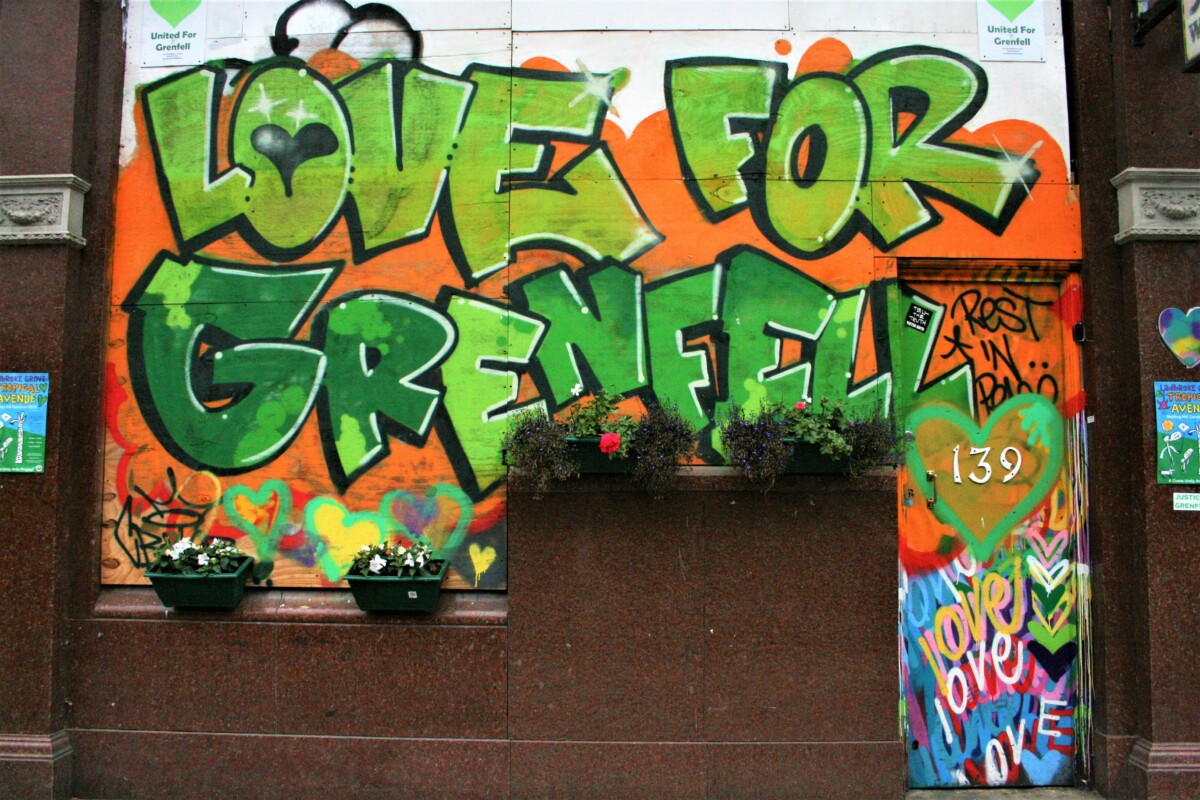
Fear After Grenfell

Despite these options, the industry has been slow to change. Saul points to the aftermath of the Grenfell tragedy as one reason why.

The disaster made companies and regulators retreat into what felt safe: concrete, brick, and steel. While that caution is understandable, Saul argues it has gone too far.

โ€œIn domestic two-storey homes thereโ€™s absolutely no reason we shouldnโ€™t be using more bio-based materials.โ€

The barriers now are less about safety and more about regulation, insurance, and supply chains. To move forward, costs must be assessed across the entire life of a building, not just the cheapest upfront option.

ย 

Retrofit Before Rebuild

If Saul had one rule for the sector, it would be this: stop tearing down and start improving what we already have.

โ€œWeโ€™ve got to stop demolishing things. The most sustainable building is the one thatโ€™s already been built.โ€

By 2050, around 26 million homes will still be standing. Retrofitting them, making them more energy-efficient, and shifting them to renewable energy should be the priority. Only then, Saul argues, should we focus on new builds โ€” and those should be designed with low-carbon materials from the start.

ย 

Beyond Growth

At the heart of Saulโ€™s thinking lies a bigger challenge: our obsession with growth.

โ€œPerpetual growth on a finite planet simply canโ€™t be sustainable.โ€

He isnโ€™t arguing for decline or scarcity. Instead, he wants to redefine what abundance looks like: homes that are healthy, communities that are safe, and societies that value wellbeing over endless consumption. Leaders, he says, must be willing to measure success not in quarters, but in generations.

ย 

Every Degree Matters

Despite the scale of the challenge, Saul refuses to give in to despair.

โ€œTwo degrees is bad. Two-point-five is awful. Three is shocking. But 2.9 is better than 3.0. Every tenth of a degree saved preserves possibility.โ€

That perspective shapes his agenda as incoming CIOB President. His focus is on spreading materials literacy, pushing retrofit-first thinking, and embedding ESG in a way that protects both financial performance and planetary survival.

ย 

Closing: A Longer Horizon

When asked what change he would like to see in business, Saulโ€™s answer was quick and clear:

โ€œEncourage all to look for longer-term outcomes.โ€

He believes the industry must step back from short-term profits and start designing for the generations that will inherit what we build. In a sector built on concrete, it may be the most important foundation of all.

Sponsored by...

ย 

truMRK: Sustainability Reports and Communications You Can Trust


๐Ÿ‘‰ Learn how truMRK helps organisations strengthen the credibility of their reporting and communications.

Want to be a guest on our show?

Contact Us.

The Responsible Edge Podcast
Queensgate House
48 Queen Street
Exeter
Devon
EX4 3SR

Join 2,500+ professionals.

Exploring how to build trust, lead responsibly, and grow with integrity. Get the latest episodes and exclusive insights direct to your inbox.

  • This field is for validation purposes and should be left unchanged.

ยฉ 2026. The Responsible Edge Podcast. All rights reserved. The Responsible Edge Podcastยฎ is a registered trademark.

Sponsored by truMRK

ยฉ 2026. The Responsible Edge Podcast

Why Engineers Had to Set the Standard for Net Zero

Episode 118 | 3.8.2025

Why Engineers Had to Set the Standard for Net Zero

โ€œWe are the engineers that have the solutions to saving the world,โ€ says Dr Anastasia Mylona, with the matter-of-fact passion that comes from hard-won conviction, not branding strategy. As Technical Director at CIBSE (the Chartered Institution of Building Services Engineers), sheโ€™s spent decades translating the theory of climate resilience into the practice of how buildings breathe, heat, coolโ€”and survive.

Listen to the full podcast episode on YouTube, Spotify, and Apple Podcasts.

So when UK policymakers failed to define a consistent, credible path to net zero for the built environment, it wasnโ€™t Whitehall that stepped in. It was the engineers.

The result? The UK Net Zero Carbon Buildings Standard: a voluntary, rigorous, and collaborative benchmark for measuringโ€”and more importantly, achievingโ€”net zero in both new builds and retrofits.

ย 

Not Just Another Framework

The standard isn’t a white paper or a wishlist. It’s a tool, developed by a coalition of professional bodiesโ€”including CIBSE, RIBA, and RICSโ€”and stress-tested by over 200 companies. It defines the โ€˜whatโ€™ and โ€˜howโ€™ of net zero for real buildings, based on performance, not aspiration.

โ€œThis isnโ€™t making it easier for engineers,โ€ Anastasia admits. โ€œBut if weโ€™re serious about net zero, this is the way to do it.โ€

She describes the standard as both โ€œambitiousโ€ and โ€œrealisticโ€โ€”a phrase that only seems contradictory if youโ€™ve grown accustomed to the vagueness of corporate climate commitments. The real success of the standard isnโ€™t just technical. Itโ€™s cultural. For once, the fox hasnโ€™t just designed the henhouseโ€”itโ€™s built it out of audited steel, daylight models, and embodied carbon calculations.

ย 

From Heat Pumps to Heatwaves: Engineering for the Future

At the core of Anastasiaโ€™s work is futureproofing. Her PhD at Cardiff focused on overheating risk in buildings. Her work with UKCIP and Oxford University centred on how climate impacts architectureโ€”not in abstract terms, but in thermal loads, drainage systems, and human comfort.

โ€œI always wanted to be an artist,โ€ she laughs. But architecture taught her that buildings arenโ€™t just objects; theyโ€™re organisms.

โ€œIt clicked that the building is not just a pretty thingโ€”itโ€™s a living, breathing, dynamic entity.โ€

That realisation has shaped her entire career, from technical guidance on weather files to overheating methodologies. Itโ€™s also why she sees this new standard as a culmination of two decades of work.

ย 

Voluntary, Yes. Optional? Not Really.

Why did industry create a voluntary standard when government wouldnโ€™t? Two reasons, Anastasia explains. First: confusion. Competing definitions of net zero made cross-sector collaboration almost impossible.

Second: influence.

โ€œYou canโ€™t lobby for policy with ten different versions of what net zero means,โ€ she says.

A single, shared benchmark enables engineers, architects, and clients to finally compare apples with apples.

The irony, of course, is that what began as a workaround now looks like world leadership. โ€œNowhere else in the world has developed something like this,โ€ Anastasia notes. Already, countries like the UAE and the US are asking how to adapt it.

ย 

Cost Is the Elephant in the Plant Room

So why hasnโ€™t the government adopted the standard as policy?

In a word: cost. โ€œThereโ€™s an implication that high standards come with high expense,โ€ Anastasia says. But she flips the question: Whatโ€™s the long-term cost of not adapting? Of relying on imported energy? Of making design decisions that bake in inefficiency for decades?

Her answer isnโ€™t just philosophical. Itโ€™s practical:

โ€œNet zero isnโ€™t a five-year thing. Itโ€™s the entire lifespan of a building.โ€

ย 

The Magic Wand Moment

When asked what sheโ€™d change about the commercial world, Anastasiaโ€™s answer is quietly radical:

โ€œI’d like it to be less commercial.โ€

In a Star Trek-like future where money wasnโ€™t the ultimate measure, she believes weโ€™d rediscover the value of people, nature, and spaces that actually enhance life.

And if that sounds naรฏve, itโ€™s worth remembering whoโ€™s saying it. Anastasia is not an idealist. Sheโ€™s a professional whose day job involves translating planetary-scale urgency into wiring diagrams, airflows, and load profiles.

The magic, it turns out, isnโ€™t in the wand. Itโ€™s in the wiring.

Sponsored by...

ย 

truMRK: Sustainability Reports and Communications You Can Trust


๐Ÿ‘‰ Learn how truMRK helps organisations strengthen the credibility of their reporting and communications.

Want to be a guest on our show?

Contact Us.

The Responsible Edge Podcast

Queensgate House
48 Queen Street
Exeter
Devon
EX4 3SR

Join 2,500+ professionals.

Exploring how to build trust, lead responsibly, and grow with integrity. Get the latest episodes and exclusive insights direct to your inbox.

  • This field is for validation purposes and should be left unchanged.

ยฉ 2026. The Responsible Edge Podcast. All rights reserved. The Responsible Edge Podcastยฎ is a registered trademark.

Sponsored by truMRK

ยฉ 2026. The Responsible Edge Podcast