
Episode 187
Demolition Is Cheaper.
That Was Not the Plan in 1973.
Matt Bullivant of Don’t Waste Buildings has spent years documenting the fiscal incentives that make retrofit commercially unviable across the UK.
Episode notes
The Twenty Per Cent Gap
Ask a developer whether to renovate an existing building or demolish it and start again. The answer usually comes back as a number. Retrofit costs roughly twenty per cent more than demolition and rebuild. That gap closes most conversations before they start.
It is not a market outcome. It is a policy artifact.
In 1973, the UK zero-rated VAT on new residential construction. The intention was to stimulate housing. Nobody considered that zero-rating new build would, by default, make renovation and retrofit more expensive. Residential retrofit has remained at twenty per cent ever since. "We've been our own worst enemy in some respects," says Matt Bullivant, Financial and Tax Incentives Lead at Don't Waste Buildings and Senior Director, Head of Sustainability at Athora.
A 1973 Decision Nobody Revisited
Buildings account for around twenty per cent of UK emissions. That figure covers operational carbon, the kind that attracts legislation and political debate. It does not, in any meaningful policy sense, cover embodied carbon. The energy locked into bricks, mortar, structure, fabric. The energy spent on demolition. The energy spent building again.
"Are we incentivising by accident the destruction of economic assets that are in abundance across the UK?" Matt asks.
The CBI has repeatedly documented a green economy growing faster than the wider economy. Retrofit is a significant part of it. The fiscal framework does not reflect that.
VAT reform is politically sticky, Matt acknowledges. The UK VAT regime is among the most convoluted in the developed world. The government does not want to give up revenue. What it has not done is calculate what revenue it is currently receiving.
"Twenty percent of nothing," he says. "Twenty percent of what here? Because there's a huge missed opportunity."

What Peers Have Done That the UK Has Not
Germany's KfW bank lends to developers for retrofit. The more ambitious the retrofit, the more favourable the lending terms. The bank borrows on financial markets rather than from government, so it does not add to the national debt. France solved the extension problem simply: no increase in square footage. If the building cannot be enlarged, the discounted VAT rate cannot be used to fund a Wimbledon swimming pool.
The Netherlands allows businesses to defer tax on renovation investment. Uptake has been a multiple of what the government expected. The US has a twenty to thirty year track record on heritage buildings. Every dollar of tax relief on historic regeneration has returned a dollar twenty to the Treasury.
The evidence is there. The UK has not acted on it.
Why It Still Does Not Happen
Planning adds its own friction. Applications for work on existing buildings are often more complex than applications for new ones. The skills required are specialist and not always available. Hastings Commons, a residential retrofit in East Sussex, spent years working through planning obstacles. Each floor of the building sat under a different VAT regime, depending on occupancy history and length of tenancy.
"It is a particular skill set knowing how to bring a building back to life," Matt says.
When the contractor faces delivery risk and the developer faces a twenty per cent cost premium before a brick is lifted, the rational decision is to demolish.
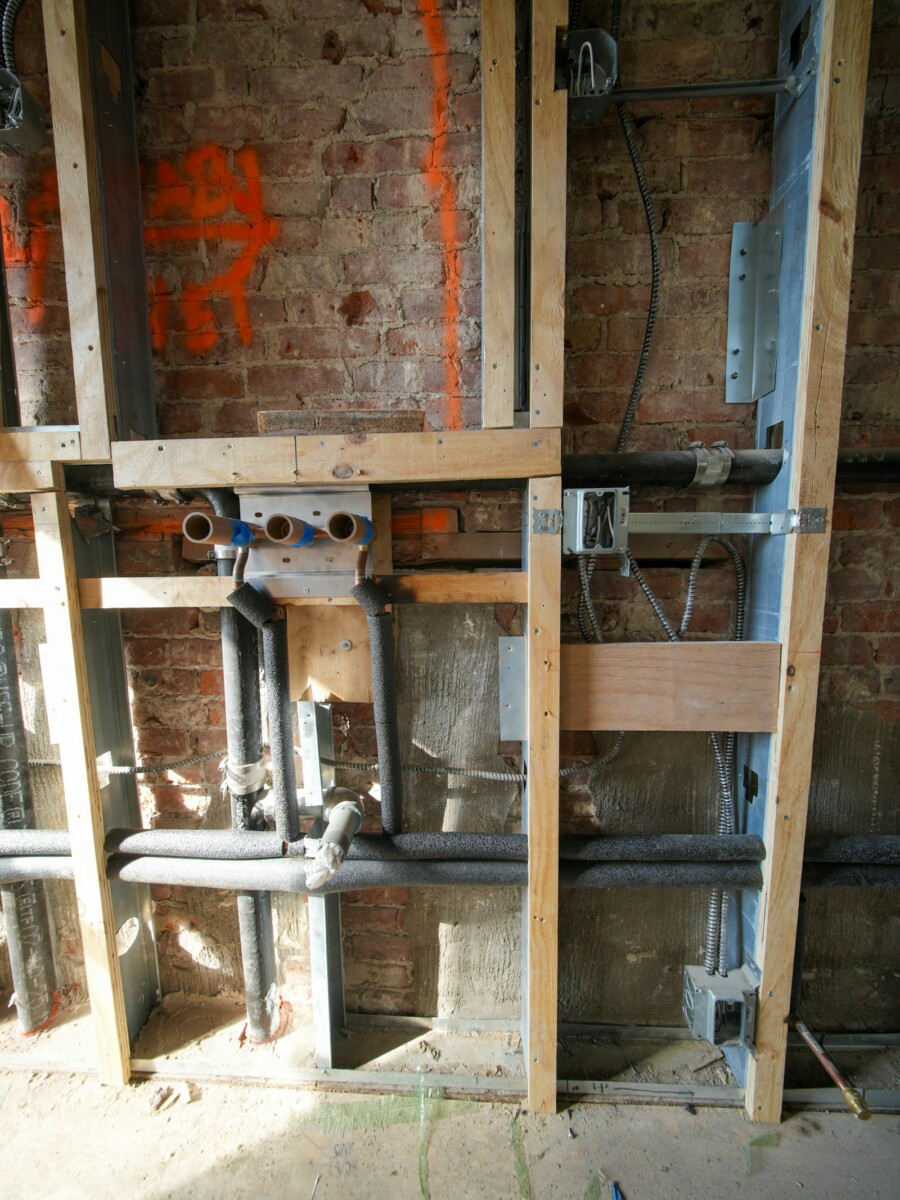
Six Hundred and Seventy Thousand Homes
Historic England calculates that unlocking historic buildings for housing could deliver six hundred and seventy thousand homes. That is half of the government's one and a half million homes target. From buildings that already exist.
Don't Waste Buildings has around three thousand active members: developers, architects, engineers, finance providers, sustainability professionals, local authority representatives, and politicians. The cross-industry alignment is there. The departmental entry point in government is not. The message lands across MHCLG, the Treasury, and multiple agencies. It does not coalesce.
What the Magic Wand Would Change
Matt's answer to the magic wand question is a finance director's answer, not a sustainability one. He names the fiscal incentive as the primary lever. Everything else follows from it.
"We cannot continue telling developers that we need to be retrofitting buildings to the environment while simultaneously taxing and creating fiscal disincentives for them to do so."
The imbalance is not between retrofit and new build. That is a false choice, Matt is careful to say. The imbalance is between reuse and demolition. The UK currently makes demolition the financially rational decision. It did not intend to. It has not changed it.
Podcast sponsor
Independent review from truMRK
Strengthen your next sustainability report or campaign with an independent review of your communications.