

Episode 185
The Evidence Exists.
The Consumer Never Sees It.
The EU built a public database of product performance data. In the episode, the figure cited was that only one in sixteen shoppers had scanned the code that leads to it. Tom Whelan, co-founder of Naked Paper, explains what that gap costs.
Episode notes
When the bold claim wins
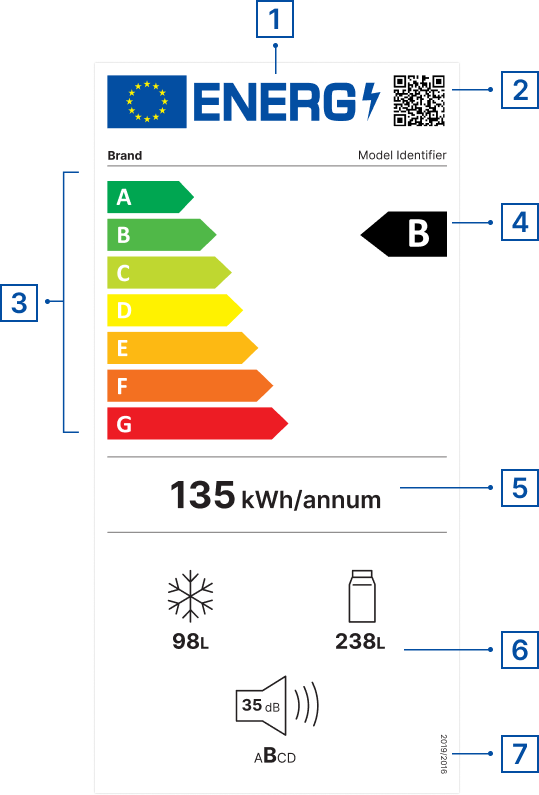
In the article discussed on the show, The Conversation drew attention to a quiet failure. Since 2019, suppliers have had to register covered products in the EU’s public energy labelling database, EPREL. The QR code on a rescaled energy label takes shoppers to more detailed product information. The figure cited in the episode was one in sixteen shoppers had ever scanned the code.
The gap in the system was visible. A brand that invests in evidence, measuring and reporting how its product performs, competes on the shelf with one that prints “green” in large letters and leaves it there. If the consumer does not reach the data, the investment in evidence may not differentiate.
“Don’t trust the adjectives,” said Tom Whelan, co-founder of Naked Paper. “Look at the numbers and the evidence behind everything.”
The choice that wasn’t
Tom Whelan co-founded Naked Paper with his wife and business partner Leila in September 2020. The company makes unbleached toilet tissue, brown in colour, manufactured without bleach or harsh chemicals. It says it has sold more than 30 million rolls to over 250,000 UK customers. In 2025, Naked Paper received a King’s Award for Enterprise in Sustainable Development.
The company’s commercial proposition rests on its environmental claims. There was no version of the business that could quietly step back from sustainability. When Tom and Leila began to understand the regulatory environment, including the CMA’s green claims guidance, the ASA guidance and the Anti-Greenwash Charter, the direction of travel was set.
“It had to become a thing. There wasn’t a choice,” Tom said. “We have to do it. Otherwise we’re not going to be a business one day.”
That was around 2023. The approach shifted from ambition to accountability.


What accountability looks like
Tom describes what that looks like in practice. He says Naked Paper links its published claims to supporting evidence, puts a batch number on each box so customers can trace its journey to the UK, and substantiates its television advertising claims through Clearcast.
According to Tom, its factory partner, Elsie Paper, operates on 100% renewable energy in Spain. Products reach the UK by electric rail where logistics allow. Where they do not, the company says so. Tom also says it discloses its use of diesel forklifts, which it considers more practical for the weight of the product.
“We like to, you know, get absolutely everything out there so you can’t get tripped up, and ultimately you can’t get fined,” Tom said.
Under its direct consumer enforcement powers, the CMA can determine certain consumer law breaches without going to court and impose penalties of up to 10% of annual worldwide turnover or £300,000, whichever is higher.
“It does cause sleepless nights,” Tom said. “Because if you’re going out there with a new claim, you’re like, have we got everything on the page.”
The structural problem
The EU database is not a bad idea. The rescaled energy label gives shoppers an A–G rating at a glance, with a QR code for more detail. The question raised in the episode is how often shoppers take that extra step.
“When every single brand is saying we’re a plus plus plus,” Tom said. “Who do you trust?”
A bold, unverified claim can win at the moment of purchase. The brand that invested in evidence may win over time. But the gap between those two timelines is real. “You’ll get a dip. It will affect sales,” Tom said, describing what happens when a business corrects how it communicates. “But once where it starts, word starts to get out that what you’re saying is trustworthy. That catapults the business forward.”
The infrastructure of transparency has been built. Consumer behaviour has not caught up with it. The question is whether regulation will close that gap before the market does.
Closing
The magic wand answer, when it came, was specific. Tom said the one thing he would change is that every claim made should have evidence reachable within a single click. Not buried in a database that requires a QR code and a moment of consumer initiative. Within a click.
Whether that is achievable at scale across consumer categories, the conversation left open.
Podcast sponsor
Independent review from truMRK
Strengthen your next sustainability report or campaign with an independent review of your communications.