
Listen to the full podcast episode on YouTube, Spotify, and Apple Podcasts.
The pressure is not a lack of data. It is a lack of agreement on what data means. Information is abundant, but credibility is scarce. Consumers transact daily without understanding who they are buying from. At the same time, trust in institutions is fragmenting, and attention is narrowing into smaller circles.
Into this environment steps a proposition that assumes more information will change behaviour. The question is whether visibility alone can shift choices when cost, habit and convenience dominate.
Raja Darbari did not begin in payments. After university, he worked with farmers in South America, trading quinoa and cacao. The experience exposed a disconnect between products on shelves and the people behind them.
“You then quickly realize that most of the products you see… have a really complex supply chain… impacting real people and… our planet.”
He later worked across consulting and banking, including roles at HSBC and Barclays. The pattern he observed was scale without proximity. Capital moved efficiently, but impact remained distant.
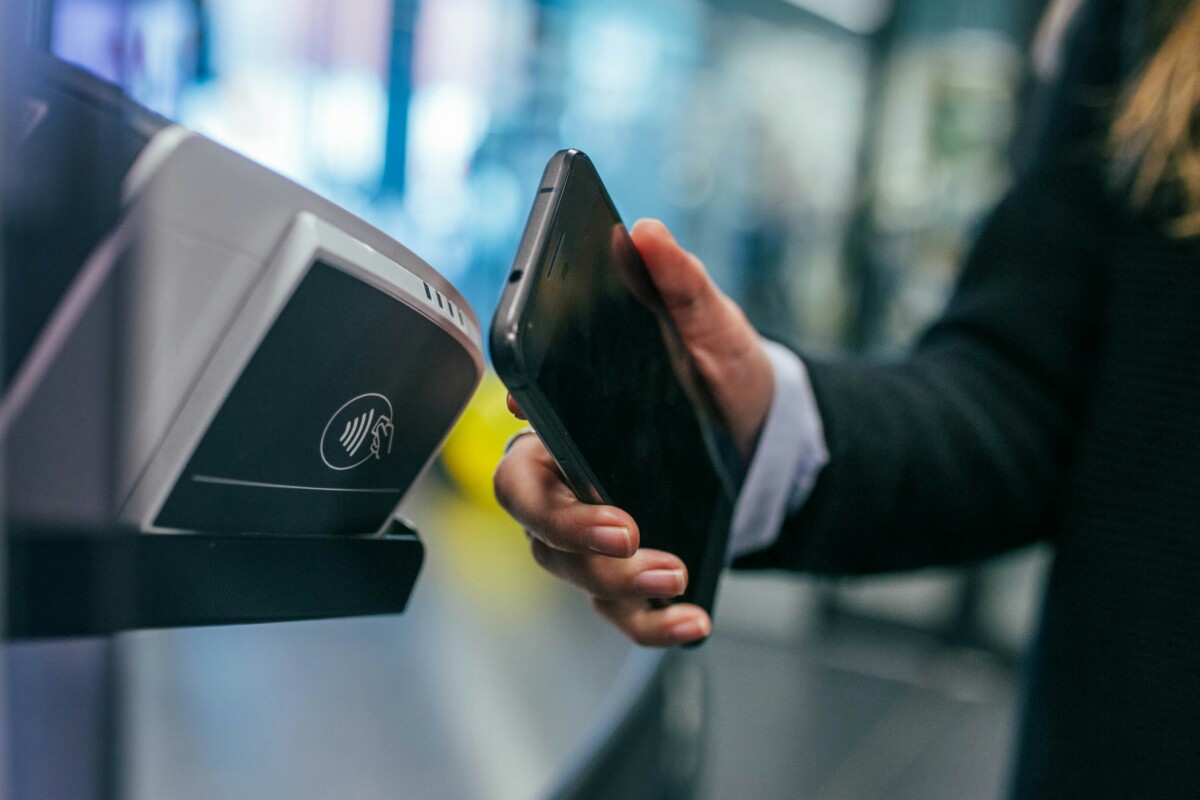
The formation of Ample reflects that tension. Payments, he argues, are one of the few systems people engage with daily at scale.
Raja describes them as “a shared touchpoint people interact with every day.”
The turning point is less a moment than a constraint. Direct-to-consumer sustainability tools struggle to reach users. “Direct to consumers is really hard,” he says.
The decision was to embed data where behaviour already exists. Not before purchase, but during and after. This is a reversal of typical influence models. It assumes feedback can reshape future decisions.
There is also an admission of limits. Even informed consumers do not always act.
“Cost, convenience are important considerations,” he notes.
Ample’s work is operational rather than advisory. It aggregates “unstructured sustainability data” from brands and third parties, verifies it across sources, and converts it into labels.
These labels appear within banking apps alongside transactions. A purchase may show tags such as “family owned” or “paying a living wage.” The aim is not to rate the consumer, but to describe the merchant.
The model relies on integration with banks and payment networks to achieve reach. It also extends upstream. Raja references “Green City Maps” as a way to surface the same data earlier in the journey.
The core claim is modest. Provide information. Let behaviour follow.
“It’s to give people the right information so they can make informed decisions.”

The tension sits in the gap between information and trust.
Raja frames trust as “the most valuable currency that we have.”
Yet the same environment that creates demand for transparency also undermines it. He points to “a flood of AI generated content” and “no shortage of greenwashing.”
Verification becomes central, but also contested. Multiple data sources do not guarantee consensus. Labels simplify complexity, but also compress nuance.
There is a second tension in behaviour. Most consumers do not have time to research. Ample’s premise is that reducing friction will increase alignment. But the system still competes with price and habit.
Raja does not resolve this. He shifts the frame from enforcement to encouragement.
“People every day are making positive impact with their spending,” he says.
The focus is incremental change across a large base. One better choice by many people.
The broader system constraint is temporal. Corporate incentives remain short term.
“The commercial world today is largely driven by short-term incentives,” he says.
This affects both sustainability investment and communication. Firms either overstate progress or withdraw from disclosure. Raja’s position is procedural. Be explicit about current state, define direction, and report progress, even when targets are missed.
Trust, in this framing, is cumulative. It depends on “small, consistent actions.”
The model assumes that if information becomes ambient, values will follow. That remains unproven at scale. Payments can reveal patterns, but they do not change constraints.
The system is moving toward greater visibility. Whether that produces alignment or further fragmentation is still open.
Sponsored by...
truMRK: Sustainability Communications You Can Trust
👉 Learn how truMRK helps organisations strengthen the credibility of their communications.
Want to be a guest on our show?
Contact Us.
The Responsible Edge Podcast
Queensgate House
48 Queen Street
Exeter
Devon
EX4 3SR
Join 2,500+ professionals.
Exploring how to build trust, lead responsibly, and grow with integrity. Get the latest episodes and exclusive insights direct to your inbox.
© 2026. The Responsible Edge Podcast. All rights reserved. The Responsible Edge Podcast® is a registered trademark.
Sponsored by truMRK
© 2026. The Responsible Edge Podcast