


Listen to the full podcast episode on YouTube, Spotify, and Apple Podcasts.
A flood map everyone can read
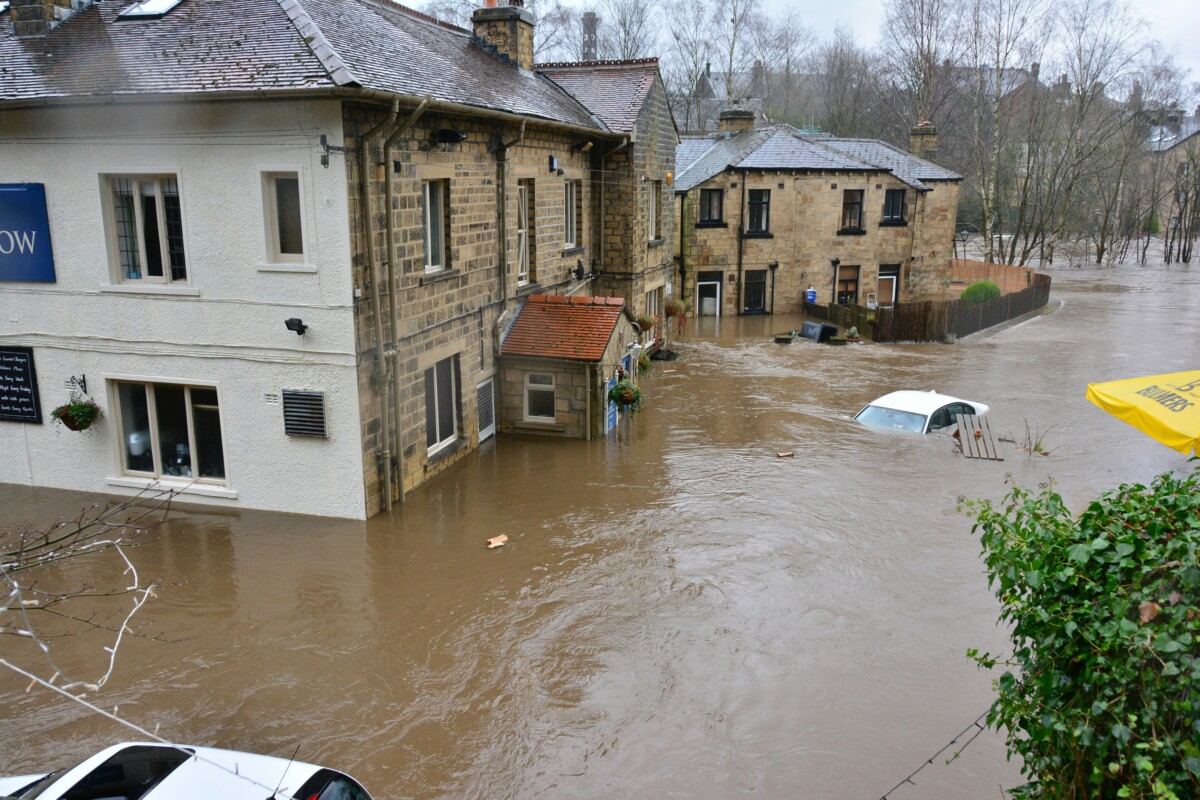
Aviva’s chief executive, Amanda Blanc, recently told the BBC that around 115,000 new homes are set to be built in flood zones over the next decade. Her point was simple. The flood areas are well known. The building goes ahead anyway.
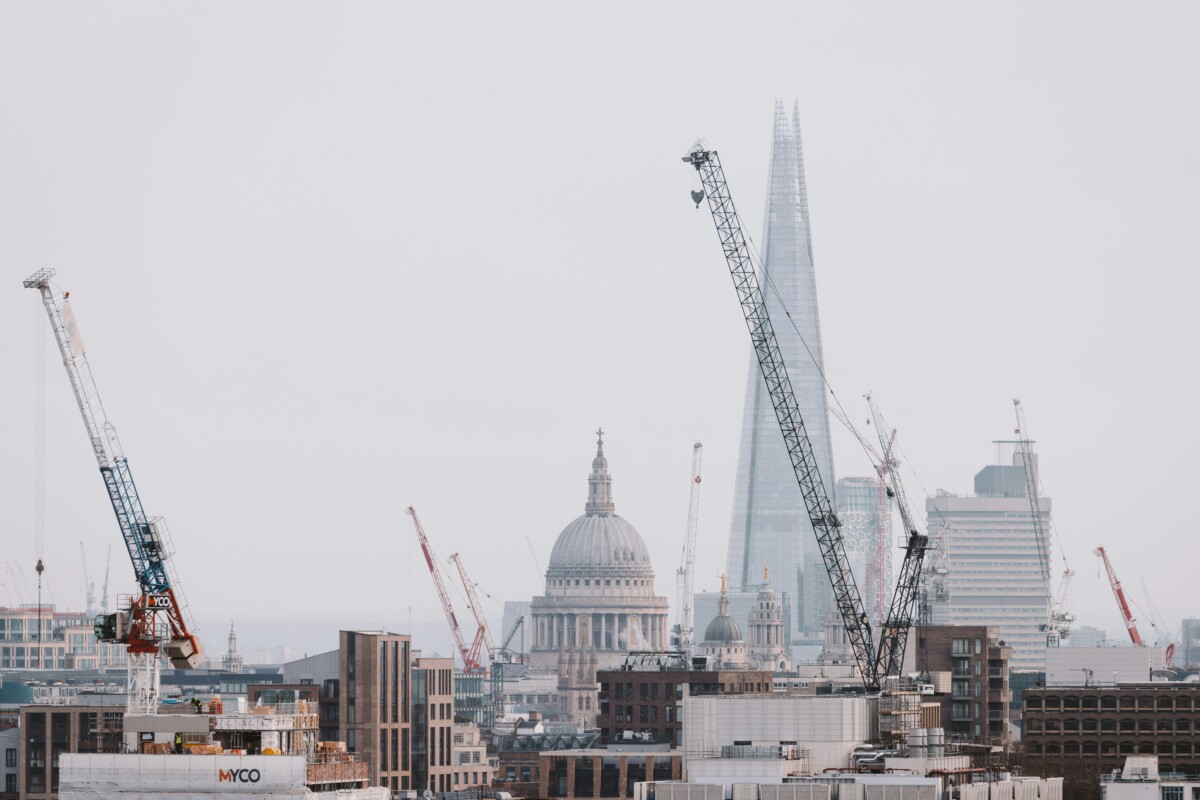
The pressure behind it is just as clear. The government wants 1.5 million homes by 2030. Land free of flood risk is scarce. Meanwhile, the odds are shifting.
Engineers point to Met Office analysis showing that a winter as wet as 2023 to 2024 has gone from a 1 in 80 chance to a 1 in 20 chance.
Two engineers inside one practice
Kelly Harrison is a structural engineer with 20 years’ experience. She is a director at Whitby Wood and co-founder of alpha, part of the Whitby Wood group. Sebastian Wood is group managing director of Whitby Wood, which he co-founded with Mark Whitby in 2016.
Kelly doubts the country can find enough plots “that are free of flood risk”.
For her, the real question is how homes and neighbourhoods are designed to cope, so they can still be lived in and insured.
The cooling problem without a headline
Flooding is only part of it. Kelly argues that cooling homes and offices will use more electricity than the UK’s planned data centres. Shading, better insulation and street trees could cut that demand. Planning policy often does not allow for them.
Sebastian explains how the industry got here. Homes were cold, so they were insulated. Then summers got hotter.
“Legislation takes a long time to happen. Codes take a long time to change.”
Kelly sees the same lag in safety rules. Some recent changes were rushed through for political reasons, with less scientific research behind them.
Her objection is direct: “climate change is also a safety issue.”
Where the ideas stop
Kelly joined Whitby Wood during Covid. Hiring anyone senior then was, she says, “a huge risk”. With little project work at first, she was asked to plan the firm’s route to zero carbon.
Talking to staff, she heard the same complaint again and again. Engineers could see better solutions. Their advice passed through layer after layer of other people. “Those messages never really get to the money.”
At the firm’s annual staff day, employees asked a pointed question: “can’t we just become a developer”.
A developer was brought in to explain how hard that job is. It was a sobering lesson. It also set Kelly on a mission to change the system.
Putting a price on doing better
Investors trust engineers. But they manage hundreds or thousands of buildings, and rarely look closely at any single one. alpha was built to close that gap.
It began as oversight work for one funder. alpha set standards before a purchase, monitored design and construction, then reported at the end. The funder soon wanted a financial figure attached.
The method is straightforward. alpha works out the bare minimum a building needed to meet regulation and planning rules. It then measures how far the finished project went beyond that. The difference is the value: lower energy bills, refrigerants that will not be banned, avoided carbon, local jobs, community space.
Caught in the system he runs
Sebastian does not claim to stand outside the problem. “I worry about cash flow. I worry about having enough work.” Some days he steps back and thinks: “oh my God, I’m perpetuating all this.”
He sees two routes. “We could blow up the system. That’s one option.”
Or investors could start to value things differently, because the climate data now demands it. He gives a friend’s example. Over ten years, a data centre’s local water is free. Over thirty, it may cost money.
Kelly sees an opening. With the property market weak, investors are thinking harder about the long term. Quick buy-and-sell deals still happen. But every exit needs a buyer. alpha wants that buyer to be a long-term owner.
What we call people
Asked what she would change, Kelly chose language. People, she says, “get stuck in that language” of the systems they work in.
Sebastian recalls his grandfather’s question:
“if you call people consumers, what would you expect them to do?”
Sebastian describes the tool investors need as a “magic black box”. He admits the work is at an early stage. For now, the flood maps are well known. The value of building well is still hard to see.
Sponsored by:
Marketing and Communications You Can Trust
👉 Learn how truMRK helps organisations strengthen the credibility of their marketing and communications.
Want to be a guest on our show?
Contact Us.
The Responsible Edge Podcast
Queensgate House
48 Queen Street
Exeter
Devon
EX4 3SR
Join 2,500+ Subscribers.
New episodes exploring responsible marketing, reporting and communications, straight to your inbox.
© 2026. The Responsible Edge Podcast. All rights reserved. The Responsible Edge Podcast® is a registered trademark.
Sponsored by truMRK
© 2026. The Responsible Edge Podcast