

Listen to the full podcast episode on YouTube, Spotify, and Apple Podcasts.
Scene and Context
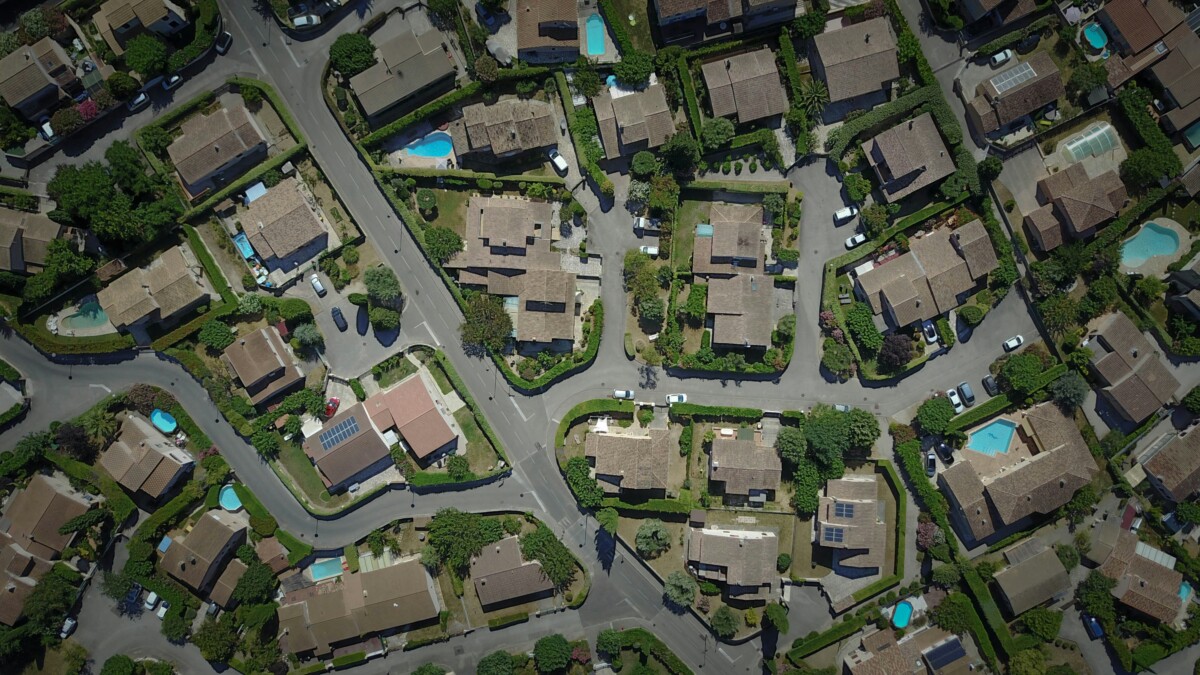
Urban sprawl rarely announces itself as a failure. It arrives as a solution. Land is cheaper on the edges. Construction is simpler. Political risk appears lower. New suburbs promise affordability and space, even as they quietly lock in car dependence, long commutes, and costly infrastructure that must be maintained for decades.
What remains largely absent from these decisions is a full accounting of consequence. Pollution. Health outcomes. Social isolation. The erosion of community life. These costs sit beyond election cycles and balance sheets, yet they define how cities perform over time.
For more than forty years, Alec Tzannes has argued that the choice between sprawl and density is not only technical or economic. It is cultural. Cities spread, he suggests, when people no longer believe that dense urban life can be desirable, humane, or beautiful.
Formation: Seeing Systems, Not Objects
Alec’s thinking took shape early. As a student in the 1970s, he encountered the Club of Rome’s forecasts on planetary limits and found them unsettling. At the same time, architecture offered a way to combine his interests in engineering and art. Yet he quickly became uneasy with what he saw as the direction of the profession.
By the mid-1970s, modern architecture, once a social project, had hardened into style and commodity. “It had become self-referential,” he recalled, detached from the environmental and social systems it affected. He began looking elsewhere for intellectual grounding.
Landscape architect Ian McHarg’s Design with Nature and urbanist Ed Bacon’s work on cities mattered more to him than iconic buildings. So did thinkers like Buckminster Fuller. He became sceptical of what he called “anthropocentric thinking” and increasingly interested in systems that placed the planet, not the individual object, at the centre.
“I became interested in dealing with the planet as a subject,” he said, “not dealing with the person as the subject.”
A Practice Built on Endurance
In 1982, a competition win altered his plans to work overseas. He stayed in Sydney and founded what would become Tzannes. The practice emerged from architecture but refused to stay within its limits.
Alec prefers the term “designers.” The studio works across buildings, urban design, public spaces, monuments, and furniture. It also designs frameworks that are never built. The aim is coherence across scales, and durability across time.
Today, the practice is heavily engaged in high-density housing, including affordable rental and social housing, alongside commercial and civic work. Longevity is central. Buildings are designed to last physically, but also emotionally. A structure that people value is less likely to be demolished. Its environmental cost is amortised across generations rather than repeated.
“We try to create enduring places and enduring artefacts,” Alec said, “that will last a very long time to ameliorate their costs to the environment.”
Beauty as a Sustainability Principle
One of Alec’s most consistent arguments is also one of the least quantified. Sustainability begins with attachment. If people love where they live, they protect it. If they feel nothing, replacement becomes easy.
“The first principle of sustainability,” he said, “is make it beautiful.”
This is not aesthetic indulgence. It is practical. Buildings that are admired are maintained. Neighbourhoods that people identify with resist erasure. Beauty, in this sense, becomes infrastructure. It supports continuity, memory, and care.
“It’s not in the science textbook,” he added, “but it’s in the beauty textbook.”
This idea reframes density. Poorly designed density produces resentment and flight. Thoughtful density, with light, ventilation, access to nature, and public life, produces loyalty. Without that loyalty, policy and planning struggle to hold.
Where Density Works
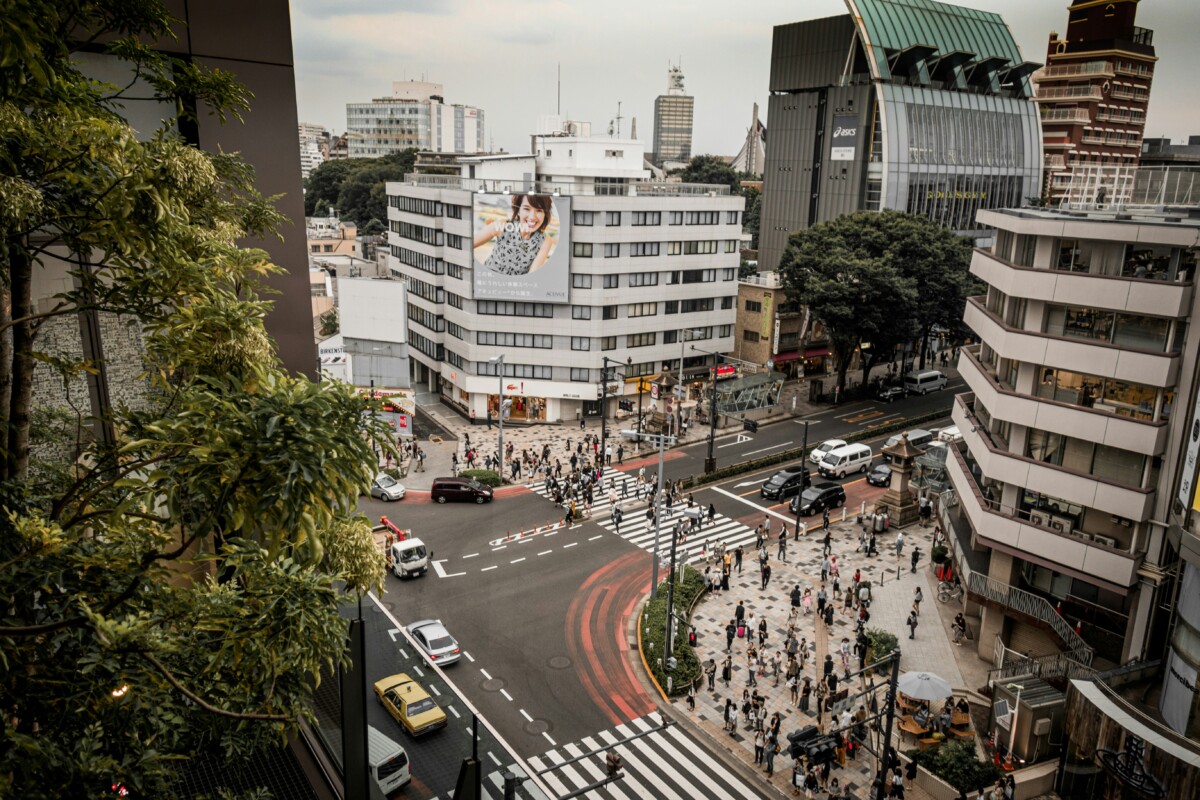
Examples exist, including in Sydney. Over roughly two decades, former industrial land near a major rail hub was redeveloped into a dense neighbourhood comparable in density to parts of Manhattan. It includes parks, schools, shopping, and strong public transport. Despite early scepticism, it has become highly desirable.
The lesson is not novelty, but execution. Density works when daily life works. When people can walk to parks, cross streets comfortably, access schools, and live without constant car use, resistance fades.
Older cities demonstrate the same principle. Paris, Rome, London, and parts of New York show that density can coexist with identity and civic life. These places are not free of inequality or displacement, but they demonstrate what sustained investment and design coherence can produce.
Why Sprawl Persists
If density can work, why does sprawl continue? Alec points to cost, governance, and culture. It is cheaper in the short term to build outward than to repair and densify existing urban fabric. Political cycles reward visible delivery, not long-term stewardship. Meanwhile, the detached house remains a symbol of success.
There is also failure in precedent. Too many dense developments of the past were hostile places. They taught generations to associate density with discomfort and neglect. Reversing that memory requires visible success, not theory.
“We have enormous amounts of urban land that are underperforming,” Alec said. “Why do we need to go out when we’ve got so much we can do with what we’ve got?”
Containment as Responsibility
Given a hypothetical “magic wand,” Alec’s answer is blunt. Stop expanding. Contain cities within their existing footprints. Improve what already exists. Make it livable, beautiful, and productive. Do not consume more land simply because it is easier.
The challenge is not technical. It is political and cultural. People must believe that dense urban life can offer safety, pleasure, and opportunity. Only then does governance follow.
“Stop the spread,” he said. “Contain the footprint.”
Closing Reflection
Urban sprawl persists because it feels affordable, familiar, and politically safe. Its real costs arrive later, dispersed across infrastructure budgets, health systems, and ecosystems. Density, by contrast, demands care. It demands design quality, patience, and trust.
The choice cities face is not between growth and restraint. It is between expansion without responsibility and improvement with intention. The latter is slower, but it is the only path that preserves land, community, and future choice.
Sponsored by...
truMRK: Sustainability Communications You Can Trust
👉 Learn how truMRK helps organisations strengthen the credibility of their communications.
Want to be a guest on our show?
Contact Us.
The Responsible Edge Podcast
Queensgate House
48 Queen Street
Exeter
Devon
EX4 3SR
Join 2,500+ professionals.
Exploring how to build trust, lead responsibly, and grow with integrity. Get the latest episodes and exclusive insights direct to your inbox.
© 2026. The Responsible Edge Podcast. All rights reserved. The Responsible Edge Podcast® is a registered trademark.
Sponsored by truMRK
© 2026. The Responsible Edge Podcast