

Listen to the full podcast episode on YouTube, Spotify, and Apple Podcasts.
In May 2025, Kenya told tea factories to stop pursuing Rainforest Alliance certification. The audit costs were landing on factories and, through green-leaf pricing, on the farmers. The buyers who required the seal were not funding it.
A September 2026 briefing from the Global Risk and Regeneration Institute set out what that means at scale. More than 680,000 Kenyan smallholders depend on tea for their livelihoods. Annual certification costs for factories ran between Ksh 384,000 and Ksh 420,000. The United Kingdom accounts for around eight per cent of Kenya’s tea exports.
“they want ethically sourced tea, but they’re not paying for it. The farmers paying for it,” says Zahra Afshar, General Counsel at Ahmad Tea.
The suspension was later lifted. The cost structure was not resolved.
The problem with the checklist
Zahra Afshar trained as a barrister and spent her early career in criminal defence and human rights law. She joined Ahmad Tea as General Counsel in 2014. The company sells to more than 90 countries. Her role now covers sustainability and social impact.
She is not hostile to certification in principle. It provides a minimum standard and has raised levels across tea-growing regions. But the model has drifted from its intent.
“It’s become a sort of vacuous checklist,” she said. “Rather than meaningful progress to do things like close living wage gap or raise living standards in a way which properly benefits livelihoods.”
The structure of Kenya’s industry sharpens the problem. Large estates can absorb audit costs and demonstrate real improvement. Smallholders farming one or two acres bring leaf to a co-operative factory, which carries the certification burden to access export markets. The smallholder on that acre sees little of the benefit. And the data generated by compliance sits outside Kenya, held by the certification body.
“Effectively the farmers are giving their data away and they’re not custodians of their own information,” Zahra said. “data is is power especially now.”
A UK buyer pays the same price for certified Kenyan tea as a buyer in a market with no certification requirement. Sometimes, she noted, the non-certified markets pay better.
One brand’s response
Ahmad Tea does not own its tea gardens. The tea workers in those gardens are not its direct responsibility. That has long been the industry’s reason not to act beyond its legal boundary.
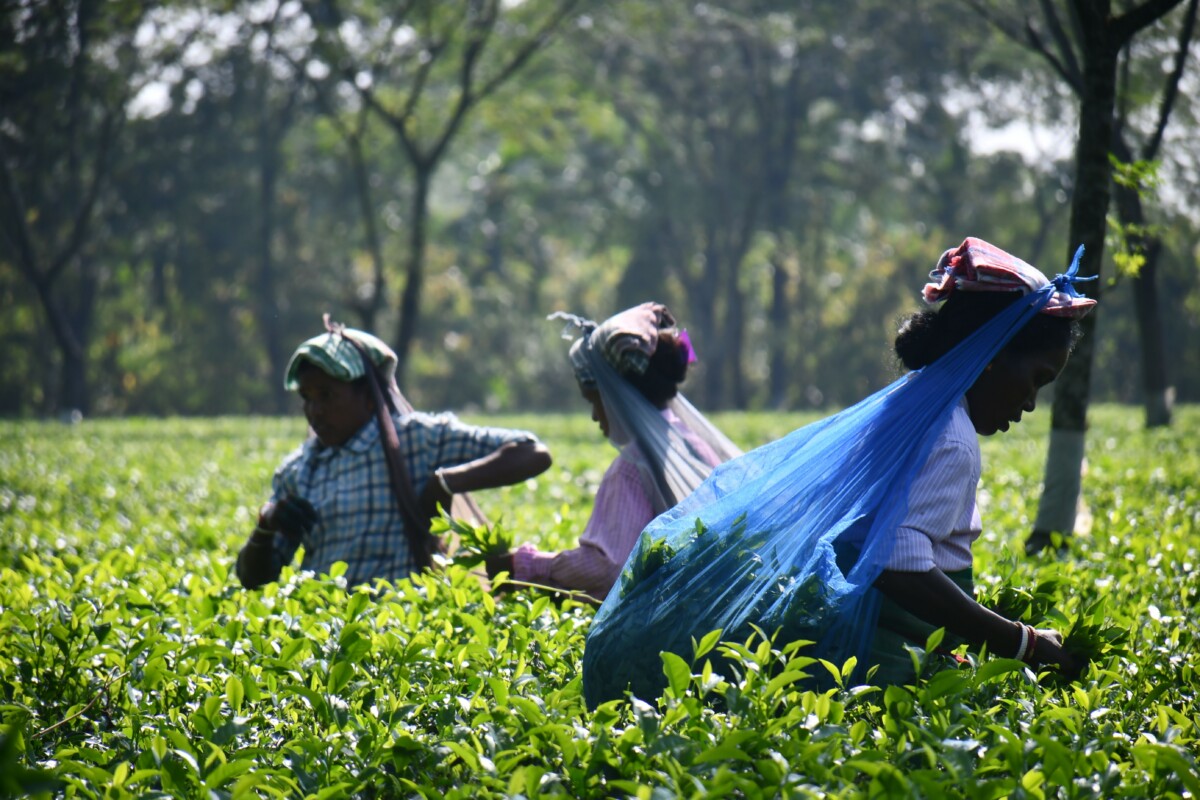
The company decided to act anyway. After examining what its third-party sustainability arrangements were actually producing on the ground, it built a programme called Hand Picked Profit Shared: digital bonus payments, held on trust, sent directly to tea workers’ bank accounts. Not a substitute for wages. A share of profit.
Tea is predominantly hand-picked. The majority of that workforce is women.
“How can we give visibility to that workforce who through history have been invisible,” Zahra said.
Making payments digital required workers to have bank accounts, which became the mechanism for a wider shift. Financial literacy workshops run alongside the programme.
“I mean, it just felt like the right thing to do,” she said.
Whether it is sufficient is a different question.

The harder problem
“Tea is undervalued,” Zahra said. “If we’re paying for, you know, a hundred tea bags for something like 2.99. I mean, it doesn’t it doesn’t make any sense.”
Supermarkets use tea as a loss leader. That creates a false floor on price which consumers have come to treat as normal. No individual brand programme changes that.
“I think it goes back to power,” she said. “The the growers don’t have enough power. They can’t demand. They don’t have the voice.”
“The question really for brands like us is, do we need, certification in order to access the market, or are we willing to find a different way to support farmers?” That question, she noted, has never really been put to the industry as a whole. It has mostly been taken for granted that certification would answer the problems. The problems are still there.
Closing
Asked what she would change about the commercial world, Zahra’s answer was simple.
“I would change how we value what is grown.”
“where there’s prosperity, everyone should prosper,” she said.
One tea company is trying to act on that. The system it operates inside has not changed.
Article discussed: “Who Pays for the Seal: Kenya Tea, Certification Cost and the Grower Who Absorbs It” Global Risk and Regeneration Institute, 11 September 2026.
Sponsored by...
truMRK: Marketing and Communications You Can Trust
👉 Learn how truMRK helps organisations strengthen the credibility of their marketing and communications.
Want to be a guest on our show?
Contact Us.
The Responsible Edge Podcast
Queensgate House
48 Queen Street
Exeter
Devon
EX4 3SR
Join 2,500+ Subscribers.
New episodes exploring responsible marketing, reporting and communications, straight to your inbox.
© 2026. The Responsible Edge Podcast. All rights reserved. The Responsible Edge Podcast® is a registered trademark.
Sponsored by truMRK
© 2026. The Responsible Edge Podcast