

Listen to the full podcast episode on YouTube, Spotify, and Apple Podcasts.
A sustainability claim under pressure
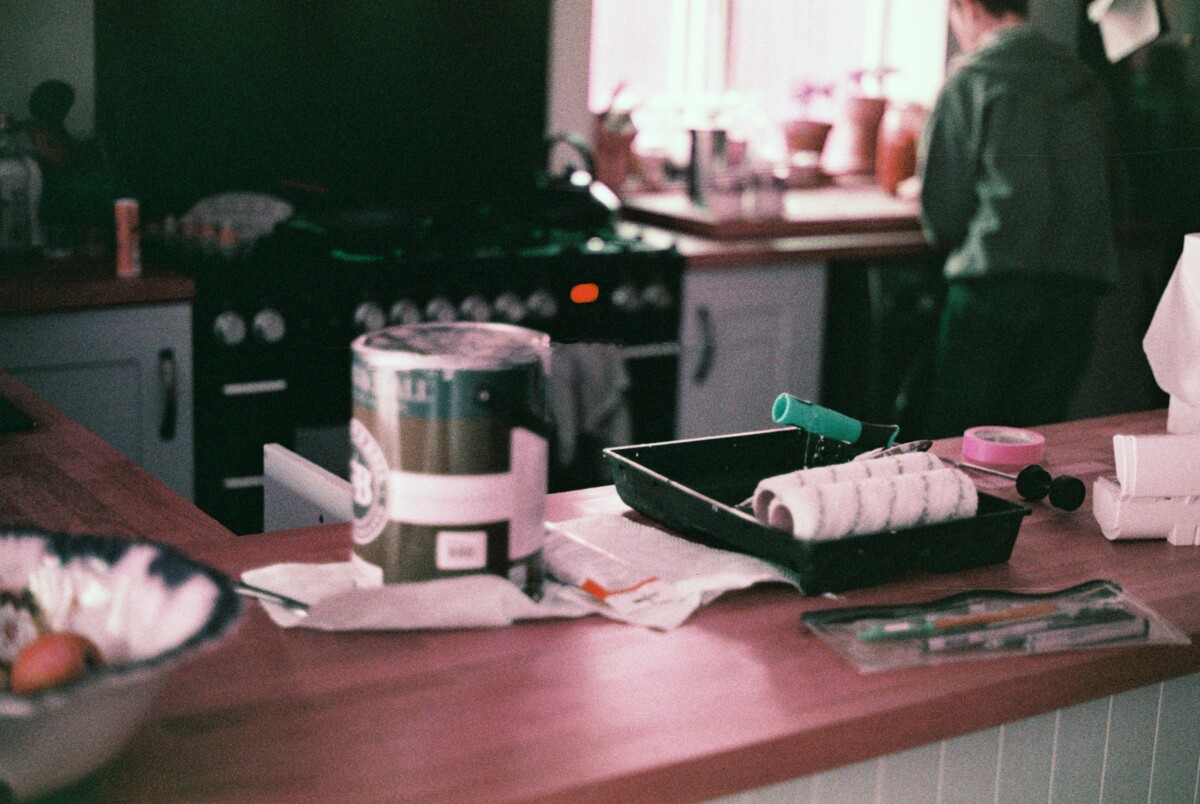
The paint aisle now looks virtuous. Labels promise low emissions, water-based formulas and environmental responsibility. Green palettes and reassuring language suggest a sector aligned with sustainability.
The chemistry behind many products tells a different story.
Historic building consultant and paint manufacturer Michiel Brouns believes the industry has become skilled at describing progress without changing its fundamentals.
Discussing a recent industry guide on environmental claims in paint, Michiel calls the strategy “a perfect example of flooding the zone.”
The document contains many terms. It contains far fewer explanations of what actually sits inside a tin of paint.
The central distinction, Michiel argues, is rarely discussed. Most modern decorative paints remain dependent on petrochemical polymers.
A career shaped by buildings
Michiel’s route into the argument began long before he started making paint.
He grew up in Maastricht in the south of the Netherlands, a city layered with Roman, Spanish, French and German influences. Historic architecture was not an abstraction. It was the physical environment.
Early work took him into the commercial world of architectural ceramics. Michiel worked for a Dutch tile manufacturer supplying designers and architects.
The decisive shift came through chance.
Waiting for a connecting bus in the town of Gulpen, Michiel repeatedly passed a small shop selling traditional building materials. Curiosity eventually took him inside.
The shop specialised in historic finishes: lime washes, traditional paints, wrought iron and restoration materials. Michiel describes the reaction as instinctive.
The materials were natural. The finishes tactile. The environment felt recognisably human.
Michiel left his corporate job soon afterwards and joined the shop’s owner, Dutch restoration expert Haske van Zadelhoff. There he learned the practical logic behind traditional materials.
Once understood, Michiel says, the reasoning becomes difficult to ignore.
An unexpected market gap
Michiel moved to the United Kingdom in 2006. The initial focus was glazing.
He founded Histoglass to supply thin double-glazing units designed for historic windows. The technology allowed period properties to improve thermal performance without replacing original frames. Over time the business became a recognised supplier for heritage buildings.
During presentations to architects and conservation professionals, one question surfaced repeatedly.
Which paint should be used on historic timber?
The answer, for Michiel, was straightforward. Linseed oil paint had been used across Europe for centuries.
The surprise was the response.
Architects often had never encountered it. High-quality versions were difficult to obtain.
“Somebody has to manufacture it,” Michiel concluded.
The decision led to the creation of Brouns & Co, producing linseed oil paints based on traditional formulations.
The work today
Today Michiel divides his time between manufacturing, consulting and education.
Brouns & Co produces linseed oil paint made from flaxseed oil. The coating contains no plastics and allows timber to release moisture rather than trapping it.
Alongside the product business, Michiel advises architects and preservation specialists on historic building envelopes.
The work involves a steady programme of lectures and professional education. Michiel has delivered hundreds of continuing professional development courses through the Royal Institute of British Architects.
Projects connected to this work range widely. They include historic estates and heritage landmarks such as the Tower of London and the Chatsworth Estate.
More recently Michiel expanded advisory work in the United States through Brouns & Galloway, focusing on historically accurate building envelope solutions.
The objective behind these activities remains uncomplicated.
Michiel says the aim is simply to replace petrochemical paints with natural alternatives wherever possible.
Sponsored by...
truMRK: Sustainability Communications You Can Trust
👉 Learn how truMRK helps organisations strengthen the credibility of their communications.
Want to be a guest on our show?
Contact Us.
The Responsible Edge Podcast
Queensgate House
48 Queen Street
Exeter
Devon
EX4 3SR
Join 2,500+ professionals.
Exploring how to build trust, lead responsibly, and grow with integrity. Get the latest episodes and exclusive insights direct to your inbox.
© 2026. The Responsible Edge Podcast. All rights reserved. The Responsible Edge Podcast® is a registered trademark.
Sponsored by truMRK
© 2026. The Responsible Edge Podcast