What Paint Teaches Us About Capitalism’s Blind Spots

Episode 112 | 9.7.2025

What Paint Teaches Us About Capitalism’s Blind Spots

For most of us, paint is one of life’s small, simple decisions. Pick a colour, slap it on the wall, job done. But Edward Bulmer sees something far deeper — and far more dangerous — lurking beneath the layers.

Listen to the full podcast episode on YouTube, Spotify, and Apple Podcasts.

Edward isn’t your average paint entrepreneur. He’s a historian by training, an interior designer by trade, and, in his own words, “a slightly reluctant businessman” who stumbled into the world of paint-making when a project at Goodwood Estate opened his eyes to an uncomfortable truth: the stuff we use to coat our walls is, quite literally, covering our homes in plastic.

It was a revelation that sent him down a rabbit hole of history, chemistry, and corporate accountability. What he discovered wasn’t pretty.

“Since the 1950s, we’ve embraced polymer technology — plastic — to make modern paint,” Edward explains.

“It’s marketed as water-based, eco-friendly, safe. But look behind the label, and it’s often anything but.”

His response? Edward Bulmer Natural Paint — a range rooted in what he calls “ancient wisdom and innovative science”, using natural, plant-based ingredients rather than fossil fuel derivatives. But his mission goes beyond tins of paint. It’s a challenge to business as usual itself.
 

The Problem With Business as Usual

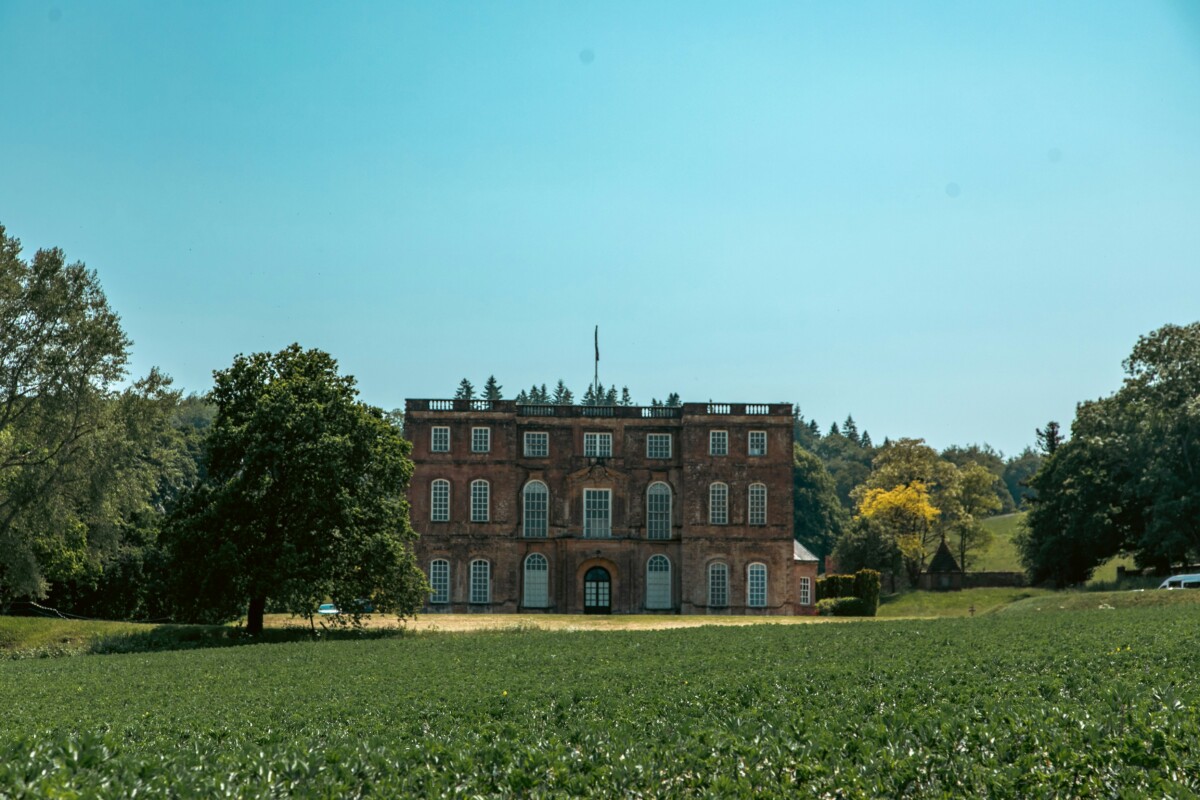
Edward’s views are shaped not only by his career but by his upbringing. Growing up in rural Herefordshire, surrounded by the legacy of his family’s cider business, he saw a model of capitalism that felt personal, connected, and — crucially — fair.

“Family businesses, when they work well, understand that looking after people and place isn’t a bolt-on. It’s part of the DNA,” he reflects.

“But too often, when businesses scale or float, that gets lost. The pursuit of endless profit takes over.”

It’s a sentiment that feels especially relevant in today’s fraught sustainability landscape. With political backlash brewing against ESG, and greenwashing rife, Edward believes transparency is now the most radical act a company can undertake.

His magic wand wish? Simple: ingredient labelling on paint tins.

“We declare what goes into food, cosmetics, cleaning products. Why not paint? If you knew you were coating your home in microplastics and petrochemicals, would you?”

 

Sustainability Isn’t Optional — It’s Survival

Beyond paint, Edward’s critique runs deeper. He’s blunt about the existential nature of the climate crisis, but also about the cognitive dissonance that allows large swathes of the commercial world to carry on as though business as usual is still an option.

“The climate effects are accelerating. The science is clear. But money still drives decisions,” he says.

“Until business understands that sustainability isn’t a nice-to-have — it’s the key to permanence — we’re stuck.”

It’s not just philosophical. It’s practical. Edward’s business model is a masterclass in solving multiple problems at once: healthy homes, heritage protection, reduced carbon footprint, and, yes, turning a profit.

“Every part of what we do can be profitable. Sustainability isn’t a sacrifice. It’s good business.”


The Optimism We Need (and the Honesty We Lack)

For all the frustrations, Edward isn’t cynical. He’s driven by a quiet, pragmatic optimism — one rooted in action, transparency, and a refusal to sugar-coat the challenges ahead.

“I couldn’t do business any other way now,” he says.

“We all need to start asking harder questions — of the products we buy, the companies we support, the systems we’ve inherited.”

Because whether it’s the paint on our walls, the food on our plates, or the future of our planet — ignorance might be easy, but it’s never harmless.

Sponsored by...


truMRK: Communications You Can Trust


👉 Learn how truMRK helps organisations strengthen the credibility of their communications.

Want to be a guest on our show?

Contact Us.

The Responsible Edge Podcast
Queensgate House
48 Queen Street
Exeter
Devon
EX4 3SR

Recognition.
Join 2,500+ professionals.

Exploring how to build trust, lead responsibly, and grow with integrity. Get the latest episodes and exclusive insights direct to your inbox.

  • This field is for validation purposes and should be left unchanged.

© 2025. The Responsible Edge Podcast. All rights reserved.
The Responsible Edge Podcast® is a registered trademark.

Sponsored by truMRK

© 2025. The Responsible Edge Podcast

Decoding Nature’s Balance Sheet: The Race to Quantify Biodiversity in Finance

Episode 105 | 16.6.2025

Decoding Nature’s Balance Sheet: The Race to Quantify Biodiversity in Finance

On this episode of The Responsible Edge, Cédric Olivares-Jirsell, Director of Sustainability Data at Matter, joins the show to unpack one of the most complex and urgent frontiers in ESG: making biodiversity legible—and investable.

Listen to the full podcast episode on YouTube, Spotify, and Apple Podcasts.

Cédric’s path from traditional finance to biodiversity metrics is both a personal and professional evolution. With experience at institutions like Schroders, Russell Investments, and Matter, he brings deep quantitative expertise to an area many in finance still struggle to define, let alone measure.

But what if nature wasn’t just priceless—but priced?


🌿 The Biodiversity Blindspot in Finance

“Historically, the financial sector has treated biodiversity as too complex to touch,” says Cédric. “But the reality is that biodiversity underpins our economy in ways we haven’t even begun to quantify.”

While climate has clearer proxies (like carbon), biodiversity lacks a single, unifying metric. This has made it easy to ignore—and difficult to regulate. That’s changing fast.

Cédric’s team at Matter is responding to frameworks like the Taskforce on Nature-related Financial Disclosures (TNFD) and evolving EU regulation by building datasets and scoring systems to bring biodiversity into the fold of investment decision-making. They’re quantifying exposure, impact, and alignment with global nature goals—all while navigating significant scientific and methodological uncertainty.


📉 From Gut Feel to Data-Driven Risk

Biodiversity loss isn’t just an ecological tragedy—it’s a material financial risk. Supply chains fail when pollinators disappear. Insurance claims rise when wetlands that prevent flooding are paved over. But these systemic risks are rarely captured in quarterly reports.

“We need to move from qualitative guesswork to decision-useful, quantitative data,” Cédric explains. “That means mapping corporate activity to actual biodiversity outcomes.”

Matter’s approach doesn’t just look at direct biodiversity impacts (like deforestation), but also indirect dependencies—such as water use or habitat fragmentation. The result? A far more granular picture of nature risk exposure.


🧠 Complexity Is a Feature, Not a Bug

Cédric is quick to caution against oversimplification.

“You don’t solve biodiversity the same way you solve carbon. It’s not a single figure; it’s a web of interdependencies. But that’s not a reason to give up—it’s a reason to lean in.”

Indeed, Matter’s work reflects a new kind of ESG thinking: one that embraces nuance and uncertainty, rather than papering over it with vanity metrics or green gloss.


🧭 What’s Next? Rethinking Value Itself

When asked what he hopes the industry will look like in 5–10 years, Cédric is clear:

“I hope we’ve moved past the idea that nature is an externality. It’s foundational. And our financial systems need to reflect that.”

That means not just better data—but better decisions. Capital must flow away from extractive business models and toward regenerative ones. That shift is already underway—but tools like Matter’s Natural Capital & Biodiversity Framework will be essential to accelerating it.

Sponsored by...


truMRK: Communications You Can Trust


👉 Learn how truMRK helps organisations strengthen the credibility of their communications.

Want to be a guest on our show?

Contact Us.

The Responsible Edge Podcast
Queensgate House
48 Queen Street
Exeter
Devon
EX4 3SR

Recognition.

Join 2,500+ professionals.

Exploring how to build trust, lead responsibly, and grow with integrity. Get the latest episodes and exclusive insights direct to your inbox.

  • This field is for validation purposes and should be left unchanged.

© 2025. The Responsible Edge Podcast. All rights reserved.
The Responsible Edge Podcast® is a registered trademark.

Sponsored by truMRK

© 2025. The Responsible Edge Podcast
Play Your Carbon Right: What Sandwiches Can Teach Us About Behaviour Change

Episode 99 | 25.5.2025

Play Your Carbon Right: What Sandwiches Can Teach Us About Behaviour Change

When Gina Camfield, Head of ESG at Aramark UK & Global Offshore, joined The Responsible Edge, we didn’t expect to be talking about football academies, protein shakes, and card games. But like many paths into sustainability, Gina’s story is one of detours and surprising overlaps—each moment building resilience, shaping perspective, and ultimately leading her to rethink how we influence behaviour at scale.

Listen to the full podcast episode on YouTube, Spotify, and Apple Podcasts.

🧠 From the pitch to the plate

Growing up in a football academy wasn’t just about chasing dreams of sport—it was training in discipline, self-awareness, and what Gina calls “foundational resilience.” That same mindset later fuelled her curiosity around nutrition during injury recovery, eventually setting her on a path from performance nutritionist to ESG leadership.

But what really sets Gina apart is her clarity on a core challenge in sustainable food: knowing what to do doesn’t mean we actually do it.

“There’s a huge gap between intention and behaviour. People say they care—but the label on the sandwich rarely drives their choice.”

Cue the research.


🧪 The carbon-labelling study that stopped us in our tracks

Gina joined us to dissect a study in Science Direct that examined whether carbon labels on sandwiches influenced consumer choices. The results were sobering:

  • 69% of people said they valued carbon labels

  • Only 27% said it influenced their purchase

The implication? We’re walking into shops with good intentions, but walking out with a BLT.

Why? The study points to a lack of understanding of carbon labels, information overload, and competing priorities like cost and convenience.

“It’s like giving people a nutrition label in a language they don’t speak—and then expecting them to change their habits.”

This “action gap” isn’t new, but Gina believes it’s fixable—with the right internal tools and a behavioural nudge or two.


♻️ From sticker to system: How Aramark re-engineered food labelling

Here’s where the Rory Sutherland part kicks in.

What if carbon labelling isn’t just a sticker for the consumer, but a lever for chefs?

At Aramark, carbon data is now embedded into recipe systems, allowing teams to analyse high-impact meals and reformulate them at the source—quietly shifting sustainability without asking customers to make heroic choices.

This means:

  • A chef uploads a new dish, and the carbon score auto-generates

  • Recipes can be tweaked behind the scenes to lower carbon impacts

  • Communication is handed over to other chefs, not a corporate team

“Chefs want to hear from chefs. They don’t want someone from corporate coming in telling them to cut beef.”

It’s a brilliantly behavioural move. Aramark doesn’t wait for customers to get fluent in carbon labelling—they engineer better choices upstream and make the sustainable option the easy one.


🧑‍🏫 Playing games, sparking conversations

That doesn’t mean the customer gets ignored. Gina and her team have launched a range of engagement tools, including…

🎮 Play Your Carbon Right – A sandwich-themed take on Play Your Cards Right, where users guess whether a meal is higher or lower in carbon than the last

📱 QR codes at points of sale – Linking to full carbon impact explanations

🥇 “A-Rated Dish of the Day” – Turning carbon labels into something people can aspire to, not just tolerate

“It’s about sparking curiosity, not guilting people into change.”


🪴 The big opportunity? Feeding 250,000 people… better

With Aramark serving over a quarter of a million meals daily in the UK alone, the stakes are high. Around 70% of their carbon footprint comes from food purchasing, especially animal-based ingredients.

That’s why Gina’s work is focused not just on reformulating dishes, but on sourcing regenerative produce, rethinking waste, and supporting smaller, sustainable suppliers across the value chain.

“We’re not perfect. No one is. But the scale of the opportunity in food is massive.”

Her ultimate goal? To embed ESG in every commercial decision by default—so it’s no longer a bolt-on, but a reflex.


✨ Final thought: ESG shouldn’t be exceptional

In her “magic wand” moment, Gina didn’t ask for a shiny new label or global policy breakthrough. She asked for something much simpler:

“I’d want ESG to be factored into every decision—automatically. Not an afterthought. Just part of how things are done.”

In a world of short-term targets and endless KPIs, it’s a radical idea cloaked in pragmatism.

And maybe, just maybe, that’s how change really happens: not with slogans, but with sandwiches.

Sponsored by...


truMRK: Communications You Can Trust


👉 Learn how truMRK helps organisations strengthen the credibility of their communications.

Want to be a guest on our show?

Contact Us.

The Responsible Edge Podcast
Queensgate House
48 Queen Street
Exeter
Devon
EX4 3SR

Recognition.

Join 2,500+ professionals.

Exploring how to build trust, lead responsibly, and grow with integrity. Get the latest episodes and exclusive insights direct to your inbox.

  • This field is for validation purposes and should be left unchanged.

© 2025. The Responsible Edge Podcast. All rights reserved.
The Responsible Edge Podcast® is a registered trademark.

Sponsored by truMRK

© 2025. The Responsible Edge Podcast

Why Business Needs to Reimagine Organisational Structures to Solve Sustainability Challenges

Episode 90 | 24.4.2025

Why Business Needs to Reimagine Organisational Structures to Solve Sustainability Challenges

In the latest episode of The Responsible Edge, Laura Hunter joined us to explore how the structures underpinning business are holding back progress on sustainability—and why redesigning them is now urgent.

Listen to the full podcast episode on YouTube, Spotify, and Apple Podcasts.

Laura grew up in the shadow of deindustrialisation. Raised in a coal mining village in South Yorkshire, she witnessed first-hand how progress for some meant devastation for many. That early understanding of inequality and its deep social consequences shaped the trajectory of her career—and the powerful insights she shares today.


The Legacy We Haven’t Escaped: Outdated Organisational Thinking

From the late 19th century onwards, thinkers like Frederick Taylor and Max Weber helped craft the management models still dominating companies today:

  • 📚 Scientific Management: Maximise efficiency by turning organisations into tightly-controlled machines.

  • 🏢 Bureaucratic Structures: Standardise processes, create rigid hierarchies, and define success through productivity and control.

At the time, these ideas revolutionised business. But in today’s world, trying to solve systemic sustainability challenges with “scientific management” principles is like trying to fix a spaceship with Victorian plumbing.

“We’re using outdated ways of working to try and solve challenges that have never been solved before.”

The sustainability issues we face require creativity, imagination, and dynamic thinking—not rigid hierarchy and departmental silos.


Why Compliance Alone Won’t Save Us

Laura is clear: compliance is essential—but it’s not the end goal.

“We can’t compliance our way out of this.”

Organisations have rightly focused on building robust sustainability reporting, frameworks, and compliance mechanisms. But in doing so, many have squeezed out the very things that drive genuine change: innovation, experimentation, and human creativity.

Without making space for new thinking, compliance risks becoming a comfort blanket that lulls organisations into a false sense of progress.


Introducing the ‘Now Work’ Philosophy

Frustrated by outdated structures, Laura founded The Now Work, a new kind of business designed around modern sustainability needs.

Here’s what makes it different:

  • 🌍 2,000-strong global network of sustainability experts across strategy, carbon accounting, creative storytelling, science, and systems thinking.

  • 🚀 Flexible talent models: helping businesses “rent, borrow, or share” sustainability expertise.

  • 🛠️ Built for agility, creativity, and real transformation—not just reporting and box-ticking.

It’s a glimpse into the future of organisational design: porous, flexible, human-centred, and impact-driven.


Rethinking Power: Why Shared Value Networks Matter

Laura also discussed the concept of Shared Value Networks (SVNs)—a radical rethink of how organisations could be structured.

Instead of all decision-making power sitting at the centre, SVNs operate at the edges, connecting companies with external stakeholders: NGOs, educators, citizens, and others. This creates a decentralised web of knowledge, co-creation, and collective intelligence.

Key ideas:

  • Impact Coordinators: New leadership roles managing the interconnected networks.

  • 🌱 Organic structures, intentionally designed for creativity and adaptability.

  • 🤝 Genuine collaboration with external voices, not just tokenistic advisory boards.

Laura believes models like SVNs can unlock the creativity and stakeholder engagement needed for real systemic change.

“We need space for creativity. We’re not going to solve these challenges by staying rigidly inside traditional structures.”


The Real Risk: Losing the Next Generation

One of Laura’s most powerful warnings? That by focusing too much on compliance, companies risk discouraging the next wave of sustainability talent.

If the sustainability profession becomes seen as purely technical and compliance-led, we will miss out on the creative, passionate innovators needed to lead true transformation.


Laura’s Magic Wand: Tackling Wealth Inequality

If given a magic wand to change one thing in business, Laura’s choice was clear:

“I want businesses to take rising wealth inequality seriously. Without tackling inequality, we won’t build a society capable of creating a better future.”

Business can’t exist in a vacuum. A sustainable economy is impossible without social justice.


Final Thoughts: Building the Businesses We Need

Laura’s message is both a challenge and an opportunity:

  • 🌟 Redesign your structures.

  • 🌟 Build spaces for creativity.

  • 🌟 Connect beyond your walls.

  • 🌟 Tackle social issues, not just environmental ones.

In short: Stop trying to save the world with broken models.

Sponsored by...


truMRK: Communications You Can Trust


👉 Learn how truMRK helps organisations strengthen the credibility of their communications.

Want to be a guest on our show?

Contact Us.

The Responsible Edge Podcast
Queensgate House
48 Queen Street
Exeter
Devon
EX4 3SR

Recognition.

Join 2,500+ professionals.

Exploring how to build trust, lead responsibly, and grow with integrity. Get the latest episodes and exclusive insights direct to your inbox.

  • This field is for validation purposes and should be left unchanged.

© 2025. The Responsible Edge Podcast. All rights reserved.
The Responsible Edge Podcast® is a registered trademark.

Sponsored by truMRK

© 2025. The Responsible Edge Podcast

From Plot to Plate: How Personal Sustainability Can Empower Entire Communities

Episode 87 | 14.4.2025

From Plot to Plate: How Personal Sustainability Can Empower Entire Communities

“Waste is money.” It’s a simple phrase—but in the hands of South African sustainability leader Tozama Kulati Siwisa, it becomes a blueprint for transforming lives, rethinking business, and tackling climate change from the ground up.

Listen to the full podcast episode on YouTube, Spotify, and Apple Podcasts.

In this episode of The Responsible Edge, Tozama joins host Charlie Martin to share her deeply personal and professional journey—from becoming a mother at 15 and putting herself through university, to leading sustainability for some of South Africa’s biggest companies. But this isn’t just a story of corporate ESG frameworks—it’s about how self-sufficiency and environmental stewardship can be taught, lived, and scaled to create true change.


🌍 Sustainability as Survival: Lessons from the Eastern Cape

Raised in the rural Eastern Cape, Tozama grew up in a household where sustainability wasn’t a lifestyle trend—it was survival.

“My mum would insist on a vegetable garden, on collecting rainwater, and on sorting waste… She didn’t know she was teaching ESG. It was just how we got by.”

After becoming a mother at 15, Tozama defied societal expectations by putting herself through university, working two jobs, and later funding her siblings’ education. This drive—to move beyond poverty—ultimately led her into corporate sustainability roles at organisations like Eskom and Lonmin, where she connected her upbringing with the professional world of ESG.


💡 Turning ESG from Buzzword to Behaviour

Tozama’s lightbulb moment came when she realised that the same sustainability habits she’d learned at home could be applied in boardrooms, communities, and entire industries.

“At first, ESG was just a buzzword. But when I looked closely, I realised—this is what we’ve been doing all along.”

In roles that spanned community development, local economic empowerment, and corporate sustainability compliance, she witnessed the direct link between environmental awareness and social mobility—particularly in mining communities where pollution, poverty, and unemployment intersect.


🧑‍🌾 Community Power: Farming, Waste & the Value of Self-Sufficiency

Tozama’s ethos is clear: when individuals take control of their resources, they unlock resilience—not just for themselves, but for entire communities.

“If you recycle your water, grow your own vegetables, and collect your own eggs, you don’t just reduce waste—you build dignity and independence.”

Through initiatives that encouraged schools to grow their own food and reuse recycled water, she saw how sustainability could alleviate poverty and empower marginalised groups.


🌱 The Kids Are the Key: Building a Climate-Conscious Generation

A key theme from the show—and the accompanying Vox article discussed—was the power of early intervention.

In South Africa’s Western Cape, the Climate Change Champs programme is teaching children to see environmental responsibility not just as a duty, but as an opportunity. From medicinal plants to waste recycling, these young minds are already identifying as future climate scientists and entrepreneurs.

“We need to start them young. Because when a child knows their waste has value, they’ll change their household, their school, their entire community.”

Tozama envisions a future where sustainability is taught alongside literacy and numeracy—and where children from rural communities can become green economy leaders.


🚨 Class & Climate: The Realities of Environmentalism in South Africa

One of the most powerful takeaways from the episode is Tozama’s breakdown of how environmentalism is perceived across different socio-economic groups in South Africa:

  • For those in survival mode, sustainability feels like a luxury.

  • For those in stable jobs, it’s about resource efficiency—saving water and lowering bills.

  • For the wealthy, it’s something they often outsource.

This class-based perspective is critical in designing policies and funding strategies that are truly inclusive.


🤝 What Role Should the Global North Play?

The episode also tackled the often-uncomfortable question of how European or Global North institutions support sustainability efforts in the Global South.

Tozama’s view?

“If there’s someone willing to fund people becoming self-sustaining—who’s not trying to give handouts but to enable long-term change—that’s incredibly valuable. Especially in our villages, where poverty is visible in the air.”

But she’s also clear: support must be led by local insight, not imposed from afar.


✨ Magic Wand Moment: Make Ethics a Contractual Obligation

If handed a magic wand, Tozama would instil one change in the commercial world:

“Less greed, more compliance. If companies simply did what they committed to do—built the schools, delivered the jobs, protected the water—they would change lives.”

Her call is a potent reminder: ESG must be more than promises on paper. It must be monitored, enforced, and lived—especially in communities where corporate behaviour can make or break futures.


Final Thoughts

Tozama’s story is not just inspiring—it’s instructional.

It shows that real sustainability isn’t imposed from boardrooms or think tanks. It’s grown in vegetable gardens. It’s felt in the weight of a water bucket. It’s taught to children who turn recycling into purpose.

When ESG is grounded in personal experience and community wisdom, it becomes more than policy. It becomes a movement.

Sponsored by...


truMRK: Communications You Can Trust


👉 Learn how truMRK helps organisations strengthen the credibility of their communications.

Want to be a guest on our show?

Contact Us.

The Responsible Edge Podcast
Queensgate House
48 Queen Street
Exeter
Devon
EX4 3SR

Recognition.

Join 2,500+ professionals.

Exploring how to build trust, lead responsibly, and grow with integrity. Get the latest episodes and exclusive insights direct to your inbox.

  • This field is for validation purposes and should be left unchanged.

© 2025. The Responsible Edge Podcast. All rights reserved.
The Responsible Edge Podcast® is a registered trademark.

Sponsored by truMRK

© 2025. The Responsible Edge Podcast
What Would Nature Do? Rethinking Business Strategy

Episode 78 | 12.3.2025

What Would Nature Do? Rethinking Business Strategy

In this episode of The Responsible Edge, host Charlie Martin sits down with Nicky O’Malley, a leader in nature-positive business strategy. With a career spanning conservation, corporate responsibility, and high-impact campaigns, Nicky has a clear message: businesses must move beyond sustainability and towards regeneration.

Listen to the full podcast episode on YouTube, Spotify, and Apple Podcasts.

Rather than just reducing harm, she argues that companies should actively restore, replenish, and rethink their relationship with nature. But what does that actually look like in practice? This conversation dives into the principles of nature-first business, the power of storytelling, and why the most successful organisations of the future will be those that ask themselves: What would nature do?


🌍 Why Sustainability Isn’t Enough—We Need Regeneration

Many businesses now recognise the importance of sustainability, but sustaining the status quo isn’t enough—especially when nature is in decline. Nicky highlights that businesses need to shift their focus from merely mitigating damage to actively contributing to planetary health.

🔹 Moving beyond carbon – While net-zero targets dominate ESG discussions, biodiversity and nature loss are often overlooked.
🔹 Replenishing, not just reducing – Businesses need to restore ecosystems rather than just minimising their footprint.
🔹 Nature as a stakeholder – Just as companies consider shareholders and employees, they must account for nature in decision-making.

“We aren’t going to have businesses and an economy unless we look after the ecosystem within which we operate. Without nature, we don’t exist.”


🎶 How a Birds-Only Chart Hit Inspired Millions

One of Nicky’s most impactful projects was “Let Nature Sing”, a campaign she spearheaded at the RSPB. The goal? Get a track made entirely of birdsong into the UK music charts to remind people of the beauty—and fragility—of nature.

📢 Five million people heard birdsong in a single day.
🚆 It played in train stations, cathedrals, and public spaces across the country.
🎶 The track reached #11 in the UK charts—outperforming global pop stars!

“When people heard birdsong on their commute, they stopped and smiled. It sparked an emotional connection—because when people care, they want to protect.”

The success of this campaign wasn’t just about awareness—it was about engaging people emotionally. For businesses, this is a crucial lesson: winning hearts and minds is essential for driving real environmental action.


🌱 Three Ways Businesses Can Learn from Nature

If businesses started thinking more like nature, how would they change? Nicky suggests applying three core principles from the natural world:

1️⃣ Systems Thinking: Break Down Silos

Just as ecosystems thrive through interconnection, sustainability should not be siloed within a company. It must be embedded into:

Operations – Sustainable supply chains, circular design
Leadership – Decision-making that considers long-term ecological impact
Culture – Employees empowered to champion environmental goals

“We need to stop thinking of sustainability as a ‘department’ and instead embed it across every function.”

2️⃣ Adaptation Over Perfection: Test, Learn, Iterate

Nature evolves through experimentation—and businesses must do the same.

🔄 Start small – Pilot nature-focused initiatives before scaling them.
📊 Measure impact – Track results and refine strategies.
💡 Stay flexible – Environmental challenges will shift, and so must businesses.

“If we wait for everything to be perfect before we act, we’ll never get started.”

3️⃣ Contribution Over Extraction: Give More Than You Take

Businesses need to stop asking, What can we take? and start asking, What can we give back? 🌍

🌿 Regenerative supply chains – Investing in biodiversity, soil health, and ethical sourcing.
🏡 Community-led projects – Supporting local environmental restoration efforts.
♻️ Product innovation – Designing waste-free, circular products.

“We need to flip the script. How can my business create a positive legacy rather than just extracting resources?”


🚀 Breaking Barriers: How Businesses Can Act Now

Many companies struggle not with why they should act, but how. Common roadblocks include:

ESG fatigue – Sustainability feels like a compliance burden.
Solution: Frame nature-first business as an opportunity for innovation, not just a requirement.

Short-termism – Quarterly financial pressures stifle long-term environmental thinking.
Solution: Shift focus from profit maximisation to sustainable wealth creation.

Fear of greenwashing – Companies worry about backlash for imperfect sustainability efforts.
Solution: Be transparent – share progress and challenges. Consumers value honesty.

“Transparency builds trust. No company is perfect, but honesty and action go a long way.”


✨ The Magic Wand: A Business Mindset Shift

If Nicky had a magic wand, she’d make every business leader ask nature for advice before making decisions:

✅ Would nature take without giving back? No.
✅ Would nature resist change? No.
✅ Would nature evolve, regenerate, and collaborate? Yes.

“Nature isn’t just something we protect—it’s something we’re part of. The businesses that embrace this will be the ones that thrive.”


🌿 Final Thought: Don’t Just Sustain—Regenerate

📌 Test a small nature-first initiative in your business.
📌 Think beyond carbon—embed biodiversity into decision-making.
📌 Share progress openly—authenticity wins consumer trust.

👉 The most successful businesses of the future won’t just reduce harm—they’ll restore, replenish, and rethink their role in the natural world.

Sponsored by...


truMRK: Communications You Can Trust


👉 Learn how truMRK helps organisations strengthen the credibility of their communications.

Want to be a guest on our show?

Contact Us.

The Responsible Edge Podcast
Queensgate House
48 Queen Street
Exeter
Devon
EX4 3SR

Recognition.

Join 2,500+ professionals.

Exploring how to build trust, lead responsibly, and grow with integrity. Get the latest episodes and exclusive insights direct to your inbox.

  • This field is for validation purposes and should be left unchanged.

© 2025. The Responsible Edge Podcast. All rights reserved.
The Responsible Edge Podcast® is a registered trademark.

Sponsored by truMRK

© 2025. The Responsible Edge Podcast