Why AI Can Speed Up Hiring but Still Miss the Right Leader

Episode 143 | 19.1.2026

Why AI Can Speed Up Hiring but Still Miss the Right Leader

An executive search founder reflects on AI, food systems, and why human judgment still matters when leadership decisions shape the future of food.

Listen to the full podcast episode on YouTube, Spotify, and Apple Podcasts.

​Scene and Context

Executive search is under pressure.

Clients want speed, certainty, and scale. Artificial intelligence promises all three.

In leadership hiring, the stakes are higher than efficiency. Decisions shape culture, strategy, and long-term outcomes. In sectors like food and agriculture, they also shape health and environmental impact.

As AI tools move quickly into recruitment, the question is no longer whether they will be used. The question is where judgment should still sit with people.

 

Formation and Origins

Simon Heal did not begin his career in sustainability or food systems. He trained as a computer scientist and spent more than two decades in mainstream executive search, building leadership teams for IT, e-commerce, and fintech businesses. He describes himself as a technologist who moved into people work because he was drawn to detail, pattern, and character rather than sales.

The shift came later. About six years ago, his young son came home from school after watching a documentary on climate change. Simon recalls being asked directly what he was doing to help. The question stayed with him. He began to examine where his skills could have real effect.

“What am I really good at?” he remembers asking himself.

The answer was clear. Building teams. Finding leaders. Understanding potential.


A Turning Point Toward Food Systems

Food and agriculture stood out. Simon grew up in Cheshire, surrounded by farming. His grandfather was a farmer. The industry felt familiar and increasingly urgent. He saw a sector under strain, doing significant harm, but also entering a period of rapid innovation.

Rather than work broadly across the industry, he narrowed his focus. Simon chose to work only with companies aiming to shift outcomes, not simply improve optics. That decision led to the founding of Myco Search, a specialist executive search firm serving food tech, agri-food tech, and food health innovators.

The positioning is deliberate. Candidates know the companies are serious. Founders know the candidates are motivated by impact as well as role.


The Work He Is Doing Now

Myco Search focuses on leadership and specialist hires in emerging food technologies. Many clients are early-stage or scaling businesses. The work involves risk. Technologies are new. Track records are limited. Commercialisation is uncertain.

Heal is explicit about those realities. His approach is open book. Candidates are told early where the risks sit and what could go wrong.

Founders are asked directly about weaknesses, gaps, and pressure points.

The goal is not to remove uncertainty, but to avoid surprises.

 

AI, Recruitment, and the Risk of Repeating the Past

Simon is a long-time user of technology and an advocate for AI used carefully. He sees clear value in using tools to expand research capacity, reduce administrative load, and surface wider pools of candidates.

Where he draws a firm line is judgment.

AI systems learn from historical data. In leadership hiring, that means past profiles, past success, and past patterns. Simon warns that this can quietly reinforce narrow definitions of leadership and filter out potential that does not yet have a record.

“AI is very good at spotting patterns,” he says. “It cannot spot potential.”

In emerging sectors like food tech, that limitation matters. Innovation often comes from people who do not fit existing templates. Over-reliance on automated screening risks narrowing thinking at the moment it needs to widen.

Simon deliberately includes what he calls a wildcard candidate in many shortlists. Someone who does not look right on paper, but shows conviction, learning capacity, and alignment with the mission. Sometimes they are hired. Sometimes they are not. They almost always sharpen decision-making.


The Tension That Remains

Food businesses remain driven primarily by profit. Simon sees this as the central structural tension. Cheap, damaging food is rewarded. Healthier, lower-impact models struggle for scale.

If he could change one thing, he would reverse the order. Human and planetary health first. Profit second.

He is realistic about constraints. Companies must survive. Investors expect returns. But he believes leadership choices can move systems, especially when capital and talent begin to align with long-term outcomes.


Closing Reflection

AI will continue to reshape executive search. Simon does not resist that shift.

He argues instead for clarity about where tools end and responsibility begins.

In leadership hiring, judgment remains the work. The cost of getting it wrong is not just commercial. In food systems, it reaches into health, land, and trust.

Speed matters. Empathy matters more.

Sponsored by...


truMRK: Sustainability Reports and Communications You Can Trust


👉 Learn how truMRK helps organisations strengthen the credibility of their reporting and communications.

Want to be a guest on our show?

Contact Us.

The Responsible Edge Podcast
Queensgate House
48 Queen Street
Exeter
Devon
EX4 3SR

Join 2,500+ Leaders.

Exploring how to build trust, lead responsibly, and grow with integrity. Get the latest episodes and exclusive insights direct to your inbox.

  • This field is for validation purposes and should be left unchanged.

© 2026. The Responsible Edge Podcast. All rights reserved. The Responsible Edge Podcast® is a registered trademark.

Sponsored by truMRK

© 2026. The Responsible Edge Podcast

Why Hard Experience Is Becoming a Hiring Asset

Episode 141 | 6.1.2026

Why Hard Experience Is Becoming a Hiring Asset

In frontline roles under pressure, some employers are finding that lived hardship translates into better judgment, stronger retention, and calmer service.

Listen to the full podcast episode on YouTube, Spotify, and Apple Podcasts.

​Scene and Context

Frontline recruitment has become one of the hardest problems for large employers. Customer-facing roles demand patience, emotional control, and reliability, yet turnover is high and training pipelines are fragile.

Managers report the same pattern. Candidates start, struggle, and leave. The cost is not just financial. Service quality drops, pressure shifts to remaining staff, and trust erodes.

At the same time, thousands of people who want to work remain excluded from hiring processes because they lack stable housing. The two problems are rarely discussed together.

Standing Tall exists precisely at that intersection.


Formation: Seeing What Others Missed

Christy Acton did not arrive at this work through policy or theory. Before founding Standing Tall, he ran a night shelter in Birmingham.

What struck him was not disengagement, but readiness.

“Half the people there wanted to work,” he said. “But no one would give them a chance.”

The barrier was structural rather than personal. Without an address, applications stalled. Without income, housing remained out of reach. Christy described it bluntly: “No job, no home. No home, no job.”

What changed his thinking was what happened when that loop was broken. When someone secured work, the effect was immediate. “They’d come in at the end of that day transformed,” he said. “You could see the physical difference of this person feeling valued again.”


Where Employers Started Paying Attention

Standing Tall places people into specific roles where pressure is unavoidable. One of the clearest examples Christy returned to was customer service work at major railway stations.

These are not forgiving environments. Delays, complaints, and public frustration are routine. According to Christy, station managers noticed something unexpected about recruits who had come through homelessness.

“When someone comes into the station angry or not in a great state of mind,” he said, “our candidate is able to relate to them and help.”

The explanation was not technical skill. It was judgment. “They’ve been through some difficult times,” he said. “They have that emotional intelligence.”

For employers, this mattered. “If they’re trying to find staff who are going to stay with them for the long term,” Christy said, “they’re getting it from Standing Tall.”


Not Charity, Performance

Christy is careful about motivation. He does not present inclusive recruitment as an act of goodwill.

“The primary decider for them is that they need good staff,” he said. “And we’re finding them.”

Standing Tall’s model is deliberately narrow. Employers start with one role, one hire. Each person enters work alongside secure housing and twelve months of ongoing support. That stability reduces early drop-out, one of the most expensive failures in frontline recruitment.

Christy described what often follows. “They go, wow, this is really working,” he said. “And then our partnership grows from there.”

The social impact is real, but it follows operational success rather than leading it.


The Limits of the Argument

Christy avoids sweeping claims. Hardship does not automatically produce good employees. Standing Tall only works with people who are ready and motivated.

Nor does he argue that hiring alone can address homelessness. Housing supply and living costs remain structural pressures well beyond any employer’s reach.

What he does argue is specific. When recruitment relies too heavily on conventional signals, employers exclude people who are well suited to the hardest parts of the job.

“Hiring changes who is inside the organisation,” he said. “That’s harder than volunteering. But it’s where the real impact is.”


Closing Reflection

Standing Tall’s work reframes inclusion as a question of judgment rather than virtue.

In frontline roles, where emotional control and resilience matter more than polish, experience can outperform credentials. For employers facing chronic shortages, the most reliable staff may be those who fought hardest to re-enter work.

This is not a story about charity. It is about what happens when businesses widen their definition of capability and judge success by who stays, not who looks right on paper.

Sponsored by...


truMRK: Sustainability Reports and Communications You Can Trust


👉 Learn how truMRK helps organisations strengthen the credibility of their reporting and communications.

Want to be a guest on our show?

Contact Us.

The Responsible Edge Podcast
Queensgate House
48 Queen Street
Exeter
Devon
EX4 3SR

Join 2,500+ Leaders.

Exploring how to build trust, lead responsibly, and grow with integrity. Get the latest episodes and exclusive insights direct to your inbox.

  • This field is for validation purposes and should be left unchanged.

© 2026. The Responsible Edge Podcast. All rights reserved. The Responsible Edge Podcast® is a registered trademark.

Sponsored by truMRK

© 2026. The Responsible Edge Podcast

What the ESG Backlash Really Means for Business

Episode 138 | 15.12.2025

What the ESG Backlash Really Means for Business

Behind the quieter language and political pressure, why most companies are still holding their ground.

Listen to the full podcast episode on YouTube, Spotify, and Apple Podcasts.

From Certainty to Caution

Only a short time ago, ESG carried a sense of inevitability. Targets were announced. Frameworks multiplied. Public commitments became routine. Sustainability appeared embedded in corporate direction.

That certainty has since eroded. Political pressure has sharpened. Language once treated as neutral now carries risk.

Acronyms themselves have become contested. Some companies have softened how they speak. Others have fallen silent.

Yet the conditions that first drove sustainability have not eased. Supply chains remain exposed to water stress, land degradation, and labour instability. Climate risk continues to surface through insurance markets, regulation, and capital allocation. The contradiction is clear. The work persists, even as the confidence around it recedes.


A Career Built Inside Brands and Systems

Jonathan Hall is Managing Partner of Kantar’s Sustainable Transformation Practice. Over more than two decades, he has worked inside global brand and consulting organisations, observing how businesses respond to social and economic change.

Trained in modern languages at Oxford, Jonathan entered marketing through a fascination with culture and behaviour. His career took him across Europe and the United States, leading innovation, strategy, and consulting teams for multinational clients. Over time, sustainability moved from a peripheral concern to a central one in those conversations.

After returning to the UK, Jonathan chose to deepen his formal understanding of sustainability, completing postgraduate study at the Cambridge Institute for Sustainability Leadership. He then proposed the creation of a dedicated sustainability practice inside Kantar.

“I pitched the idea of launching a practice to the leadership,” Jonathan said.

“The exec signed that off, and very quickly we were off to the races.”


Launching Sustainability in a Crisis

The Sustainable Transformation Practice launched in March 2020, as the pandemic spread globally. The timing tested more than commercial viability. It tested whether sustainability inside a large organisation was a strategic commitment or a fair-weather initiative.

For Jonathan, the experience clarified what internal change requires.

“You are on amber alert all the time,” he said. “You’re constantly having to make the argument.”

Client demand proved decisive. Companies dependent on global supply chains were forced to confront fragility in real time. Sustainability ceased to be abstract. It became operational, material, and immediate.


What the Practice Does Now

Jonathan now leads Kantar’s Sustainable Transformation Practice, integrating sustainability into consumer insight, brand strategy, and organisational decision making. The work focuses on how people relate to brands not only as consumers, but also as citizens and employees.

Alongside client work, Jonathan advises academic institutions at Oxford and Cambridge, sits on the board of the water charity Water Unite, and works with global industry bodies. Across these roles, his view is consistent. Sustainability cannot remain a specialist function. It must operate horizontally across organisations.


Why Commitment Has Gone Quiet

Jonathan does not dismiss the ESG backlash. In his experience, a minority of companies are genuinely stepping back. These tend to be organisations whose commitments were fragile to begin with. At the other end, a smaller group is accelerating, treating sustainability as a source of long-term growth and competitive advantage.

Most companies sit in between. They continue investing, but speak less publicly about it.

“The language has changed,” Jonathan said. “Moving from morality and values to materiality, resilience, and being future fit.”

This shift reflects caution, but also maturity. Sustainability is increasingly framed as a business discipline rather than a moral position.

The deeper problem, Jonathan argues, lies in how sustainability has been communicated beyond specialist audiences. Technical terms, acronyms, and distant metrics have failed to build broader legitimacy. Meanwhile, opponents have framed powerful counter-narratives around cost, risk, and personal impact.

“When things come into my world,” he said, “that’s when behaviour changes.”


What the Backlash Is Really Testing

Jonathan is sceptical of incremental fixes. The pressures facing business are systemic, affecting insurance markets, infrastructure, regulation, and trust. Addressing them will require new business models, closer collaboration with government, and leaders willing to accept risk.

“We don’t have time for tinkering around the edges,” Jonathan said. “Systems will need to change fundamentally.”

The ESG backlash, in that sense, is not the end of corporate sustainability. It is a test of whether businesses are prepared to move beyond slogans and treat responsibility as a core operating reality.

Sponsored by...


truMRK: Sustainability Reports and Communications You Can Trust


👉 Learn how truMRK helps organisations strengthen the credibility of their reporting and communications.

Want to be a guest on our show?

Contact Us.

The Responsible Edge Podcast
Queensgate House
48 Queen Street
Exeter
Devon
EX4 3SR

Join 2,500+ Leaders.

Exploring how to build trust, lead responsibly, and grow with integrity. Get the latest episodes and exclusive insights direct to your inbox.

  • This field is for validation purposes and should be left unchanged.

© 2026. The Responsible Edge Podcast. All rights reserved. The Responsible Edge Podcast® is a registered trademark.

Sponsored by truMRK

© 2026. The Responsible Edge Podcast

What Professional Services Get Wrong About Responsibility

Episode 132 | 3.11.2025

What Professional Services Get Wrong About Responsibility

Lawyer and adviser Jeff Twentyman says the real measure of integrity isn’t in office emissions or travel miles, but in what your advice enables in the world.

Listen to the full podcast episode on YouTube, Spotify, and Apple Podcasts.

Why This Conversation Matters

Most professional firms now publish long sustainability reports. They measure travel, electricity, and waste. But Jeff Twentyman says that’s only a fraction of the truth.

“The biggest part of a professional firm’s footprint is what its advice leads to,” he says.

“If the outcomes of that advice make the world worse, you can’t hide behind a green office or a recycling policy.”

It’s a simple idea, but one that cuts deep. Because it means law, finance, and consulting firms are not neutral. Their work shapes decisions that echo far beyond their buildings.

Jeff has spent more than three decades in that world. A former partner at Slaughter and May, he helped build the firm’s sustainability practice and responsible business programme. Today, he teaches at UCL, is chair of Blueprint for a Better Business, sits on the board of the Green Finance Institute, and supports purpose-led entrepreneurs. His focus is always the same: how responsibility becomes real.


From City Law to Public Purpose

Jeff didn’t plan to become a governance adviser. “I started out as a deal lawyer,” he says. “It was all about getting transactions done.”

But over time, he began to ask tougher questions. “I realised we never talked about what those deals actually meant,” he says.

“We looked at legality and efficiency, but not whether the outcome was good for society.”

That shift in perspective eventually led him to lead sustainability and responsible business at Slaughter and May. It also connected him to organisations like A Blueprint for Better Business, which challenges companies to serve the common good, and the Green Finance Institute, which pushes financial systems toward climate alignment.

His current work, he says, is about “helping people make sense of what responsibility really looks like in practice.”


Seeing the Real Footprint

In the early 2000s, law firms began to focus on their carbon emissions. “We all looked at the easy stuff,” Jeff recalls.

“Recycling, energy use, travel. And those things matter. But they’re small compared to what your advice enables.”

He offers a blunt example. “If a firm helps a client structure a deal that prolongs fossil fuel extraction, then your real footprint is that project’s emissions. You can’t offset that by switching to LED bulbs.”

This way of thinking — linking a firm’s ethics to its influence — remains rare in professional services. It’s uncomfortable. It asks firms to take moral ownership of their role in the system, not just manage their own operations.

But Jeff insists it’s where the real opportunity lies.

“Once you start looking at the impact of your work, you can choose differently. You can ask: is this something we’re proud to enable?”


Doing, Not Saying

Jeff’s career now blends boardroom work with teaching, coaching, and mentoring. He advises leaders on governance and sits with early-stage founders trying to scale responsibly. “I like variety,” he says with a smile. “I need a bit of turmoil in my life to stay interested.”

He’s also quick to challenge empty talk. “There’s a lot of saying and not enough doing,” he says.

“Firms make big claims about purpose, but integrity is what you do when no one’s watching.”

Jeff believes progress depends on honesty about trade-offs. “Sometimes you can’t please every stakeholder. Responsibility isn’t about being perfect; it’s about being transparent about what you’re choosing and why.”


The Hard Part of Change

The episode’s discussion centres on a research paper about the attitude–behaviour gap — why people who care about the planet still fly, eat meat, or overconsume. Jeff finds the topic fascinating, but warns against easy answers.

“Information doesn’t automatically change behaviour,” he says.

“People know what’s right, but we’re built for comfort and convenience.”

The paper links self-awareness, or “dispositional mindfulness,” to better choices. Jeff agrees it helps. “Mindfulness gives people a pause button. It lets you notice what you’re about to do before you do it.”

But he adds, “That’s not enough on its own. We also need incentives and rules. Sometimes governments have to make the hard calls people won’t make individually. We can’t rely on everyone becoming a monk.”


Hope and Momentum

Despite his realism, Jeff remains hopeful. He sees evidence of cultural change in daily life. “Look at diet,” he says.

“Ten years ago, vegetarianism was fringe. Now it’s mainstream. Electric cars, the same story. Change starts quietly and then tips.”

He also sees frustration among companies that want clearer direction. “Many businesses actually want stronger regulation. They’re tired of guessing what ‘good’ looks like.”

And while politics can feel stuck, Jeff believes people are moving ahead anyway. “Citizens are often braver than their leaders. You see it in communities adapting to droughts, floods, or energy shocks. They don’t need to be told it’s real — they’re living it.”


A Simple but Radical Idea

When asked what single change could make the biggest difference, Jeff doesn’t hesitate. “I’d choose equality,” he says.

“If we valued every human life equally, we’d act very differently.”

He explains that inequality fuels fear and mistrust. “When some people have too much and others have nothing, it’s very hard to cooperate. Climate change needs collective effort, but inequality makes that impossible.”

It’s a striking answer — less about technology, more about values. “We have to start treating fairness as part of sustainability,” he says. “It’s not a side issue. It’s the foundation.”


Responsibility Starts with Reality

In the end, Jeff’s message is practical, not idealistic. He wants professional firms to own the influence they hold and align their work with the outcomes they claim to support.

“For me, responsibility starts with being real,” he says.

“Look honestly at what you do. Be clear about your impact. And if you don’t like what you see, change it.”

It’s the kind of clarity that cuts through policy talk and brand language. Responsibility, as Jeff defines it, is not about saying the right thing. It’s about choosing the right thing — and accepting the weight that comes with it.

Sponsored by...


truMRK: Sustainability Reports and Communications You Can Trust


👉 Learn how truMRK helps organisations strengthen the credibility of their reporting and communications.

Want to be a guest on our show?

Contact Us.

The Responsible Edge Podcast
Queensgate House
48 Queen Street
Exeter
Devon
EX4 3SR

Join 2,500+ Leaders.

Exploring how to build trust, lead responsibly, and grow with integrity. Get the latest episodes and exclusive insights direct to your inbox.

  • This field is for validation purposes and should be left unchanged.

© 2026. The Responsible Edge Podcast. All rights reserved. The Responsible Edge Podcast® is a registered trademark.

Sponsored by truMRK

© 2026. The Responsible Edge Podcast

Inside Kent: Building Real Zero from the Inside

Episode 128 | 4.10.2025

Inside Kent: Building Real Zero from the Inside

Emma Scott on facing the truth about sustainability in a high-carbon world.

Listen to the full podcast episode on YouTube, Spotify, and Apple Podcasts.

When Emma Scott joined Kent as Vice President of Sustainability, she walked into a century-old engineering company built on oil and gas. Her brief was simple on paper: make it sustainable. In reality, it meant rebuilding trust, inside and out, in an industry many no longer believe can change.


A Blank Page, Heavy with History

Emma’s role didn’t exist before she arrived. Kent’s leadership had decided the company needed a sustainability strategy, but not much else.

“There were good things happening,” Emma recalls, “but there was no strategy. Everything was in isolation.”

The CEO’s response was to give her complete freedom. “He said, ‘I trust you. Go and do what you need to do.’ It was empowering,” she says, “but also a little scary.”

That trust became both an opportunity and a burden. Building sustainability “from scratch” meant taking a hard look at an organisation still tied to fossil fuels, and at how much it would take to change that.


Finding the Facts Before the Promises

When Emma started, Kent didn’t even know its global emissions baseline. “We had no real insight into where the big impacts were,” she admits.

Her small team, just two people, spent months collecting data from projects across dozens of countries. What they found confirmed what many suspected: one large Middle East site accounted for most of the company’s emissions.

“It was sobering,” she says. “But at least we knew where to start.”

The project became their pilot for change, swapping diesel for solar, tracking every tonne of carbon, and sharing what worked and what didn’t. “We can’t boil the ocean,” she says. “So we picked the biggest beast first.”


Why She Stays Inside the System

Kent’s deep roots in oil and gas invite scepticism. How can a company built to serve fossil fuel clients claim to be part of the transition?

Emma doesn’t dodge the question. “I’d rather be inside, helping to make change, than outside throwing stones,” she says.

“The lights still need to stay on. The question is: how do we do it better?”

She knows that balance is fragile. Kent now invests heavily in renewables and low-carbon work, but it still depends on the old energy system to survive. “We choose both,” she says. “But we choose to do both more responsibly.”


The Myth of ‘Net Zero’

Emma’s thinking sharpened when she read Digging to Zero, a Reuters investigation into decarbonising mining. She quotes a line from Fortescue Metals’ CEO: “The word ‘net’ is killing us.”

“I completely agree,” she says. “We need real zero — cutting emissions, not offsetting them.”

Kent’s own progress mirrors that stance. Rather than buying offsets, it’s testing new solar systems for its high-emitting sites. “One of them’s basically a container full of panels and batteries,” she laughs. “You pull it out of the truck, and it replaces a diesel generator.”

It’s practical, small-scale work, but real. “It’s not perfect,” she says. “But it’s honest.”


The Price of Transparency

If there’s one principle Emma refuses to compromise, it’s honesty. “We don’t want to be accused of greenwashing,” she says.

“Everything we say has to be true and clear.”

That sounds simple, but she knows how uncomfortable truth can be when progress is slow. “We’ve had to publish data that isn’t flattering,” she admits. “But hiding it would be worse.”

She works closely with Kent’s communications team to keep sustainability updates factual. “There’s a lot of jargon in our field,” she says. “People confuse sustainability with ESG. I want to make it simple and real.”


From Awareness to Ownership

Emma wants sustainability to become everyone’s job, not a specialist’s. “Education is the biggest priority,” she says.

“People need to understand how it helps them do their work better.”

She’s also pushing inclusion and well-being as part of the same mission. “Belonging is sustainability too,” she says. “It’s about people as much as carbon.”

Her long-term goal is to make herself redundant. “When sustainability’s fully embedded, I’ll have worked myself out of a job,” she smiles. “That’s success.”


Let’s Get Real

If she could change one thing about business overnight, it would be forced honesty. “Give every corporation a dose of truth serum,” she says.

“Be honest about your impacts and what you’re doing to improve.”

She wants sustainability reports to stop pretending. “They should show the good and the bad,” she says. “If they were truly honest, the world would look very different.”

For Emma, responsibility starts with reality. Her journey isn’t about perfection, it’s about staying in the uncomfortable middle, where progress depends on truth more than image.

Sponsored by...


truMRK: Sustainability Reports and Communications You Can Trust


👉 Learn how truMRK helps organisations strengthen the credibility of their reporting and communications.

Want to be a guest on our show?

Contact Us.

The Responsible Edge Podcast
Queensgate House
48 Queen Street
Exeter
Devon
EX4 3SR

Join 2,500+ Leaders.

Exploring how to build trust, lead responsibly, and grow with integrity. Get the latest episodes and exclusive insights direct to your inbox.

  • This field is for validation purposes and should be left unchanged.

© 2026. The Responsible Edge Podcast. All rights reserved. The Responsible Edge Podcast® is a registered trademark.

Sponsored by truMRK

© 2026. The Responsible Edge Podcast

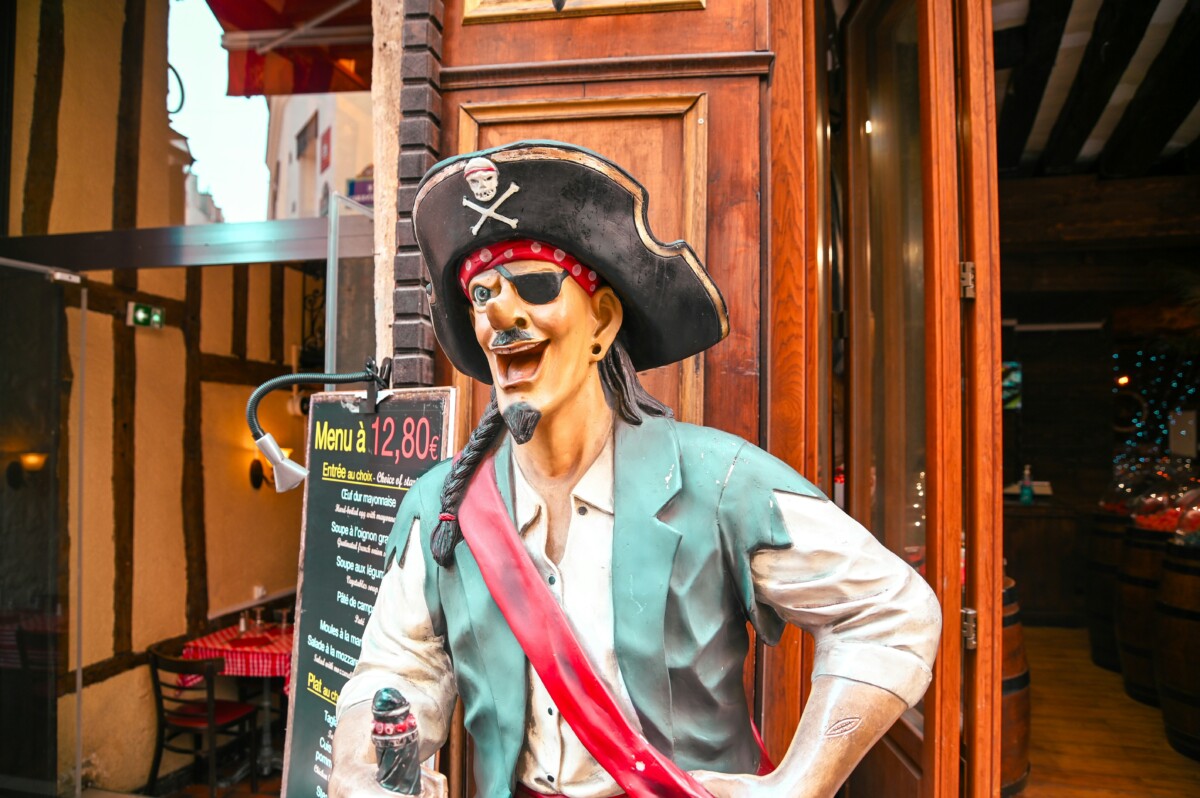
Be a Rebel, Be a Pirate: Mark Goyder on Purpose, Failure, and the Future of Business

Episode 125 | 15.9.2025

Be a Rebel, Be a Pirate: Mark Goyder on Purpose, Failure, and the Future of Business

From community service to corporate boardrooms, Mark Goyder shares his journey of failure, reinvention, and purpose—exploring what it really takes to build responsible companies and why leaders must sometimes ‘be a rebel, be a pirate.’

Listen to the full podcast episode on YouTube, Spotify, and Apple Podcasts.

What does it take to lead a life shaped not by convention, but by values? For Mark Goyder, the founder of Tomorrow’s Company and a lifelong advocate for responsible business, the answer lies in embracing failure, resisting conformity, and holding fast to a sense of purpose that transcends profit.

Speaking on The Responsible Edge podcast, Mark reflects on a career that has spanned politics, business leadership, and decades of work pushing companies to rethink their role in society. His story is less about climbing a straight ladder and more about weaving together experiences—volunteering, factory work, political campaigns, and boardroom debates—into a philosophy of leadership rooted in human values.


From Quaker Roots to Cambridge Disillusionment

Mark’s early influences were profoundly shaped by family. His mother, of Quaker origins, embodied calm resilience, while his father campaigned for responsible business long before it was fashionable. Sent away to boarding school, Mark witnessed the racism and elitism of the system, sparking a radical streak.

But it was through community service volunteering—working with Punjabi communities in Shropshire and later with young offenders—that he discovered his ability to lead, persuade, and organise.

“Suddenly,” he recalls, “I found I could communicate, I could persuade people to do things.”

It was a turning point that revealed leadership as service, not authority.


Failure as a Teacher

Mark’s career, by his own admission, was not a linear path. After roles in HR and general management, he entered politics with the Social Democratic Party, standing for parliament twice and serving on Kent County Council. Despite tireless campaigning, he saw little electoral progress. Personally, he also faced the devastating loss of his infant son—an experience that reframed his sense of failure.

“Nothing succeeds like failure,” Mark says.

The lessons he thought were distractions—writing press releases, building grassroots campaigns, persuading people on limited resources—later became the foundations for his work with Tomorrow’s Company. Failure, in his words, is never wasted.


The Birth of Tomorrow’s Company

In 1990, Mark was invited by Charles Handy to direct a programme at the RSA that asked the radical question: What is a company for? The resulting Tomorrow’s Company inquiry brought business leaders together to explore the role of purpose and relationships in corporate success. Its landmark 1995 report introduced the concept of “enlightened shareholder value,” later enshrined in UK company law.

For Mark, this was a pivotal moment: a chance to translate years of hard-won lessons into a new vision for business.

“Human business is effective business,” he argues.

Purpose and values, once seen as “soft” add-ons, are now recognised as central to success.


Protecting Purpose in a Corporate World

One of the central questions Mark wrestles with today is how companies can retain their values once they grow or are sold. He points to the Ben & Jerry’s-Unilever saga as a cautionary tale. Founders can write protections into agreements, but ownership structures and market pressures often erode original purpose.

“The idea that you can talk about a purposeful company independent of talking about ownership is for the birds,” he insists.

True purpose requires governance that ties values to decision-making at every stage—what he calls the “seven ages of the company.”


Reinventing for the Next Generation

Now, Tomorrow’s Company is turning its attention to education, working with schools to help 14- and 15-year-olds discover their potential and imagine new ways of engaging with work. It’s a return to Mark’s own formative experiences with community service, completing a circle that began in Shropshire decades ago.

At the same time, he is championing “game-changing ideas” with networks of responsible business organisations—from new governance models to place-based investment. The goal is not just incremental change, but systemic reform.


A Rebel’s Advice

If there’s one message Mark offers to young leaders, it’s this: don’t let conventional definitions of success box you in.

“Be a rebel, be a pirate if that’s what it takes to reconnect with the real soul inside you,” he says.

For someone who has combined politics, business, and activism into a restless, values-driven career, the advice rings true. The future of responsible business, as he sees it, belongs not to those who follow the rules, but to those willing to challenge them.

Sponsored by...


truMRK: Sustainability Reports and Communications You Can Trust


👉 Learn how truMRK helps organisations strengthen the credibility of their reporting and communications.

Want to be a guest on our show?

Contact Us.

The Responsible Edge Podcast
Queensgate House
48 Queen Street
Exeter
Devon
EX4 3SR

Join 2,500+ Leaders.

Exploring how to build trust, lead responsibly, and grow with integrity. Get the latest episodes and exclusive insights direct to your inbox.

  • This field is for validation purposes and should be left unchanged.

© 2026. The Responsible Edge Podcast. All rights reserved. The Responsible Edge Podcast® is a registered trademark.

Sponsored by truMRK

© 2026. The Responsible Edge Podcast