The Marketing Playbook That Sold Consumption Is Now Being Asked to Undo It

Episode 160 | 18.5.2026

The Marketing Playbook That Sold Consumption Is Now Being Asked to Undo It

Kim Grob of Right On argues that sustainability communication is failing because it refuses to use the tools that actually change what people want.

Listen to the full podcast episode on YouTube, Spotify, and Apple Podcasts.

The Gap Nobody Is Talking About

The scientific consensus on climate change sits above 97 percent. In the United States, 72 percent of the population believes global warming is happening. Only 45 percent expect it to harm them personally.

That gap is not a knowledge problem. A University of Chicago analysis of climate communication research makes the failure visible. People do not process environmental information neutrally. They process it through ideological filters shaped by identity and values.

Presenting scientific consensus to someone who distrusts scientific institutions can produce further entrenchment. The data lands as a challenge to identity, not as evidence.

Value-based messaging, calibrated to the audience, consistently outperforms consensus messaging across political lines. The message has to land somewhere the person already lives.

Kim Grob has been arguing this for more than a decade.

Formation

Kim grew up in Louisiana, outside New Orleans. Her mother would take her on walks to what they called “their special log,” pointing out plants, stopping to look at banana spiders and snakes.

“We would stop and admire them,” Kim said. Nature was not a cause. It was, from early childhood, magic.

She studied communications at Loyola University New Orleans, then completed an MFA in creative writing at the University of Arizona. She taught English, edited cycling publications and a newspaper for California prisoners, then spent years writing for clients including Intel, InFocus, and Barclays at Euro RSCG. In 2011 she co-founded Right On with her sister, Jen Jackson.

The career is not a straight line from nature to sustainability. It is a straight line from language to persuasion.


The Turning Point

What Kim found in sustainability communications was a sector that had confused urgency with effectiveness. Doom framing is accurate. It does not produce action.

“You cannot motivate someone through despair,” she said.

The sector had also inherited a suspicion of marketing, associating it with greenwashing and the commercial apparatus that contributed to the problem. Kim’s position is that this reluctance has been costly. “The same principles that we use across all of these different types of marketing campaigns have to be applied to our sustainability communications,” she said.

The missing link was not more information. It was understanding that how a story is told determines whether it changes anything.

The Work Today

Right On works across corporate sustainability, nonprofits, and foundations, covering message development, content creation, design, and internal training. Kim builds capability rather than dependency: the goal is for organisations to continue without her.

The approach starts with the audience, not the cause. She points to messaging around Great Salt Lake as an illustration. The lake is in ecological crisis. The message she encountered from a local organisation reframes the situation precisely: nobody in the world has ever brought a terminal lake back from collapse. Salt Lake could be the first community to do it.

“It admits that the lake is on the brink of collapse,” Kim said, “but it also says that we have a chance to do something no one else has done before.”

The audience moves from bystander to potential protagonist. That produces motivation. Despair does not.


The Unresolved Tension

The tools Kim describes, aspiration, desire, identity-led messaging, are not neutral. They are the same tools that built the consumer culture now requiring urgent reversal. The playbook that sold luxury goods through aspiration is, in her framework, the one sustainability needs to borrow.

Her response is to redirect the object, not the mechanism.

“I want to change the objects of desire,” she said. Secondhand clothing as status. Plant-based eating as sophistication. Sustainable behaviour as the aspirational choice.

She sees this shift beginning, particularly among younger consumers. Whether it can move fast enough, and across a wide enough demographic, to meet what the science requires is a question she does not resolve. “I’m hopeful,” she said. “I think that we are getting there.”

The marketing apparatus is capable of selling anything, in either direction. That is precisely why it matters who is using it, and what they are pointing it at.

Sponsored by...


truMRK: Sustainability Reports and Communications You Can Trust


👉 Learn how truMRK helps organisations strengthen the credibility of their reporting and communications.

Want to be a guest on our show?

Contact Us.

The Responsible Edge Podcast
Queensgate House
48 Queen Street
Exeter
Devon
EX4 3SR

Join 2,500+ Leaders.

Exploring how to build trust, lead responsibly, and grow with integrity. Get the latest episodes and exclusive insights direct to your inbox.

  • This field is for validation purposes and should be left unchanged.

© 2026. The Responsible Edge Podcast. All rights reserved. The Responsible Edge Podcast® is a registered trademark.

Sponsored by truMRK

© 2026. The Responsible Edge Podcast

Why Climate Action Fails at the Checkout

Episode 156 | 20.4.2026

Why Climate Action Fails at the Checkout

How Ben Wynn ties carbon removal to consumer savings, exposing the limits of awareness-led climate communication.

Listen to the full podcast episode on YouTube, Spotify, and Apple Podcasts.

A behavioural problem, not a messaging one

Climate communication has improved in clarity but not in effect. The assumption remains that better explanation will drive action. It has not.

The article argues that climate messaging is too technical and insufficiently human. Its solution is to make communication more relevant to everyday concerns.

This addresses tone, but not behaviour.

Decisions about climate are made alongside rent, food, and energy costs. In that context, climate is rarely rejected. It is deferred.

From convenience to constraint

Ben Wynn built his career reducing friction in consumer decisions. Across payments and digital products, behaviour followed clear incentives.

That logic breaks in climate. “There was just no higher purpose,” he reflects.

Climate action requires more than convenience. It requires motivation, and that motivation must compete with immediate financial pressures.

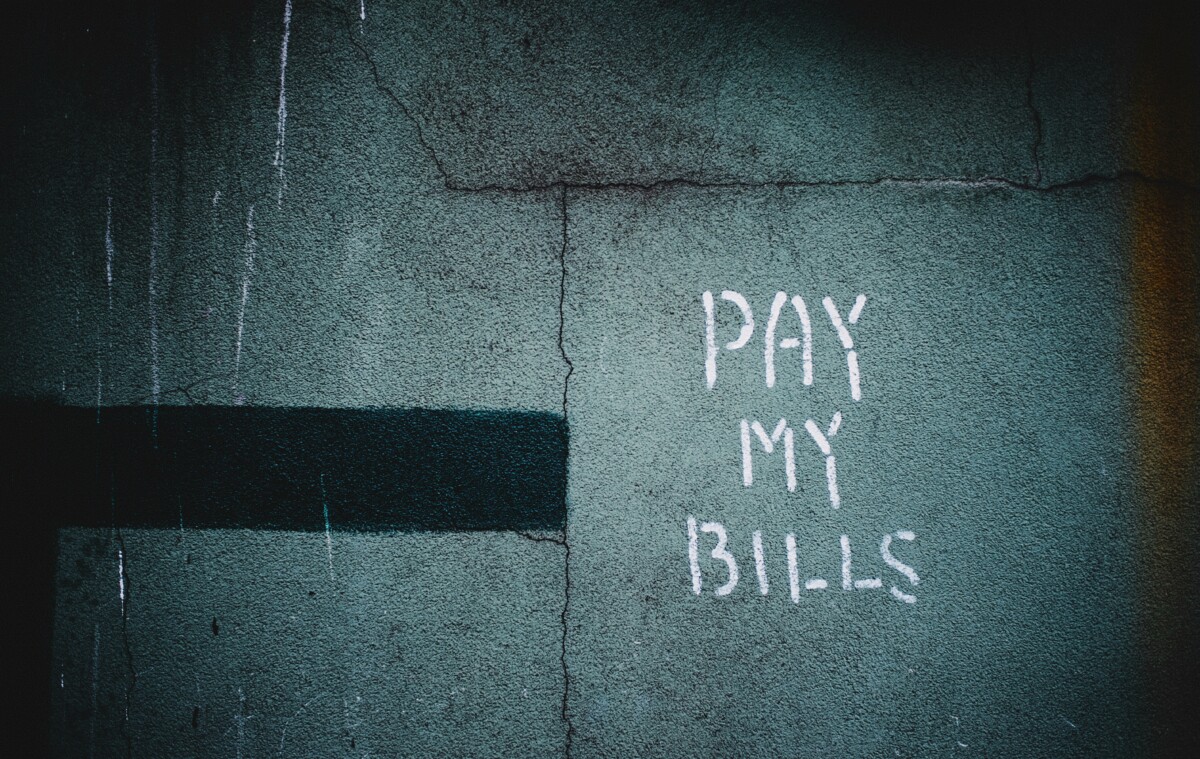
“It’s very difficult to think about the climate if you can’t pay the bills.”


Why “sell the brownie” is not enough

The article’s core idea, “sell the brownie, not the recipe”, reflects standard marketing logic. Focus on outcomes, not mechanics.

The limitation is timing. Climate benefits are long term and diffuse. Costs are immediate and individual.

Reframing the message does not resolve that mismatch.


Embedding climate into financial behaviour

Glad Climate is designed around this constraint. Members contribute monthly to fund greenhouse gas removal and receive discounts on essential spending.

The model aligns climate action with immediate benefit.

“Most people would like to save some cash.”

Funding comes from brand marketing budgets. Discounts replace traditional acquisition spend. “We’re tapping into marketing budgets.”

Climate impact becomes a byproduct of participation, not the reason for it.


Motivation over convenience

An earlier model attempted to redirect payment fees into climate funding. It failed to gain traction.

“You need to work on motivation as well as convenience.”

Savings provide that motivation. They introduce a clear, immediate reason to act.

Reversing the value proposition

Most climate messaging leads with responsibility. Ben reverses this.

“Save money, and you’ll help save the climate.”

The shift is structural. Immediate value drives behaviour. Climate becomes secondary but embedded.


Reduction without repair

Corporate climate strategies remain focused on reducing future emissions. This leaves a gap.

“You can’t call yourself responsible if you’re not trying to clean it up.”

Removal markets remain limited and concentrated among large firms such as Microsoft. Smaller businesses largely remain outside.

The system manages future risk while leaving past damage under-addressed.


Design, not communication

The article treats climate as a communication problem. Ben treats it as a design problem.

“You can’t just talk about the things people are interested in.”

Relevance alone does not drive action. Incentives do.


Closing reflection

Climate communication has become more sophisticated, but it remains disconnected from how decisions are made.

Action follows incentive, not instruction. The constraint is not understanding, but trade-off.

Until climate action delivers immediate value at the point of decision, the gap between awareness and behaviour is unlikely to close.

Sponsored by...


truMRK: Sustainability Reports and Communications You Can Trust


👉 Learn how truMRK helps organisations strengthen the credibility of their reporting and communications.

Want to be a guest on our show?

Contact Us.

The Responsible Edge Podcast
Queensgate House
48 Queen Street
Exeter
Devon
EX4 3SR

Join 2,500+ Leaders.

Exploring how to build trust, lead responsibly, and grow with integrity. Get the latest episodes and exclusive insights direct to your inbox.

  • This field is for validation purposes and should be left unchanged.

© 2026. The Responsible Edge Podcast. All rights reserved. The Responsible Edge Podcast® is a registered trademark.

Sponsored by truMRK

© 2026. The Responsible Edge Podcast

When Behaviour Change Meets the Limits of Ethical Consultancy

Episode 145 | 2.2.2026

When Behaviour Change Meets the Limits of Ethical Consultancy

BH&P founder Becky Holland on working inside flawed systems, and why walking away is not always the responsible choice.

Listen to the full podcast episode on YouTube, Spotify, and Apple Podcasts.

​Scene and Context

In recent years, agencies have found themselves under scrutiny not just for what they make, but for who they make it for. Campaigns are dissected for greenwashing. Consultancies are questioned for their role in enabling harm. Neutrality has become a fragile defence.

At the heart of this scrutiny sits a difficult question. Should agencies be held accountable for the actions of their clients, even when they do not control the final decisions? Or does refusing to engage simply leave flawed systems untouched?

That question framed a recent episode of The Responsible Edge, where Becky Holland, founder and CEO of BH&P, spoke candidly about the ethical tension baked into values-led consultancy work.

“There’s a lot of damage that can be done by good people working inside bad systems,” she said.


Formation Inside the System

Becky has spent her entire career in marketing and advertising. She began in large agencies in the 1990s, working on major brands during a period when long hours and shareholder pressure were the norm. Purpose-led work existed, but usually at the margins.

“The myth was you had to have a retail client, a car client, a finance client, something sexy, and a charity client,” she recalled.

“The charity client didn’t make any money, but everyone wanted to work on it because it made them feel good.”

The imbalance was hard to ignore. Most of the work, she said, existed to keep shareholders happy, whether client-side or agency-side. “You’re working ten, twelve hour days. You spend a lot of time at work. Do you really want it to be that?”

That question stayed with her as she moved between agency, consultancy, and client-side roles, eventually leaving large agencies altogether.


A Shift in Purpose

The turning point was not a single moment, but an accumulation of unease. Becky described looking back on campaigns where creative brilliance was used to sell things that “don’t really do any good in the world”.

At the same time, she saw organisations tackling complex social and environmental problems struggling to change behaviour or communicate effectively.

“We can use that creativity. We can use that strategic rigour,” she said. “And we can use it differently.”

BH&P was founded in 2016 around that idea. The agency positioned itself as a behaviour change consultancy working upstream, focused on insight and strategy as much as creative output. The aim was not awareness for its own sake, but measurable change in what people think, feel, and do.


The Work and the Grey Areas

Today, BH&P works primarily in sectors where impact is complicated rather than cosmetic. Energy, finance, and technology dominate the client list. Becky described these as industries where “choosing positive impact is exactly that. It is a choice.”

One example discussed was work tackling energy meter tampering and energy crime. Funded by the energy sector and delivered through the Retail Energy Code, the programme enables anonymous reporting, makes dangerous properties safe, and directs vulnerable households to support.

On the surface, such work could be dismissed as reputation management. Becky was direct about that criticism.

“You could argue it’s greenwashing,” she said. “It isn’t. It is a very specific initiative that is done to keep people safe. And it works.”

For her, the ethical test is not the sector alone, but the consequence of the work itself.


Interrogating the Brief

Becky was clear that most ethical failures begin long before delivery. They start with accepting a brief at face value.

“The brief will be written to look good,” she said. “What you have to do is put your critical lens on it and go, ‘Which means what?’”

At BH&P, behavioural frameworks normally used with clients are applied internally. Capability, opportunity, and motivation are assessed not just for audiences, but for the organisation commissioning the work.

Is the client capable of change? Do they have the opportunity to act? Are they genuinely motivated, or simply managing reputation?

Sometimes, the answer is instinctive. “You probably know the first time you read the brief,” Becky said. “We don’t give gut feel enough credit in business.”


The Pressure to Compromise

Becky acknowledged how difficult refusal can be, particularly for smaller agencies. Ethical clarity becomes harder when livelihoods are involved.

“If you’re a ten-person company and you’ve got a million-pound contract on the table, and halfway through you realise this isn’t good, that’s a moral dilemma,” she said. “You’ve got people paying their mortgages.”

That reality, she argued, is why rigorous upfront interrogation matters. It is also why blanket judgments about “bad actors” are unhelpful.

“There’s very rarely black and white,” she said. “Sometimes there is. But not very often.”


Standards, Absolutes, and Unintended Consequences

The conversation turned to professional standards, particularly B Corp certification. Recent rule changes now limit how much revenue agencies can earn from fossil fuel companies.

Becky understands the intent, but worries about the effect.

“It potentially goes against the opportunity to get inside those organisations and cause good,” she said.

Her concern is not about defending harmful practices, but about losing access to the places where the biggest change is needed. Ethical work, she argued, often happens inside uncomfortable systems.


Closing Reflection

Becky ended with a call for accountability that goes beyond outputs. Not just what agencies deliver, but what their work actually does.

“If every agency had to demonstrate not just what they’ve delivered, but what impact it’s had on society, the environment, governance,” she said, “it would change the incentives.”

It is not a comforting vision. It offers no moral purity and no easy refusals. But it reflects the reality Becky has spent her career navigating.

Change, she believes, rarely comes from standing outside and pointing. It comes from staying inside long enough to make responsibility unavoidable.

Sponsored by...


truMRK: Sustainability Reports and Communications You Can Trust


👉 Learn how truMRK helps organisations strengthen the credibility of their reporting and communications.

Want to be a guest on our show?

Contact Us.

The Responsible Edge Podcast
Queensgate House
48 Queen Street
Exeter
Devon
EX4 3SR

Join 2,500+ Leaders.

Exploring how to build trust, lead responsibly, and grow with integrity. Get the latest episodes and exclusive insights direct to your inbox.

  • This field is for validation purposes and should be left unchanged.

© 2026. The Responsible Edge Podcast. All rights reserved. The Responsible Edge Podcast® is a registered trademark.

Sponsored by truMRK

© 2026. The Responsible Edge Podcast

The real problem with sustainability is how we talk about it

Episode 133 | 10.11.2025

The Real Problem With Sustainability Is How We Talk About It

Two communications leaders explain why climate language has lost people, and how honesty and simplicity could win them back.

Listen to the full podcast episode on YouTube, Spotify, and Apple Podcasts.

Why this conversation matters

The word “sustainability” has become heavy. It carries too much emotion, too much politics, and not enough clarity.

As Rob Agnew puts it:

“The debate’s been hijacked by extremes. One side says it’s all doom; the other says it’s all nonsense. Most people are just trying to pay the bills.”

That middle ground, where practical progress actually happens, is where Rob and Cat Biggart spend their time. Both work in strategic communications and see the same pattern: companies either speak in jargon or go quiet out of fear. Neither helps anyone move forward.


How the story begins

Cat grew up outside Sydney, where she says she “spent more time saving bees from the pool than swimming.” She studied psychology and went into marketing, but the pull toward the natural world never left. That’s shaped how she sees business: as something that should support, not exploit, the environment it depends on.

Rob’s story starts on a small farm on the Bucks–Northants border.

“I saw what happens when environmental policy ignores people’s lives,” he says.

Later, in Texas, he watched communities wrestle with the economic side of the energy transition. Those experiences gave him a grounded view of what real responsibility looks like.


The turning point

For both, the turning point came when sustainability talk got louder, but less useful.

“We spent years appealing to emotion,” Rob says. “Now we need to appeal to reason.”

That doesn’t mean ditching ambition. It means showing what progress feels like in people’s lives. “Talk about the things they notice,” he says. “Lower bills, cleaner air, safer jobs. Not a 2035 target they can’t picture.”

Cat agrees:

“People tune out when the message feels abstract. They want to know, what’s this going to do for me, for my family, for my business?”


A practical kind of storytelling

Both believe the future of sustainability communication lies in honesty and proof. “Say what you’re doing, and show the results,” Cat says.

“If you missed a target, own it. People can handle bad news. What they can’t handle is spin.”

Rob’s rule is even simpler. “I’d ban most corporate words. The minute you sound like a press release, people stop listening.”

They describe good sustainability storytelling as “win-win-win”: good for business, good for people, and good for the planet. Not perfect, just real.


The moral tension: fear vs. responsibility

Many companies have pulled back from public sustainability talk. Some call it “green-hushing.” Cat sees the risk. “Silence isn’t neutral,” she says.

“If you stop talking, the loudest, most polarised voices fill the space.”

The fear of backlash has made brands cautious, but Rob argues that responsibility requires persistence. “If you believe in what you’re doing, explain it. Don’t hide behind silence. Find language that works.”


What gives hope

Both sense the conversation maturing. Sustainability is moving from marketing to management, from slogans to strategy. “We’re starting to see resilience replace rhetoric,” Rob says. “Businesses want to do what works, not what sounds good.”

Cat adds that younger communicators are bringing new energy.

“They care, but they’re also pragmatic. They know the world’s messy, and that’s okay. Progress doesn’t have to be perfect.”


The takeaway

Sustainability isn’t failing, it’s growing up. The next step is to make it understandable again. Speak plainly. Tell the truth. Admit the trade-offs.

As Cat puts it, “You can’t build trust with a slogan.” And as Rob reminds us:

“Responsibility starts when you stop talking to yourself.”

Sponsored by...


truMRK: Sustainability Reports and Communications You Can Trust


👉 Learn how truMRK helps organisations strengthen the credibility of their reporting and communications.

Want to be a guest on our show?

Contact Us.

The Responsible Edge Podcast
Queensgate House
48 Queen Street
Exeter
Devon
EX4 3SR

Join 2,500+ Leaders.

Exploring how to build trust, lead responsibly, and grow with integrity. Get the latest episodes and exclusive insights direct to your inbox.

  • This field is for validation purposes and should be left unchanged.

© 2026. The Responsible Edge Podcast. All rights reserved. The Responsible Edge Podcast® is a registered trademark.

Sponsored by truMRK

© 2026. The Responsible Edge Podcast
Andy Last on Purpose, Profit and the Price of Credibility

Episode 122 | 20.8.2025

Andy Last on Purpose, Profit and the Price of Credibility

Andy Last has spent two decades helping companies navigate the uneasy marriage of profit and purpose. As co-founder of Salt, one of the UK’s first B Corps, and now as a strategist and author (Business on a Mission), he’s worked with brands trying to turn social responsibility into more than a PR exercise.

Listen to the full podcast episode on YouTube, Spotify, and Apple Podcasts.

He knows the stakes. “Business has always had a purpose,” Andy says.

“The question is whether it serves a social need as well as a commercial one.”

That tension — between mission and margin — defines the hardest leadership choices.


When It Works: The Lifebuoy Example

The best case Andy knows is Lifebuoy soap. By embedding hygiene education into its business model, Unilever turned a bar of soap into a global health intervention. It was neither charity nor greenwash. “If it doesn’t connect to the business model, it’s just philanthropy,” Andy warns.

“And philanthropy is the first thing to go when times get tough.”

The lesson? Responsibility sticks when it strengthens, rather than competes with, commercial success.


The Trust Deficit

For today’s leaders, the bigger challenge is credibility. Decades of greenwashing have bred deep mistrust. “Most people think businesses are overstating their role in society,” Andy admits. “And often, they’re right.”

His advice is disarmingly simple: tell the whole truth. “Don’t just talk about what you’re doing well,” he says.

“Talk about what you’re not doing yet. People can forgive imperfection. They can’t forgive spin.”


The Missing Piece: Governance

Andy’s view of what unlocks real change is less about marketing brilliance than political clarity. “We shouldn’t pretend companies can do this alone,” he argues. Without governance — rules, standards, accountability — even the most committed leaders are undercut by competitors willing to cut corners.

That’s why, he insists, government must set the guardrails. Once the rules are clear, companies adapt quickly. Until then, purpose will always be at risk of being outpaced by profit.


What Leadership Demands

Andy’s reflections sketch a demanding picture of responsible leadership today:

  • Integration — embedding social value in the business model itself.

  • Honesty — admitting limits as well as achievements.

  • Advocacy — pushing for governance that holds everyone to account.

They’re not slogans; they’re disciplines. And they remind us that the real test of leadership isn’t writing the purpose statement. It’s living with the trade-offs when markets, shareholders and society all demand different things at once.

Sponsored by...


truMRK: Sustainability Reports and Communications You Can Trust


👉 Learn how truMRK helps organisations strengthen the credibility of their reporting and communications.

Want to be a guest on our show?

Contact Us.

The Responsible Edge Podcast
Queensgate House
48 Queen Street
Exeter
Devon
EX4 3SR

Join 2,500+ Leaders.

Exploring how to build trust, lead responsibly, and grow with integrity. Get the latest episodes and exclusive insights direct to your inbox.

  • This field is for validation purposes and should be left unchanged.

© 2026. The Responsible Edge Podcast. All rights reserved. The Responsible Edge Podcast® is a registered trademark.

Sponsored by truMRK

© 2026. The Responsible Edge Podcast
The Creative Who Gave Up Magic Markers for Planetary Boundaries

Episode 106 | 19.6.2025

The Creative Who Gave Up Magic Markers for Planetary Boundaries

“We’re not reacting to windmills and green fields anymore,” says Martin Kann. “It’s just visual spam now.”

Martin Kann, one of Sweden’s most decorated creative directors, didn’t start his career wanting to save the planet. He wanted a desk full of coloured markers, like the ponytailed ad men he idolised at 17. But a lifetime orbiting two parental influences—his father, a Mad Men-era advertiser; his mother, a nature-loving artist—set the stage for a late, yet seismic pivot. Ten years ago, he walked away from a traditional agency partnership, abruptly exiting a system he realised was complicit in ecological harm.

Listen to the full podcast episode on YouTube, Spotify, and Apple Podcasts.

That decision wasn’t born of sudden enlightenment. It was, as Kann describes, “an unpleasant epiphany.” Despite decades spent immersed in natural environments during his free time—diving, birdwatching, identifying flora—he had never connected his day job to the crises he deeply cared about. “It was embarrassing,” he says. “I was a cog in a system built on eternal growth at the cost of everything.”

Kann’s journey is a case study in the power of alignment. After leaving his agency, he joined sustainability communication firm Futerra. “It felt like walking into heaven,” he recalls, describing the excitement of collaborating with climate strategists and communication activists. For someone who once viewed advertising as “the highest level of cleverness,” this new chapter was about redirecting that cleverness towards survival.


From Fear to Worry: A New Emotional Lexicon

Central to Kann’s current mission is emotional literacy. Referencing Anna Townley’s earth.org article on emotional engagement in climate messaging, Kann zeroes in on a paradox: while fear can paralyse, “worry” motivates. “Worry creates support,” he says.

“Fear, when overused, leads to fatigue.”

He’s seen the arc first-hand. The early days of climate comms relied heavily on doom: melting glaciers, starving polar bears, flooded cities. While impactful, these fear appeals often backfired, overwhelming audiences. The lesson? Humans aren’t persuaded by science alone—we act when we feel. And the sweet spot is not terror, but tension. Worry, Kann argues, is just enough emotion to drive action without tipping into paralysis.

This insight aligns with behavioural psychology’s “Goldilocks principle”: too little emotion, and people shrug. Too much, and they shut down. But just the right amount—a simmering concern? That’s where change brews.


Killing the Cliché: Why Visual Language Matters

One of Kann’s most powerful critiques is aimed at sustainability’s visual status quo. “We’ve exhausted the tropes,” he says.

“Smiling families in green fields, hands cradling Earth—it’s all wallpaper now.”

He believes the biggest communications challenge isn’t inventing new facts—it’s disrupting stale aesthetics.

“The visuals need to change before minds do,” Kann argues. And he’s right: humans process images far faster than words, and emotional cues often come more from tone and imagery than rational argument. In this sense, sustainability comms isn’t just a content issue—it’s a design problem.


What Does Success Look Like Now?

For Kann, success is no longer measured in Cannes Lions or market share. “Success is making a real difference,” he says.

“It’s using creativity not for persuasion, but for transformation.”

His “magic wand” wish? A commercial world unshackled from short-termism. In such a world, brands would optimise for ecological continuity, not quarterly returns. “Nature restores quickly if you let it,” Kann notes. “But we need long-term thinking to let that happen.”

Sponsored by...


truMRK: Sustainability Reports and Communications You Can Trust


👉 Learn how truMRK helps organisations strengthen the credibility of their reporting and communications.

Want to be a guest on our show?

Contact Us.

The Responsible Edge Podcast
Queensgate House
48 Queen Street
Exeter
Devon
EX4 3SR

Join 2,500+ Leaders.

Exploring how to build trust, lead responsibly, and grow with integrity. Get the latest episodes and exclusive insights direct to your inbox.

  • This field is for validation purposes and should be left unchanged.

© 2026. The Responsible Edge Podcast. All rights reserved. The Responsible Edge Podcast® is a registered trademark.

Sponsored by truMRK

© 2026. The Responsible Edge Podcast